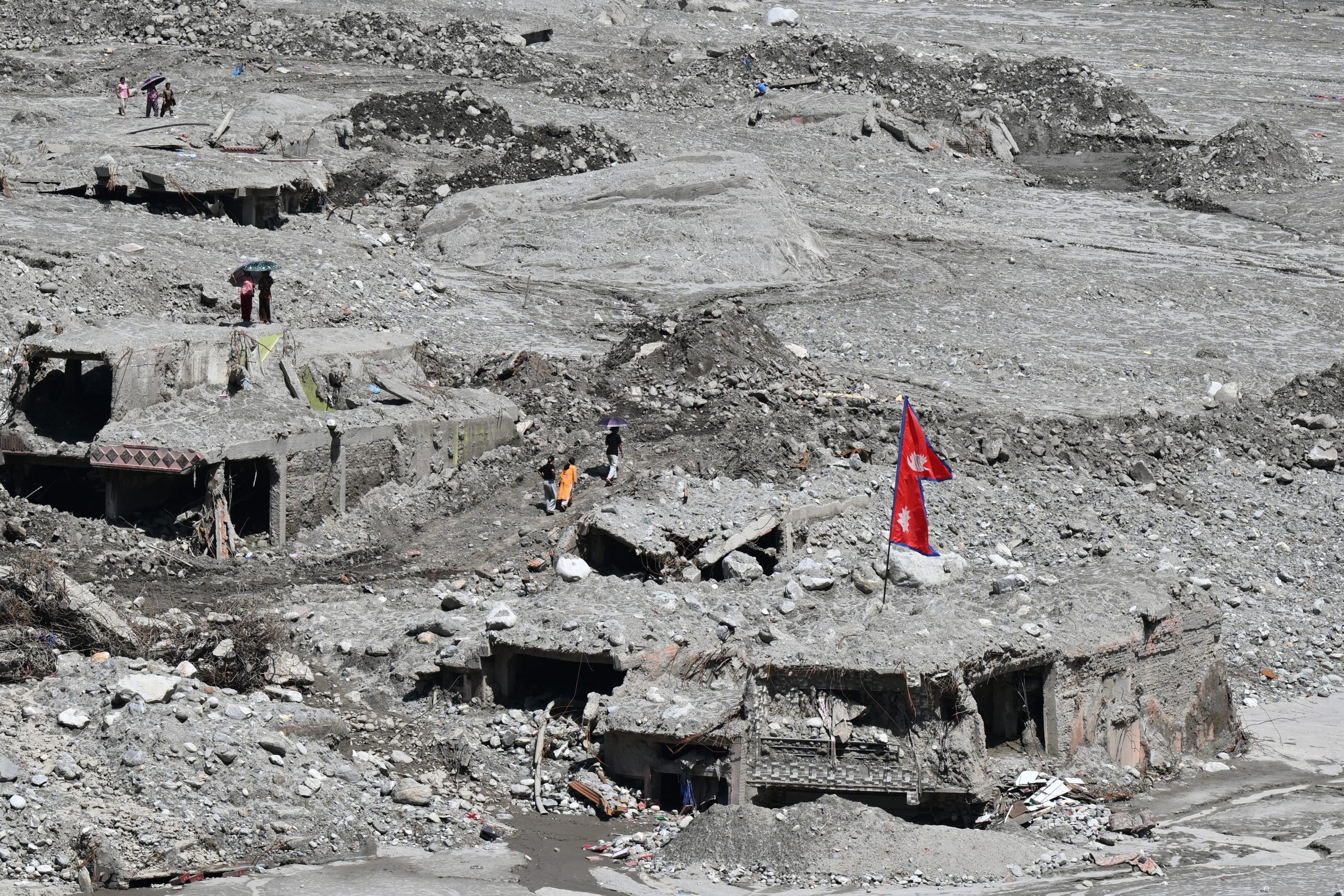
KATHMANDU: Nepal is facing a massive reconstruction challenge a month after a tsunami-like flood tore through mountain communities, killing and displacing thousands and causing billions of dollars in damage.
The disaster began on August 26 when a huge section of ice and rock broke away from the north face of Langtang Lirung mountain near the China-Nepal border. The collapse, at an altitude of about 5,200 metres, plunged onto a debris-covered glacier before surging down the valley and briefly blocking the Lhende River.
The resulting torrent travelled about 20 kilometres, dropping 1,700 metres at Rasuwagadhi in just seven minutes. Geologist Sudan Bikash Maharjan described the flow as moving “like a bullet train”.
Nepal’s disaster authority says 1,451 bodies have been recovered, while more than 5,700 people remain missing. Among those unaccounted for are hydropower workers, tourists and pilgrims. Identification has proved difficult, with only about 100 bodies identified through DNA so far and some victims buried in mass graves after samples were collected.
On the Chinese side of the border, state media have reported 43 deaths and 519 people missing.
Hundreds of rescuers, many deployed by helicopter, have spent weeks searching through mud and debris. Three workers were rescued alive after being trapped for 10 days inside tunnels under construction. One survivor, Sanjay Sah, said he survived by drinking muddy water and relying on his faith.
The disaster has affected more than 80,000 people, with thousands now living in emergency shelters. The United Nations has appealed for nearly US$50 million in emergency aid, while helicopters and cargo drones are delivering supplies to communities that remain cut off.
Nepal estimates reconstruction will cost about US$4.78 billion, including US$57 million needed for recovery during the next six months. The disaster has reduced the country’s electricity generation capacity, mainly hydropower, by about 10 per cent, with the energy sector accounting for half of the infrastructure damage.
Scientists have linked the disaster to a combination of climate-related factors, including glacier retreat, permafrost thaw and geological instability. Climate scientist Friederike Otto said climate change was “one of the drivers”.
Nepal, already constrained by limited resources, has called for sustained international support to adapt to a rapidly changing mountain environment. – AFP