MIRI: Sarawak’s stories and literary works have the potential to evolve into valuable creative assets, generating new economic opportunities through publishing, translation, intellectual property licensing, film, animation, digital games, education and tourism.
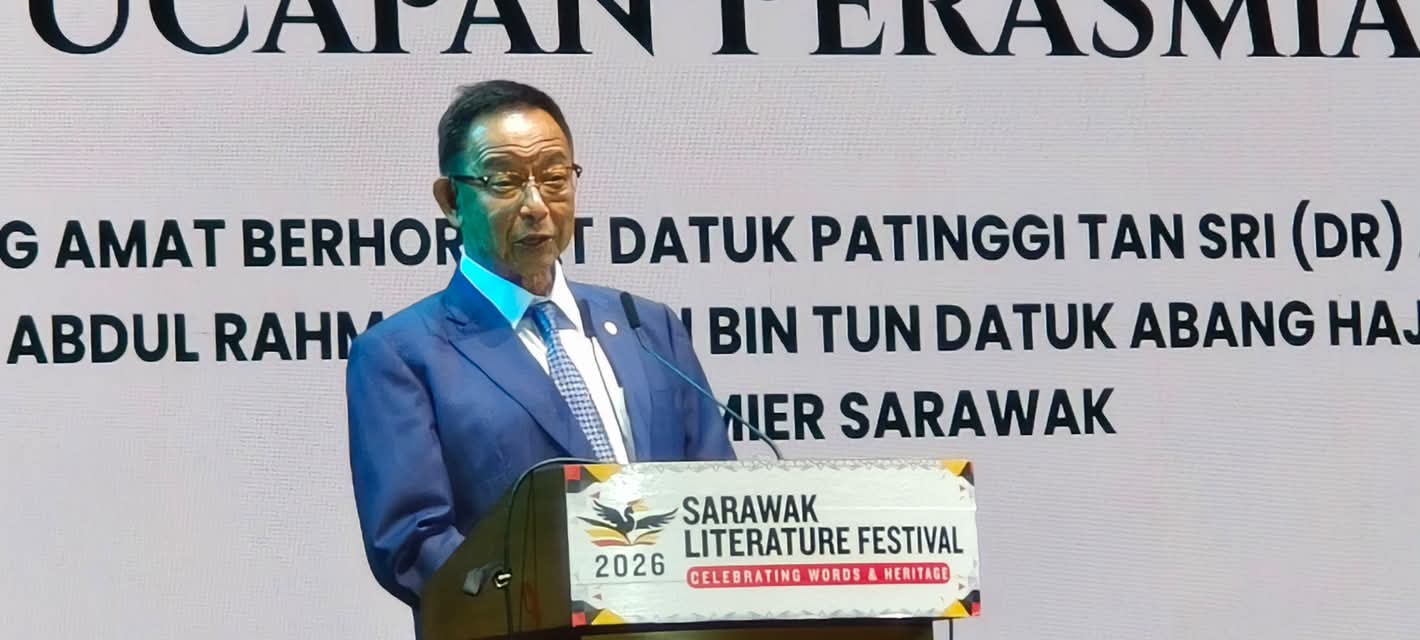
Premier Datuk Patinggi Tan Sri Abang Johari Tun Openg said works that highlighted Sarawak’s stories and identity had the potential to be developed into various forms of creative content, creating opportunities for writers and other industry players.
He said a Sarawak story produced today could potentially become valuable intellectual property in the future, as such developments could create new opportunities for writers, publishers, illustrators, designers, translators and creative industry practitioners.
“If we do not write our own stories, others may write them on our behalf.”
He said this in his speech, delivered by Tourism, Creative Industry and Performing Arts Minister Datuk Seri Abdul Karim Rahman Hamzah, at the opening ceremony of the Sarawak Literature Festival (SLF) 2026 here yesterday (Sept 24).
Abang Johari said efforts to strengthen the literary ecosystem were also important in supporting Miri’s aspiration to be recognised as a City of Literature under the UNESCO Creative Cities Network (UCCN).
He said the recognition was not merely a title, but required a strong literary ecosystem involving writers, readers, publishers, booksellers, libraries, educational institutions, literary organisations and creative spaces.
“This SLF 2026 could serve as a platform to bring together writers, readers, publishers and the community while strengthening networks that supported the growth of the local publishing and creative content industries.”
He also stressed the importance of increasing the translation of Sarawakian works, publishing works by young writers and documenting indigenous literary heritage to ensure local stories and identity could reach wider audiences.
At the same time, he emphasised the important role of libraries in supporting the development of the ecosystem, including as centres for lifelong learning, research, creativity, innovation and the preservation of documentary heritage.