When the Longhouse Falls Silent
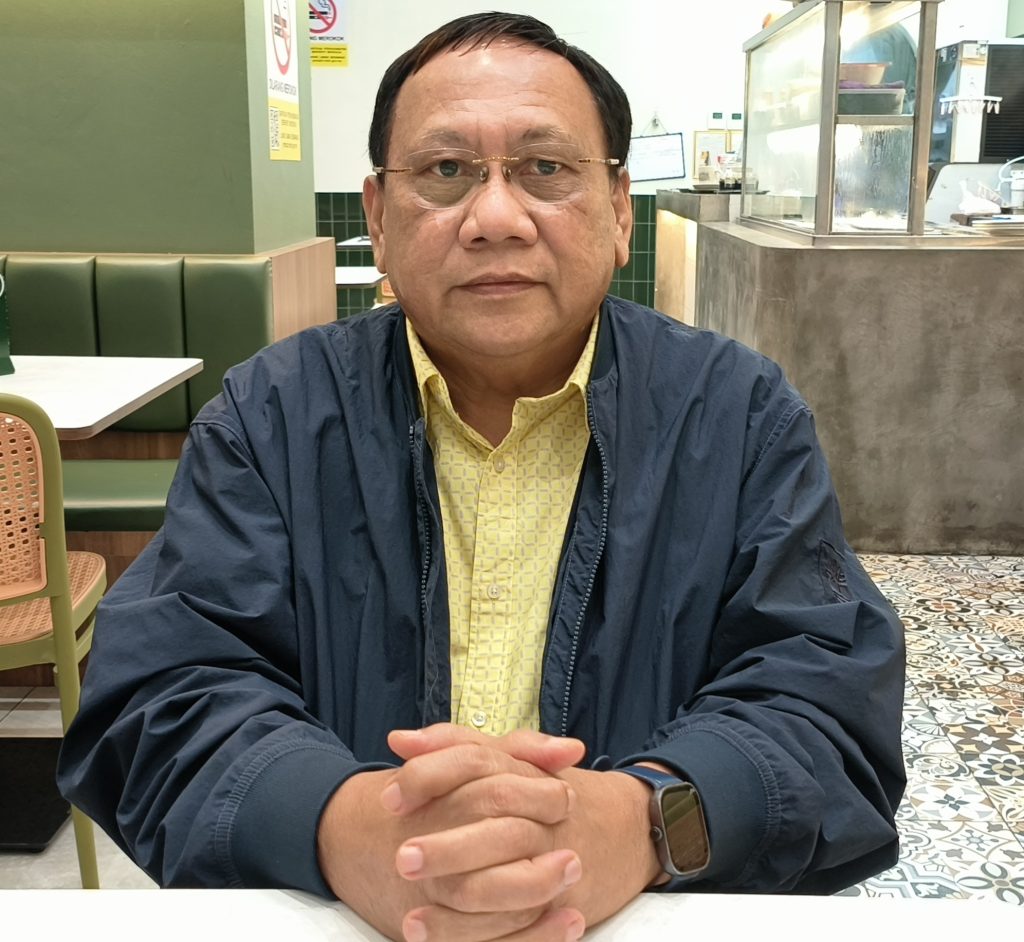
SIBU: Munan Laja, 63, fears that Sarawak’s traditional longhouses could one day remain standing long after the communities that gave them life have disappeared.
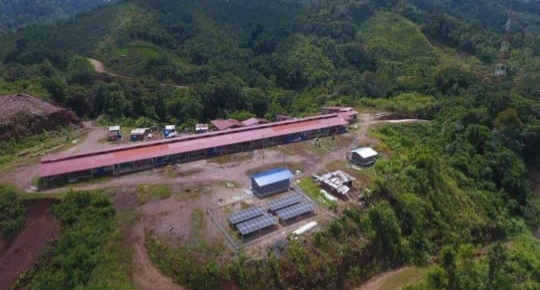
His 22-door longhouse, Rumah Nanga Peraran in the remote Song district, is already a stark example of what that future could look like.
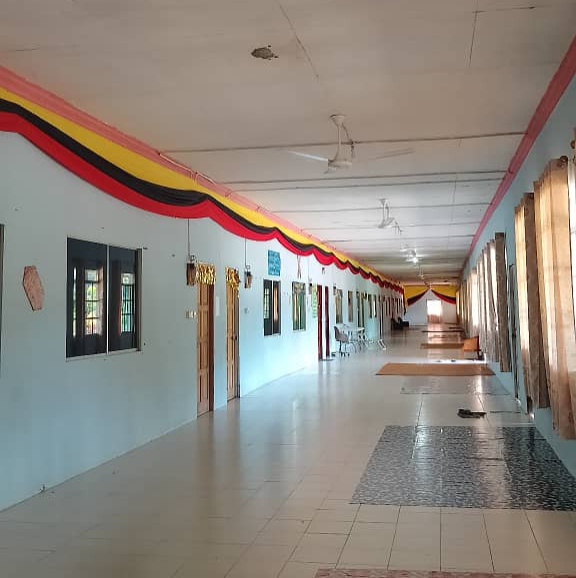
“Zero. There is not a single soul there,” he said, his eyes widening as he described the eerie emptiness that now greets visitors.
Once home to about 220 people, the longhouse is now completely deserted.
Reaching the longhouse from Song bazaar is itself a challenging journey. One can travel by boat along Sungai Katibas, a journey that takes up to three hours.
Alternatively, there is an iron bridge across the river, followed by a 30-kilometre journey along a rough logging road. The trip takes about two hours under favourable conditions but can become considerably longer during the rainy season, when the road turns into a muddy and treacherous stretch.
The longhouse was built about 20 years ago. Munan vividly remembers a time when each bilik, or family unit, housed around 10 people.
Basic amenities were not a concern then. The longhouse had round-the-clock electricity supplied by solar power, while a gravity-fed system provided a reliable source of water.
But gradually, the residents began to leave.
“It is very difficult to survive in the longhouse. There are no jobs as most of the logging companies around it have closed down. Residents could not do farming because the crops would be destroyed by wild animals such as monkeys,” said Munan, who is the permanent chairman of the Sarawak Dayak Iban Association (SADIA).
For many, the answer was to seek better livelihoods elsewhere.
According to Munan, most of the former residents have migrated to Johor, where they have found employment.
“The migration started with a few people. Everyone followed suit when they saw that the pioneers had jobs in Johor. They only come back for Gawai and Christmas, but that is only for a few days. After that, they return to their second home in Johor,” he said.
Munan is among those who now live in Sibu.
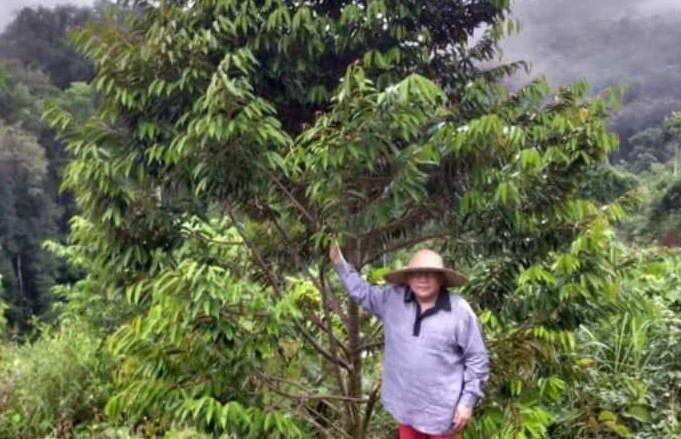
Apart from returning during Gawai and Christmas, he makes the journey back to the longhouse about once a month to tend to his 30-acre durian farm, where he applies fertiliser and clears the weeds.
But each visit is a poignant reminder of what has been lost.
When he arrives with a worker, there is no familiar bustle of conversation, laughter or children at play.
Instead, he is greeted by an unsettling silence.
Monkeys roam freely around the abandoned longhouse, scavenging for food, while the doors of every room remain firmly locked.
And Munan has another concern.
His durian trees, now about seven years old, are approaching the age when they will begin producing fruit. But with nobody living at the longhouse, he worries that monkeys will feast on the harvest whenever he is away.
The deserted longhouse, he believes, is not an isolated case.
“There are about 160 longhouses in the Song district. I know this because I was once an election candidate. I went to every longhouse to meet the voters,” he said.
Many of these longhouses, he observed, have either been deserted or are occupied by only a handful of residents.
Across Sarawak, there are about 4,500 longhouses, based on statistics from a decade ago.
For Munan, the warning signs have been visible for years.
He had long foreseen the possibility that some longhouses would eventually become empty.
“In 2018, I asked whether our longhouses would survive until 2040. Eight years later, perhaps the question has changed.
“The issue is no longer simply whether the longhouse will still be standing in 2040. The real question is: Will there still be a living community behind the doors?
“We still have 14 years to make sure the answer is ‘yes’.”
For Munan, a longhouse is far more than a physical structure.
It is a living tapestry of communal life — a place where families live together, traditions are practised, elders pass their wisdom to younger generations and strong bonds between neighbours are nurtured.
Yet that way of life is facing profound change.
Munan cited research suggesting that the traditional communal lifestyle is increasingly under pressure. A 2020 Universiti Teknologi MARA study examining 15 traditional longhouses in Sarawak identified abandonment, demolition and modernisation as major concerns for longhouse conservation.
Another study by UiTM researchers found that modern materials such as concrete, bricks and metal roofing are increasingly replacing traditional building materials, reflecting changing lifestyles and preferences.
But Munan stressed that modernisation itself should not be regarded as the enemy.
“Our longhouse communities need better roads, water, electricity, internet connectivity, education, employment opportunities and safer homes.
“The challenge is to modernise without losing the identity and communal spirit of the longhouse.”
There are, he noted, positive examples of government assistance.
Following the fire at Rumah Austine Ikau in Nanga Sipan in January this year, affected families received financial assistance, including RM5,000 for each of the 29 affected households, while RM70,000 per room was allocated towards rebuilding the longhouse.
Such assistance is important, Munan said, but the focus must extend beyond rebuilding after disasters.
“We need an updated assessment of our longhouses: Which are thriving? Which are becoming empty? Which are at risk of abandonment?”
Long-term support, he said, should encompass maintenance, fire safety, infrastructure and economic opportunities, giving younger generations compelling reasons to remain connected to their communities.
Traditional knowledge, craftsmanship, history, stories, language and customs must also be safeguarded before they gradually disappear.
“A modern longhouse does not have to lose its identity,” he said.
“It can have modern facilities while retaining its communal spaces, traditions and values.”
Munan acknowledges that rural-to-urban migration is, to some extent, inevitable.
Hospitals, jobs, schools and administrative centres are concentrated in towns and cities, making urban areas naturally more attractive to younger people seeking education, employment and better services.
A complete halt to migration, he believes, is unrealistic. But it can be reduced.
One possible answer, he argues, lies in transforming agriculture into a modern, profitable and technologically advanced industry capable of attracting a new generation of rural entrepreneurs.
“The rural districts need a serious approach with a great revolution towards modern, sophisticated and sustainable agricultural practices for them to produce results.
“A new concept called the Agropark is the right approach to agricultural transformation in rural areas.
“The Agropark concept is good because the system puts in place the entire agricultural ecosystem — infrastructure, innovation and the supply chain — altogether.
“Agriculture is never easy. I am an agropreneur myself. I know this.”
Munan believes Sarawak should aspire to produce a generation of prosperous farmers.
“In Western countries, farmers are millionaires. Therefore, I urge the Ministry of Food Industry, Commodity and Regional Development Sarawak (M-FICORD) to produce many of our farmers who can become millionaires within 10 to 15 years.”
If attractive and sustainable opportunities are created, he believes many entrepreneurs could eventually return to their home districts — not merely as farmers, but also as breeders, agropreneurs and successful business owners.
He highlighted several distinctive Sarawak products with strong potential, including Bario rice, terong Dayak, dabai and empurau.
The government, through M-FICORD, he said, should further develop these products and open up international markets for rural producers to export their goods overseas.
Munan also called for greater efforts to unlock the economic potential of Native Customary Rights (NCR) land.
“There are vast areas of NCR land belonging to the rural populace. They are rich in land but are living in poverty.
“Their lands are left idle. They generate no income,” he said.
His final proposal is to decentralise more government agencies and institutions to rural districts, including colleges and universities, so that these areas can develop into vibrant economic centres rather than continuing to lose their young population to the cities.
“With that, I urge the government not to hold the money in Kuala Lumpur or Kuching. Spend it on rural areas.
“For all these to happen, it needs political will. Let’s hope for the best and remain optimistic that one day the rural region will become the engine of growth for Sarawak.”
For now, however, the silence at Rumah Nanga Peraran remains a sobering reminder of what is at stake.
Behind every locked door is a family story.
Behind every deserted room is a memory.
And behind every silent longhouse lies a question that Sarawak can no longer afford to ignore: when the people leave, how long can the longhouse itself remain alive?