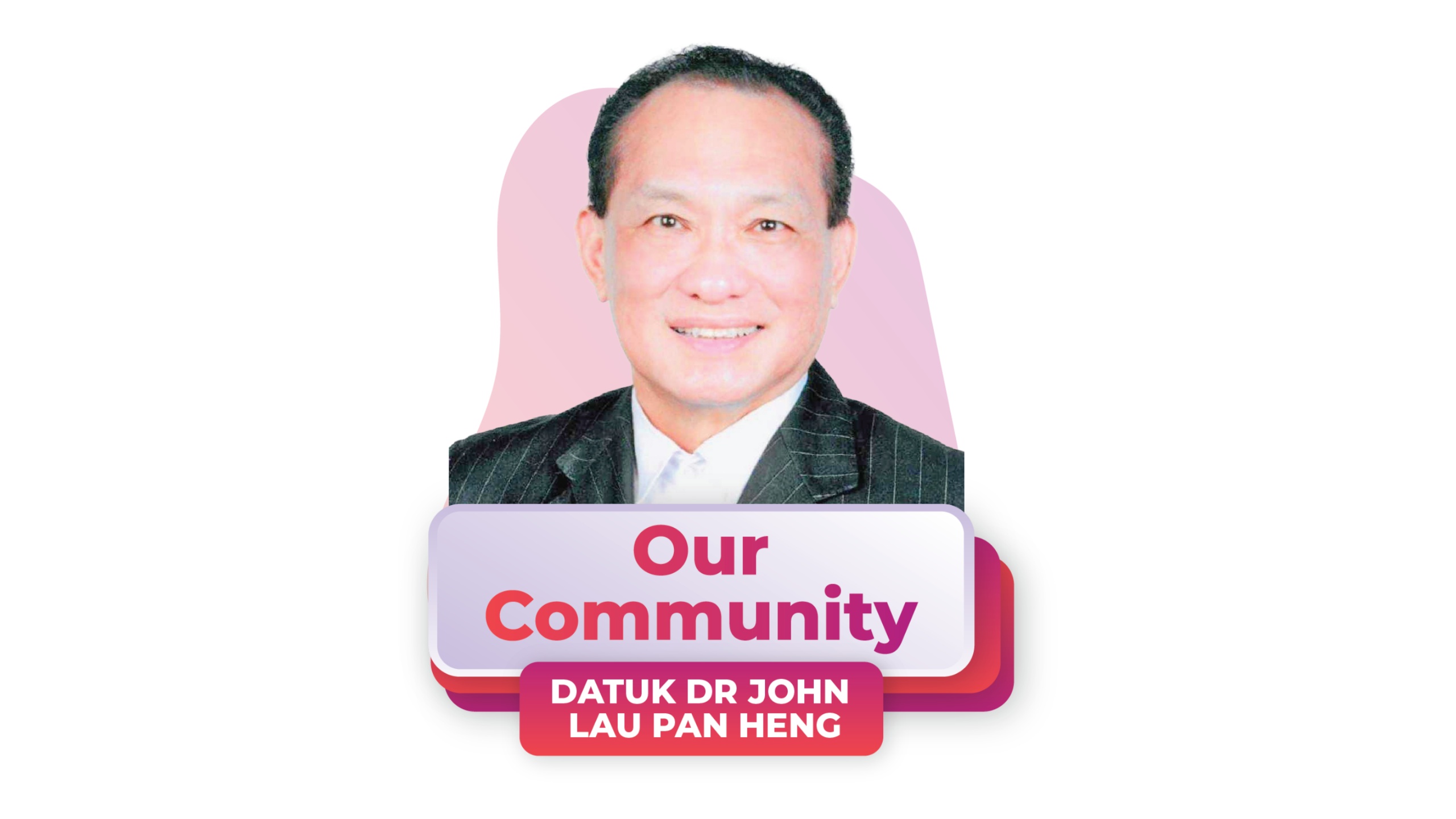
‘No one is useless in this world who lightens the burdens of another.’
— Charles Dickens (1812–1870), one of Britain’s most celebrated novelists and literary figures of the Victorian era.
Over lunch one Saturday in 1964, my father suddenly asked me, “Do you think you are useful?”
My eleven-year-old brain was not particularly quick or clever. So, I chewed on the question for a few moments, thinking about football. I compared his question with the specific role each player had to play in a team.
“I don’t just think, Father,” I replied. “I know I am useful.”
“You sound confident, but just now you didn’t seem very productive. You spent a long time playing in the river,” he said.
“I played, yes, but it was productive play. I collected a lot of river snails from the sand. I like doing that,” I replied.
Before I continue, perhaps I should backtrack a little.
That day, I had helped my father gather bamboo stems to build a drying platform beside our farmhouse. It was an annual activity.
Every year, just before the paddy harvest, we built a raised, covered platform on which to dry the newly harvested paddy.
The platform was about waist-high, keeping the paddy safely above the damp ground. It also made it easier to stir and turn the grain under the blazing sun.
At eleven, I was not particularly useful when it came to cutting down bamboo. But my father thought I was good enough company, and I was strong enough to carry one of the bamboo stems, depending on its size.
So there we were, having lunch of bamboo shoots, wild ferns and salted fish under a shady tree, several miles from our village in Serian District, about 40 miles from Kuching.
“We’ll have a good dinner tonight. I also caught a few fish hiding in the bamboo tubes I set last week,” I said.
“That’s good. Your mother will be very pleased,” Father replied without looking at me.
He often mentioned my mother whenever I did something good. I never quite understood why, but I didn’t mind. Perhaps, in his own quiet way, he was reminding me that whatever good I did was also a source of happiness for her.
On a Sunday, about a month or so later, I was with Busi, an older friend and a distant cousin on my father’s side. We were walking along a jungle track to check his fish traps, which he had placed the previous day in a sandy stream a few miles from the village.
“You were late,” I reminded him.
“Sorry. Obligations, you know.”
“Obligations to whom?” I asked.
“To my mother. I carry water, wash the dishes and do other things every morning.”
In those days, during the first half of the 1960s, we had neither piped water nor electricity. Many ordinary household chores required considerable time and effort.
“Why only your mother? What about your father?”
“When my mother is happy, my father is happy too.”
“I see. You’re perceptive.”
“I’m observant. That’s why I have a lot of freedom. What about you?”
“I am useful … helpful too. My father said so.”
“I see. You know, you could check your fish traps alone instead of bringing me along.”
“True, but I prefer good company.”
“I see. So, all I have to do is tag along and get a few fish in return,” I said.
We both burst into spontaneous laughter.
It was only later that I began to connect the dots. Being useful, being helpful and fulfilling one’s obligations seemed to earn a person attention, appreciation and respect. These qualities were not necessarily rewarded with money or grand gestures.
I began to understand this through a few small encounters.
One Sunday afternoon, while returning home after spending the weekend with my parents at our paddy farm, I passed a man and his young son, who was not much older than me. They were clearing their farm and were clearly struggling with the work.
Without saying a word, I put down my rattan backpack, took off my shirt and joined them.
I worked alongside them for about two hours before leaving. I told them I had things to do at home before dark.
A few days later, I was surprised when the son turned up at my house, all smiles, carrying an offering of pumpkin cakes.
From then on, he became one of those I could comfortably call a friend.
It was a small gesture, but I remember it to this day.
About twenty houses north of ours lived a woman with a loud voice and a habit of cursing and swearing. She seemed unable to filter her language, even in social gatherings and public settings.
I was always rather wary of her. I did not know what circumstances had shaped her behaviour, and I probably would not have understood them even if I had known.
One day, I saw her struggling with several things she wanted to carry to a nearby river for washing. I watched for a few moments before deciding to help.
I rearranged the items in her large rattan backpack to make them easier to carry, then took the remaining things and carried them to the river.
The next time she saw me passing her house, she spoke kindly to me. On other occasions, she even gave me small gifts of food.
I also began to notice a change in her language. There were fewer harsh words, and sometimes none at all, directed at her children.
I helped her twice more after that first encounter. The last occasion left me feeling rather sad, though. As I was about to leave, she looked at me and said, “I wish I had a son like you.”
I wondered what had happened between her and her children. What had they done, or perhaps failed to do, to earn such displeasure from their mother? I was too young to understand family relationships and the disappointments that sometimes lie beneath them.
Yet her words stayed with me.
Looking back, I realise that none of these encounters was particularly remarkable at the time. There were no grand acts of kindness, no heroic deeds and certainly no expectation of recognition. They were simply ordinary moments in the life of a village boy growing up in rural Sarawak in the 1960s.
But perhaps that was where some of life’s most important lessons were learnt.
My father’s question at lunch that Saturday was more profound than I initially realised. At eleven, I understood usefulness in practical terms. I could carry bamboo, collect river snails, catch fish and help with farm work. I measured my usefulness by what I could do.
As I grew older, however, I began to see that usefulness was not merely about physical strength, productivity or completing assigned tasks. It was also about noticing when someone needed help, offering companionship when it mattered and doing something without first asking what might come in return.
Busi understood this in his own way. His morning chores made his mother happy, and that happiness brought peace to the household. The young farmer’s son found a friend in an unexpected helping hand. The woman who often spoke harshly found, perhaps, a little kindness and relief in an otherwise difficult day.
I also learnt that being useful does not always mean being appreciated immediately. Sometimes, people are too preoccupied with their own struggles to acknowledge what others do for them. Sometimes, a simple gesture takes days, months or even years to reveal its meaning.
And perhaps the greatest lesson is that we should not be too quick to judge people by their words or outward behaviour. Behind a loud voice, an unfriendly expression or an apparent lack of warmth, there may be a story we know nothing about.
I have often wondered whether my father intended to teach me all this when he asked that seemingly simple question. Perhaps he was testing my understanding of responsibility. Perhaps he wanted me to look beyond myself and recognise my place in the lives of others.
I never asked him.
But after all these years, I find myself returning to that Saturday lunch beneath the shady tree, with bamboo shoots, wild ferns and salted fish before us.
I can almost hear his question again.
“Do you think you are useful?”
Today, I would probably give him a different answer.
Being useful is not about how much we can do, how busy we are or how many people depend on us. It is about whether our presence makes a small difference to someone else’s life. It is about recognising that we are part of something larger than ourselves.
Perhaps we spend too much of our lives asking what we can gain, how far we can go and what others can do for us. Yet the more meaningful question may be a quieter one: whose burden have we helped lighten along the way?
We may never know the full impact of a kind word, a helping hand or a few hours spent keeping someone company. What seems insignificant to us may become a treasured memory to another person.
And perhaps that is what being useful really means.
Not necessarily to be remembered, praised or rewarded, but to have made someone’s day a little easier, their burden a little lighter or their world a little less lonely.
After all, a life is not measured only by what we have accumulated, but also by what we have contributed.
Perhaps, in the end, the most useful thing we can do is simply to make ourselves useful to one another.
The views expressed here are those of the writer and do not necessarily represent the views of the Sarawak Tribune. The writer can be reached at www.hayhenlin@gmail.com