SIBU: Sarawak has the right to legislate and impose sales tax on petroleum under the Federal Constitution.
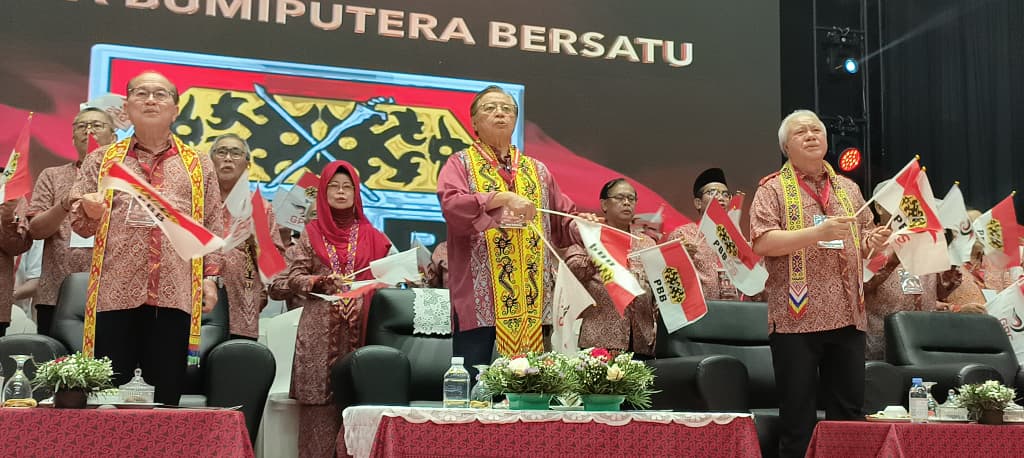
Sarawak United People’s Party (SUPP) Bawang Assan branch chairman Robert Lau Hui Yew (pic), a lawyer by profession, told the New Sarawak Tribune that Article 95B(3) of the Federal Constitution expressly provides for the States of Sabah and Sarawak to make laws for imposing sales taxes.
Lau, who was one of the attendees at a law lecture on ‘The Spirit of Malaysia Agreement 1963 in our Constitution’ held on October 8, 2019 in Kuching disputed the views of Constitutional Law expert Professor Shad Faruqi in his lecture.
“I was intrigued and surprised when Prof Shad specifically touched on Sarawak’s right to impose sales tax on the oil and gas extracted from Sarawak. The two slides he put forward was in defense of Petronas,” said Lau.
According to him, there wasn’t time during the lecture to read the Federal Constitution to offer a proper rebuttal to the view put forth that evening.
“I now have the opportunity to do so and do so below as to why Sarawak has the right to impose sales tax on petroleum products derived from Sarawak,” he said.
Lau said Article 95B(3) of the Federal Constitution expressly provides for the States of Sabah and Sarawak to make laws for imposing sales taxes. This article is in the main body of the Constitution and not in the Schedule. The wording is clear and unambiguous, he explained.
He noted that Shad had relied entirely on the argument that the Federal List covers matters pertaining to ‘petroleum products’ hence it is out of bound for the States to legislate and impose tax on. He referred to the Ninth Schedule List 1 item 8(j).
“If we read this item in the 9th Schedule, one will immediately notice that this is a generic provision listing out all items that come under the ambit of the Federal Government to make laws. Item 8 touches on ‘Trade, commerce and industry’ and sub item (j) covers development of mineral resources including petroleum products.
“Of significance is the opening word of item 8(j). It says “Subject to item 2(c) in the State List…”
“Therefore, the whole item 8(j) in the Ninth Schedule, the supporting stand relied on by Professor Shad, is subject to the State List item 2(c). Item 2 (c) states “Permits and licences for prospecting for mines; mining leases and
certificates,” he said.
Lau said this meant that the Federal List on development of minerals and petroleum products is subject to the State List to license and regulate.
“This view is further supported by the wordings in article 95B(3) which went on to say, ‘… and any sales tax imposed by State law in the State of Sabah or Sarawak shall be deemed to be among the matters enumerated in the State List and not in the Federal List.’
“I wish now to draw attention to the 10th Schedule Part V of the Federal Constitution. For some reason or oversight, Professor Shad failed to highlight Items 1, 3 and 7 of the 10th Schedule Part V.
“Part V assigned to Sabah and Sarawak additional sources of revenue not available to other states in Malaysia,” Lau said.
On another point, Lau noted that Shad said the draftsmen would not have intended to give the State of Sarawak and Sabah the blanket power to impose tax otherwise it would have made the federal power to legislate on ‘taxes’ meaningless.
“I believe this is too presumptuous a statement. As I have enumerated above, the Federal Constitution has specifically clothed the two Borneo States with the right to impose import duty, excise duty, export duty and sales tax.
“The State has the right to impose these duties and taxes on resources derived from her land. This is not overstepping the federal power over taxes,” he concluded.