“Power is okay, and stupidity is usually harmless. Power and stupidity together are dangerous.”
– Patrick Rothfuss, American author
I WROTE in this column on 5 November that the coming Sabah election promises to be one of the most crowded and unpredictable contests in the state’s history.
As expected, it was not only crowded on nomination day, 15 November; it was a record-breaking 596 candidates vying for 73 seats.
The extraordinarily crowded field speaks volumes about the current state of Sabah politics, offering both hints and warnings about what may lie ahead.
The sheer number reflects a fragmented and unsettled political landscape. Parties are splintering, alliances are fluid and personal ambitions seem to be the top priority for most contestants.
The trouble is that everyone wants a piece of the action, but not everyone has a vision for the state. With such a crowded field of almost 600 individuals, it suggests that politics in Sabah has become a battleground of opportunism rather than a contest of ideas.
Without doubt, such overcrowding guarantees vote-splitting, particularly in marginal seats. Winners may secure office with very small pluralities, meaning many elected representatives will lack strong mandates.
This could lead to a legislature that is divided, unstable and vulnerable to political manoeuvring – the very conditions that have repeatedly shaken Sabah’s governance in the past.
While I’ve written that the results might be unpredictable, I also think that the ruling GRS coalition led by Chief Minister Datuk Seri Hajiji Noor will win most of the seats, but not enough to form the new government. A hung assembly is the most likely outcome of the 29 Nov polls.
Then again, Hajiji is not known to be a strong or charismatic leader, and his weaknesses could be exploited to the maximum by his opponents and enemies – and he does not lack them.
There is another area of concern related to the very crowded field which I feel compelled to raise. By comparison, even the heated 2020 polls, with 447 candidates, now look modest.
Some may shrug and say, “the more the merrier”, or argue that there is nothing wrong with politically ambitious Malaysians stepping forward.
I agree. In principle, they are right. A vibrant democracy must allow every eligible citizen the freedom to contest.
However, please allow me to view the situation in another light. With nearly 600 hopefuls scrambling for only 73 positions, it stops looking like healthy democratic participation and starts resembling a desperate stampede for public office.
Why? Are there too many politicians in Sabah who are ‘jobless’ now? Hence their desperate scramble for the 73 vacancies in the legislative assembly.
As a Sarawakian, I wish the best for my fellow Borneons and Malaysians in Sabah. Honestly, I even worry for them as 29 November approaches.
I think my concern is real and justified. Looking at the list of candidates, we see a troubling number of tainted politicians – individuals long known for being self-serving, mired in scandals or burdened by serious allegations – once again vying for power.
Some of these bigwigs carry the weight of unresolved controversies; one is even facing a graft-related charge.
Yet, despite their chequered records, many of them stand a very real chance of returning to office. And that is what troubles me most. Sabah may wake up after the polls to find the same discredited figures back “in business”, steering the state’s future.
For the good people of Sabah who deserve clean leadership and a fresh start, the possibility of recycling the very leaders who let them down is deeply disheartening.
I pray that the One Above will guide the people of Sabah to choose wisely, even from the disheartening slate laid before them this 29 November.
In times like these, divine grace may be the only light cutting through the fog of our politics.
I have also noted that in several seats, we see coalitions claiming to be in an alliance for the election fielding candidates against each other.
Contrary to some brushing it off as “friendly contests”, most probably in damage-control mode, I do not think there is anything truly friendly about candidates engaged in an electoral battle for public office.
So, let us not kid ourselves or others. You cannot pull the wool over the eyes of Sabah voters who have endured decades of broken pledges and political gamesmanship.
The worst thing politicians can do during an election is to insult the intelligence of the electorate. Sabah voters are far more discerning than many politicians care to admit.
Many of them have seen through years of empty promises, cosmetic reforms and recycled excuses.
Anyone contesting this election should remember one thing: the voters are not fools. They are watching, evaluating and ready to deliver their verdict at the ballot box.
In this climate, honesty is no longer optional; it is the bare minimum. Politicians who underestimate the public’s wisdom do so at their own peril.
To the 596 ‘jobless’ and desperate candidates, don’t say you have not been warned.
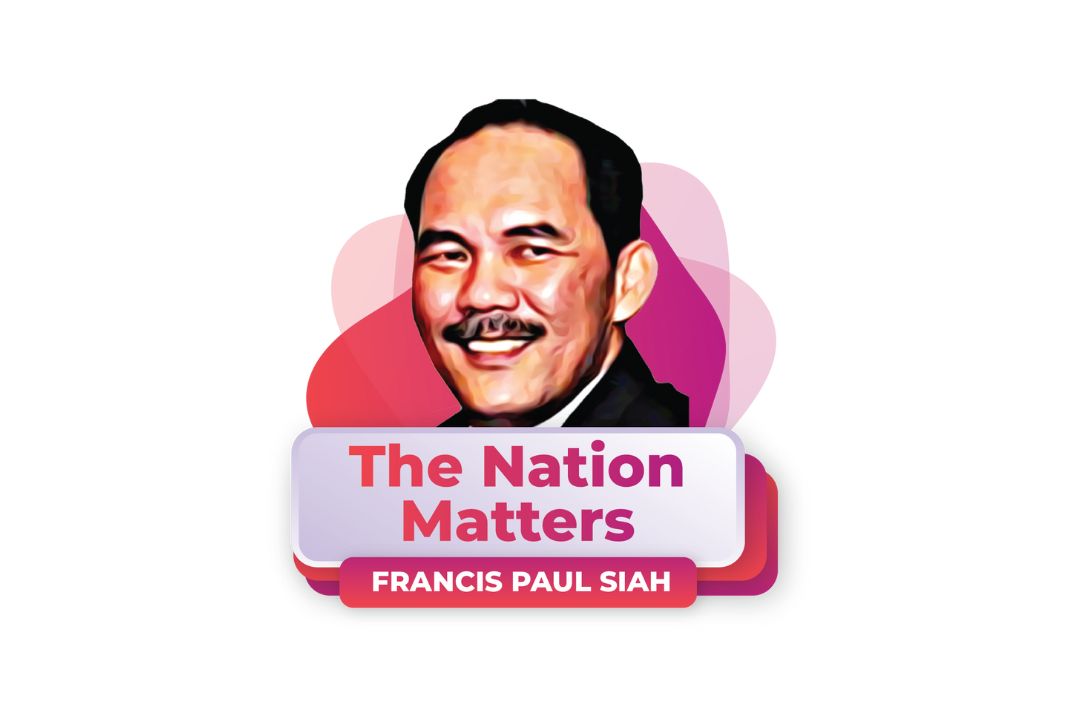
● Francis Paul Siah is a veteran Sarawak editor and currently heads the Movement for Change, Sarawak (MoCS). He can be reached at sirsiah@gmail.com
The views expressed here are those of the columnist and do not necessarily represent the views of Sarawak Tribune.