A CHILD should not have to leave a village before discovering what he or she might become.

Yet, in a state as vast as Sarawak, where distance can shape access to education, training and employment, finding that out is not always straightforward.
A student may have the interest but little opportunity to handle a robotics kit. A school-leaver may be willing to learn a trade but unsure where to begin. An entrepreneur may have an idea without knowing who could help develop it.
These are the gaps Tabung Ekonomi Gagasan Anak Sarawak (TEGAS) has been working to close over the past 14 years.
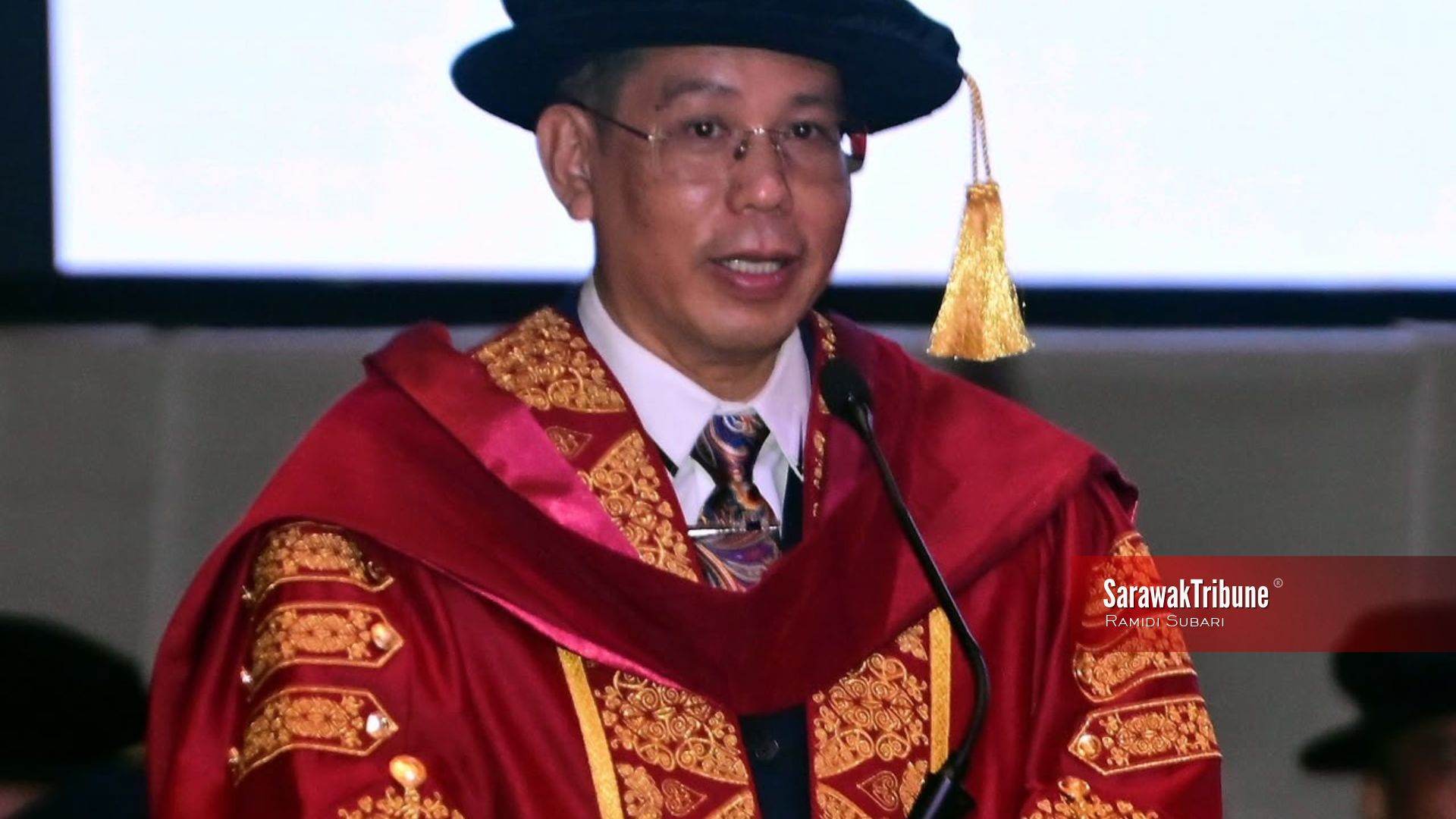
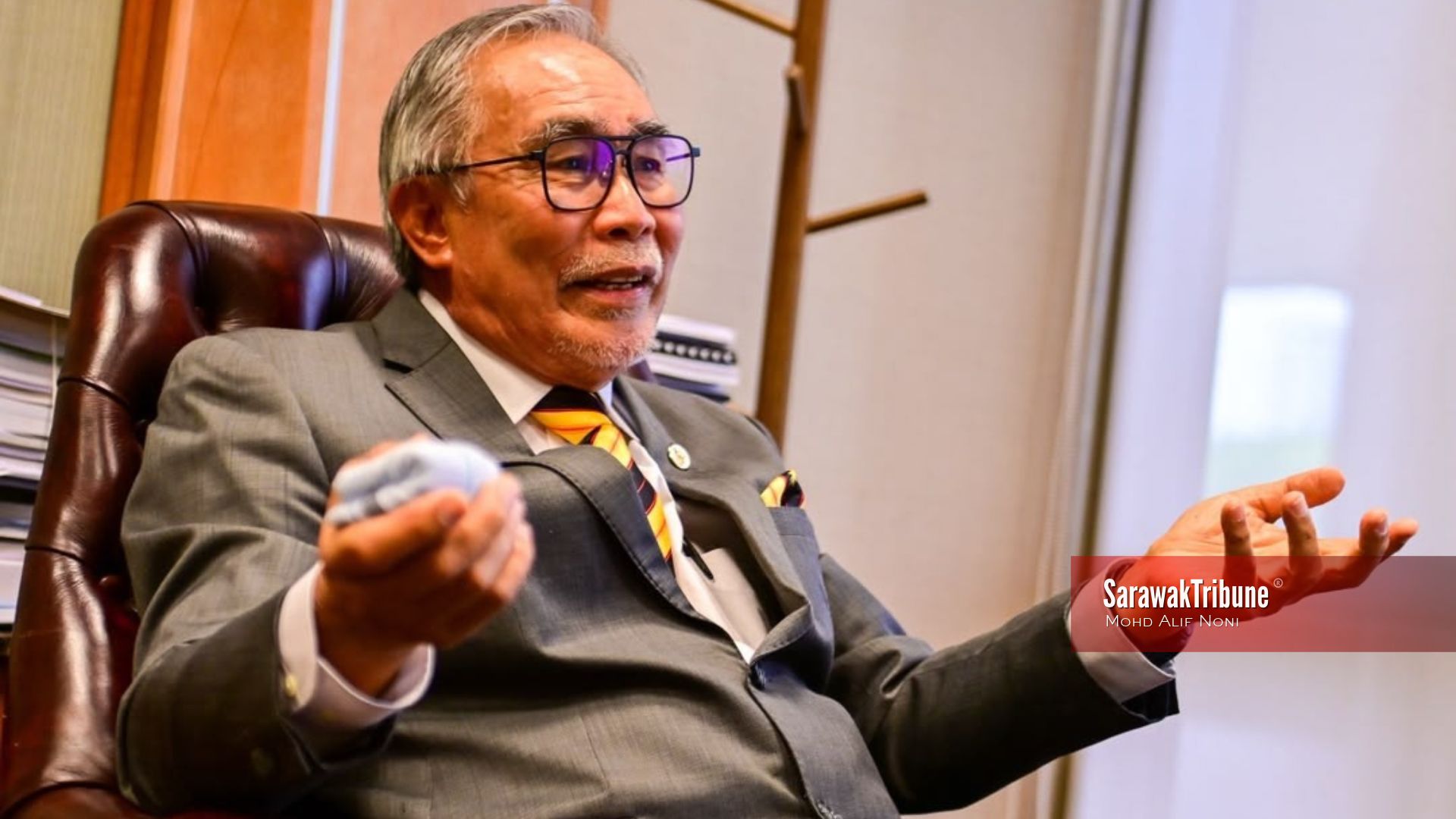
For its chairman, Datuk Len Talif Salleh, the work carries a personal resonance.
Long before he helped create pathways for young Sarawakians, he was a boy making journeys of several days to reach school.
The Colombo Plan Scholarship provided by the Australian government later allowed him to further his studies. He knows what an opportunity can change.
“You can see the progression: how I was brought up, the struggles at school, the scholarship that allowed me to study, returning to work at Sarawak Timber Industry Development Corporation (STIDC), Forest Department Sarawak (FDS) and Sarawak Forestry Corporation (SFC).
“I had served as a civil servant for 32 years, and then being given the opportunity to enter politics. I cannot ask for more,” he said in an exclusive interview with Sarawak Tribune.
That experience gives particular meaning to watching young TEGAS participants venture beyond familiar surroundings and present their ideas overseas.
Len Talif said seeing primary school pupils explain their projects confidently in English was among the outcomes that made him proud of the organisation’s work.
“Just imagine, some of them are in primary school. When you look at the way they present their ideas with confidence, and in English, that makes you really proud.
“That is why I say we can take pride in all our programmes,” he said.
An idea on the journey home
TEGAS began with a task from former chief minister Tun Pehin Sri Abdul Taib Mahmud, who wanted a platform to promote technical education with greater flexibility than a government agency.
Len Talif, then Assistant Minister for Promotion of Technical Education, recalled that its name emerged during a journey home after a programme in Mukah.
“He wanted me to establish another platform as an NGO so that its operations would not be as restrictive as those of government agencies.
“On the journey back from a programme in Mukah, the name Tabung Ekonomi Gagasan Anak Sarawak came to mind spontaneously,” he said.
When the proposal reached the Cabinet, the word “tabung” prompted a question about whether the organisation would distribute money.
Len Talif explained that the fund he envisioned would hold knowledge, skills and expertise — resources that could help young Sarawakians earn a living and improve their circumstances.
“I explained that the ‘tabung’ referred to a fund of knowledge. Knowledge would generate monetary rewards and other benefits.
“We prepared the Cabinet paper, which was approved, and I was given the opportunity to lead TEGAS from the beginning,” he said.
Bringing opportunities closer
Launched on February 28, 2012, TEGAS began connecting students and families with opportunities through initiatives such as the Sarawak Career and Training (SCAT) Fair.
The fair brought education providers, financial assistance and employers together, allowing families to consider what a young person could study, how to afford it and where the training might lead.
“The first component provides information to students, parents, teachers and community leaders about where students can pursue technical education and TVET. The second is financial assistance, whether through scholarships, loans or other forms of support.
“The third component is careers, where students or other visitors can attend interviews and potentially get a job on the spot,” he said.

However, a fair in Kuching could only reach so far, leaving TEGAS to consider families elsewhere who needed the same information.
Its Pro-DR outreach took training providers, financial assistance providers and strategic partners on the road, with stops across Sarawak and engagement with teachers, counsellors and community leaders.
“The fair is in Kuching. How do people in rural areas benefit? That is why we have Pro-DR.
“We bring our strategic partners, financial assistance providers and training providers on a roadshow from Lawas to Lundu, or from Lundu to Lawas,” he said.
From technical skills to digital possibilities
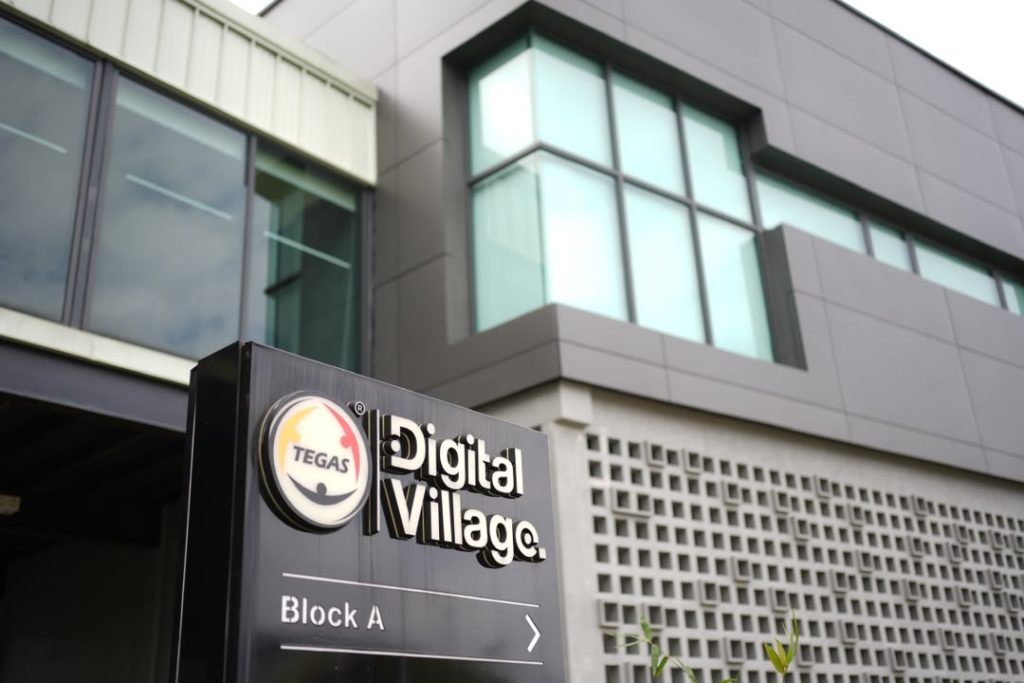
Another chapter began in 2017, when Datuk Patinggi Tan Sri Abang Johari Tun Openg took office as chief minister and announced RM30 million for the TEGAS Digital Village.
Len Talif said Abang Johari subsequently suggested establishing a hub first, allowing activities to begin while the larger development took shape.
“He called me and said, ‘Len, setting up the Village might take a while. Why don’t you set up a hub first?’
“I said, ‘If you allow me to take RM3 million from that allocation, I can set up the hub in Kuching,’” he recalled.
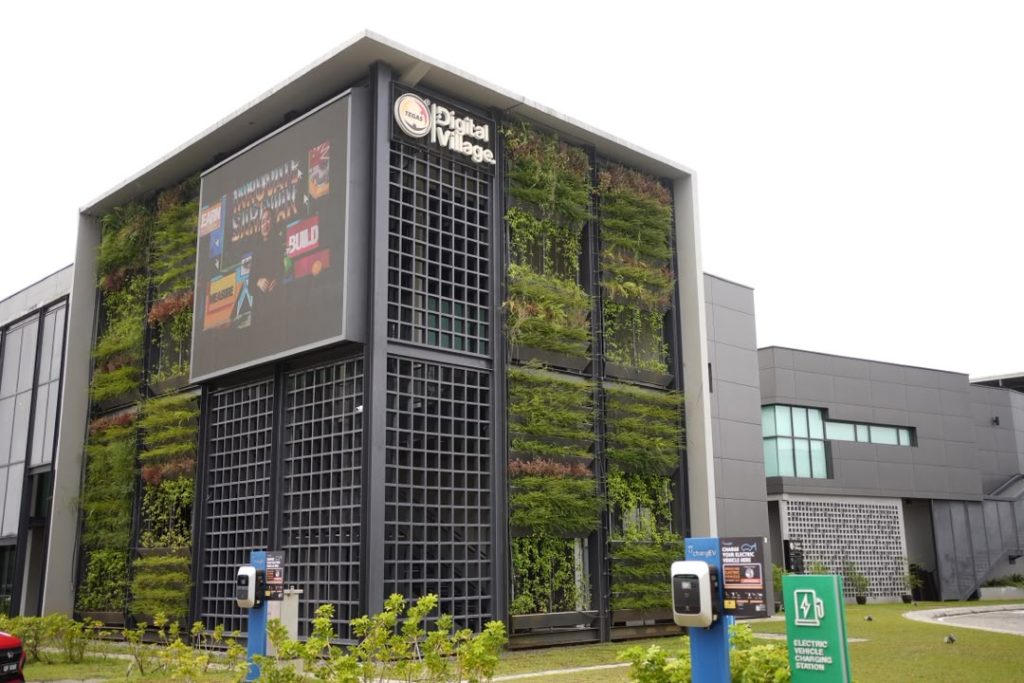
The Kuching hub opened in August 2017, while the remaining RM27 million went towards developing the Digital Village in Sama Jaya.
For Len Talif, the move into digital learning remained connected to TEGAS’ original purpose of helping young people acquire useful skills and find pathways suited to their interests.
“The transition from promoting technical education to digital education is not an issue because they are connected. Digital education is also part of STEM.
“Not all school-leavers will pursue the academic route. The others still need to be trained, and many pursue technical and vocational education,” he said.
Learning by trying
Today, practical activities under TEGAS Community Innovative Learning (TCIL) bring technology closer to students, with more than 20 rural outreach programmes conducted annually.
Its Think & Tinker Mini Lab initiative covers 25 rural school locations, with equipment including 3D printers, robotics kits and virtual reality headsets, offering children opportunities to explore beyond what they encounter in ordinary lessons.
“Through hands-on STEM and digital activities, including our Think & Tinker Mini Lab in 25 rural school locations, we provide students with opportunities to develop practical skills.
“Through these initiatives and strategic partnerships, we aim to ensure that more rural students can access STEM and digital learning opportunities and develop the skills needed for future careers in technology and innovation,” he said.
That exposure has taken some participants beyond their classrooms, with SMK Medamit among the examples.
The school, which participated in the Mini Lab initiative, secured bronze and silver awards in the Innovation Challenge category at the International Creativity and Innovation Award 2025 in Vietnam.
When asked which TEGAS programmes made him proudest, Len Talif simply said ‘all of them’.
Helping ideas grow
For entrepreneurs, TEGAS’ support extends through its Digital Village in Kuching and Digital Innovation Hubs in Bintulu and Miri, with access to mentoring, funding opportunities and market networks.
Programmes such as the TEGAS Pre-Accelerator Bootcamp, SCALE Sarawak and Sarawak Shell LiveWIRE help participants develop their businesses, while partnerships connect them with support beyond TEGAS itself.
“TEGAS is not primarily a financing provider for start-ups, but we can provide a test bed and related support. Our programmes have a wider reach when we work with partners in Peninsular Malaysia and overseas,” he said.
One example is Kuching-based Evolving Brilliance Technologies, or EB Tech, which develops artificial intelligence-powered solutions for land asset management, agriculture and carbon sustainability.
After refining its business strategy through Sarawak Shell LiveWIRE and SCALE Sarawak, it won the East Malaysia title at the Startup World Cup Malaysia 2025 Kuching Final, earning an opportunity to represent the country at the grand finale in Silicon Valley.
“A clear showcase of TEGAS’ impact is the journey of Evolving Brilliance Technologies, a deep-tech start-up born in Kuching. By participating in local accelerators such as Sarawak Shell LiveWIRE and SCALE Sarawak, EB Tech successfully refined its business strategy,” he explained.
Making room for more
Growing use of the Digital Village has brought new demands on its facilities, prompting plans for TEGAS Lodge Sarawak (TLS) under its Phase Two expansion at Sama Jaya High Tech Park.
Len Talif said accommodation would support visiting programme participants and digital nomads, while making use of the remaining land at the approximately 20-acre site.
“Initially, we did not know what the response would be. Alhamdulillah, now we are running out of space.
“We have about 20 acres, and we have only used five acres,” he said.
The idea gained momentum after he highlighted visiting primary school pupils from his constituency to Abang Johari during a Shell LiveWIRE programme.
Improved connectivity had enabled more pupils to visit Kuching, giving him an opportunity to suggest accommodation that could support educational visits to the Digital Village.
“I jokingly said it would be nice if we had a lodge or hostel here. When the Premier concluded the event, he announced his agreement. It was a pleasant surprise,” he recalled.
The next opportunity
Beyond the proposed TLS, targeted for completion in 2029 or 2030, TEGAS is preparing programmes supported by its RM12.5 million allocation under the Sarawak Budget 2027 for operations and activities.
Plans include TEGAS Community PlayFarm and an upgraded satellite challenge, introducing students to practical applications of science in agriculture, sustainability and aerospace engineering.
“In 2027, we plan to introduce the TEGAS Community PlayFarm, integrating STEM, IoT-based smart farming, renewable energy and sustainability through hands-on learning.
“We will also upgrade the Sarawak Rocketeer CanSat Challenge to the Sarawak Rocketeer CubeSat Challenge, expanding students’ exposure to satellite technology and aerospace engineering,” he said.
The subjects have advanced considerably since a name emerged on the journey home from Mukah, but the purpose behind that fund of knowledge remains recognisable.
For the child growing up beyond the main towns, TEGAS wants the opportunity to discover an interest, develop a skill or test an idea to begin closer to home.
“These initiatives will further develop young Sarawakians’ innovation and problem-solving skills while expanding our outreach, particularly to rural communities. By expanding our programmes across Sarawak, we will make sure our youths, no matter where they live, get the skills and support they need to succeed in the digital economy,” he said.