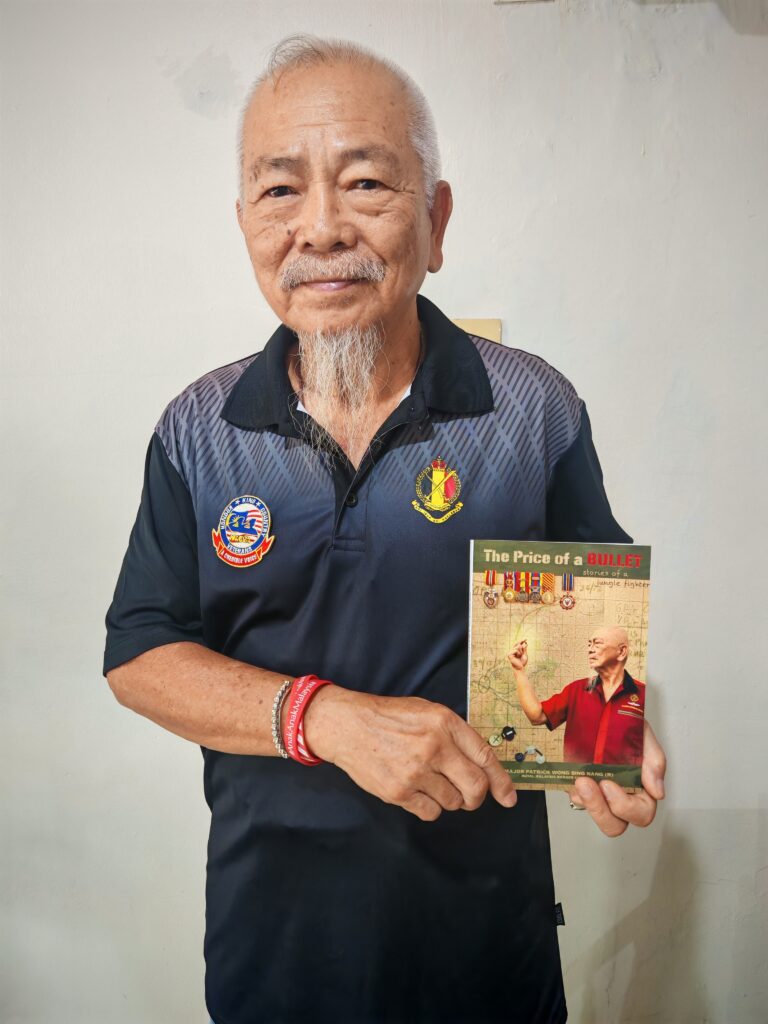
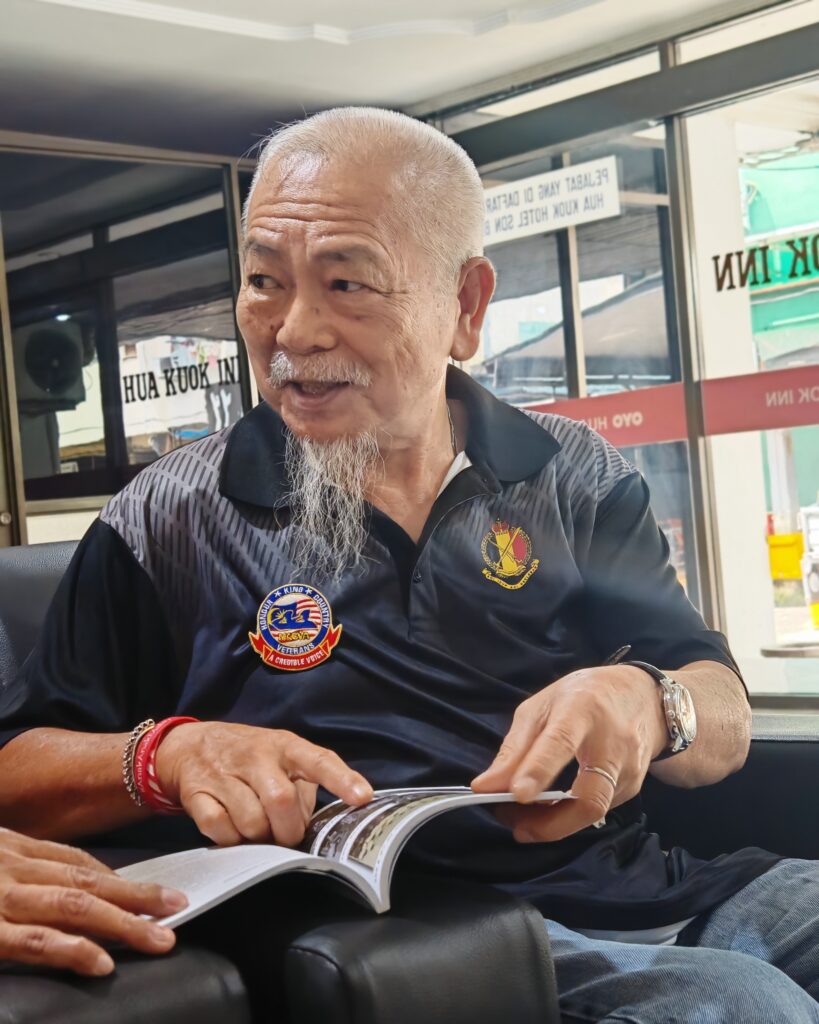
For retired Major Patrick Wong, his journey from a young recruit to a veteran reflects a lifetime shaped by duty, hardship, and pride in service. His resilience is evident in his book, “The Price of a Bullet”.
A journey through war and duty
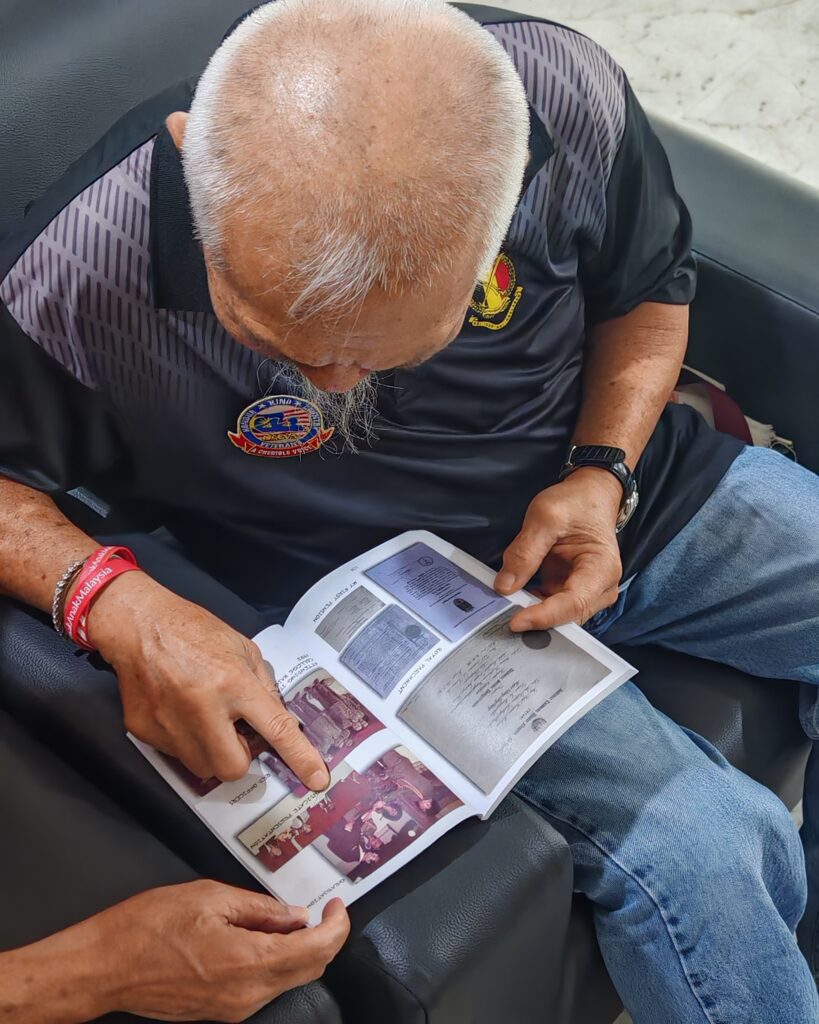
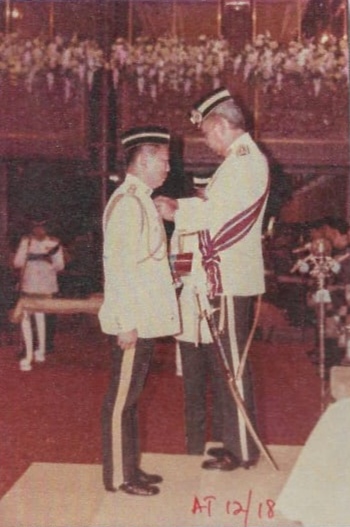
Pride glistened through as veteran Major Patrick Wong showed photos of his royal parchment published in his book “The Price of a Bullet”. On the page shown was his commission parchment into the army.
“My commission parchment was signed by the King! I feel honoured to have served the King!” he exclaimed proudly.
After his retirement in 1993, Wong never worked for another boss. He revealed that he had held the most honourable job of all: “I served the King and the country. They are my bosses. When I left, I never applied for any other job, because who else can be a bigger boss than the King?”
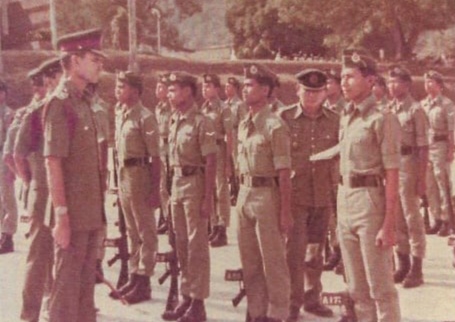
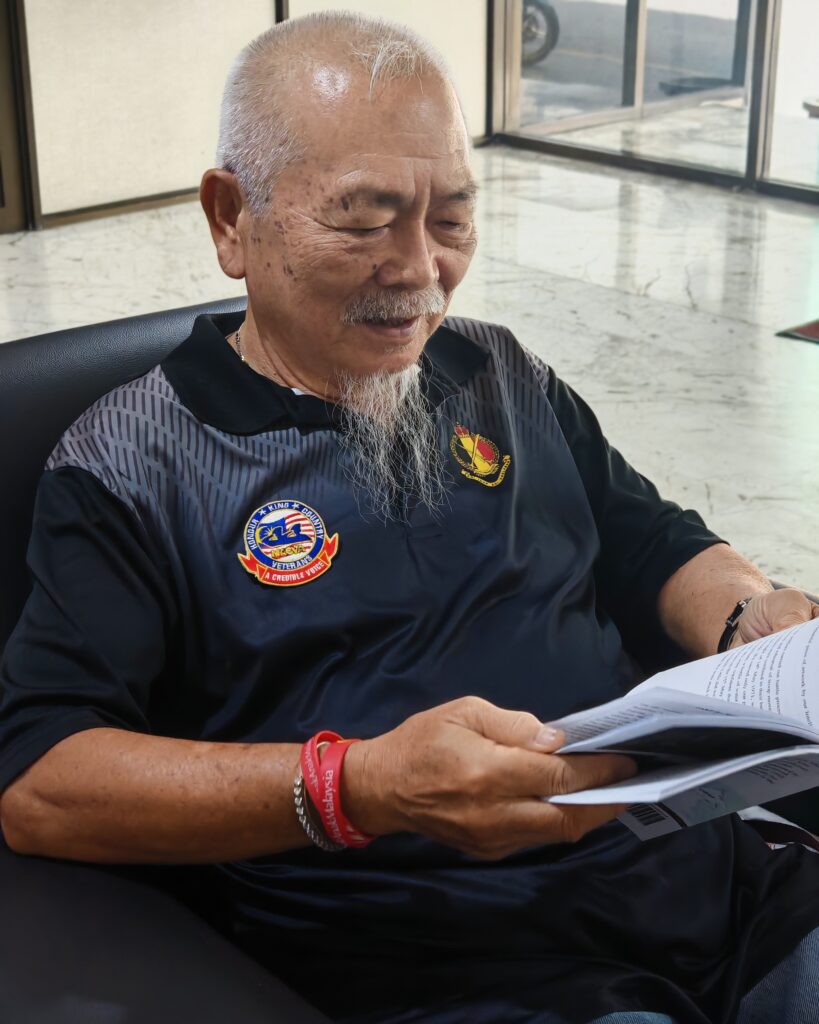
Looking back, Wong, when met recently, shared that joining the military forces, despite its ups and downs, gave him a deep sense of purpose and contentment. Reminiscing about the days when he first signed up, the 78-year-old recalled being in awe of the British Commonwealth soldiers back in the 1960s.
“They were around, running and marching. Watching them left an impression on me. So when the recruiting team came to my school in Sibu, I applied without much hesitation. Furthermore, the salary scheme was good.”
In 1967, he was selected to undergo two years of training at the Royal Military College in Kuala Lumpur. The move, though far from home, toughened him up and instilled independence. It was his first time being away from his parents.
In his book published in July, he wrote that when his mother learned he would be moving to the capital, there were tears in her eyes.
“My mother was sad to see me venture so far away to pursue a career. I myself could not foresee when I would be home again!” he wrote.
He also revealed that his parents had little idea what he would be studying in Kuala Lumpur, as he didn’t want to worry them.
“I just told them that I was going to train and work in Kuala Lumpur. Back then, if I had told them that I would be a soldier, they would have seized my identification card, and I would not have been able to go.”
Having lived through the Japanese occupation, Wong’s parents could not bear the thought of their eldest son joining the army.
Nevertheless, the truth prevailed when his parents found out after he returned home for a holiday during his service.
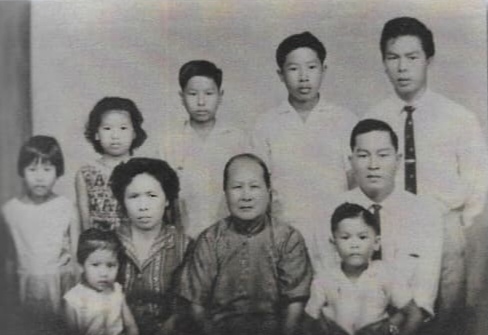
“I travelled by Air Force aircraft, so I had to wear my uniform. Then they saw it, but didn’t say much,” said the eldest of seven siblings.
Traumatic experience
His most traumatic experience wasn’t the bullet that pierced his lungs, nor the phone call on his wedding day summoning him for an urgent operation. For Wong, it was the near-death experience he endured while being treated for a gunshot wound in hospital.
“It was a time when I felt semi-conscious for three to four days. I don’t know what that feeling was, but I could sense myself moving very fast, through walls and doors, chasing after a white light. I don’t tell many people about this experience, because I didn’t know what it was. Was I hallucinating?”
All of a sudden, the light became blinding and then exploded. The explosion woke Wong up and he regained awareness.
“That feeling was frightening to me. It happened in the tenth year of my service. I kept wondering what it was, but I finally made peace with it and moved on with life.”
Right before this episode, Wong had been on a mission in Gopeng, Ipoh, the day after Christmas in 1977. That week, communist insurgents were spotted in the forest. As the troops prepared to ambush, a ranger tripped a landmine, triggering an explosion and immediately alerting the enemy, who retaliated with gunfire.
In the middle of the battle, Wong was shot.
“The bullet hit my sternum, lacerated my lung, punctured my diaphragm, and tore into my liver. I felt my energy slowly seeping away.”
But he held on.
It was then that his sense of leadership, as captain of the troop, took over. Though struggling, he persevered by recalling everything he had been taught during training.
“I had to carry on because the others were waiting for my instructions. It was the thinking and interactions that kept me alert throughout. I was shot at 7.30 am and survived until the helicopter whisked us up at 10 am,” he said.
A soldier’s wife
In his book, he also honoured soldiers’ wives, describing them as unsung heroes who kept their households and families intact while the men went out to fight for the country. Every battle carried an uncertain fate, and yet these women endured.
Like a big community, the wives often looked after one another while their husbands were in the field. Their quiet strength and mutual support helped them through difficult times, keeping their families together in their husbands’ absence.
“When I was still courting my wife, I warned her numerous times about life as a soldier’s partner. If there is no news, that means it is good news. If I am somewhere, don’t ask me where, because I wouldn’t know myself — I would be deep in the jungle somewhere,” he shared.
“Don’t ask about my salary, just know that we have enough to eat and enjoy life. If you are happy with these conditions, only then can we sign the contract (marriage certificate). Hence, throughout my time in the field, my wife was always prepared. She knew what she was getting into when she married me.”
During his wedding to his wife, Yeoh Wei Leng, Wong was recalled for an important mission despite having approved leave. In one chapter of his book, “The Missing Groom”, he recounts how he missed his own wedding. Since it was too late to cancel, Yeoh went ahead with the ceremony alongside family members.
His wedding was not the only occasion he missed. Still, Wong never regretted his decision to join the army.
“We are soldiers. We take orders. We never ask why or what. We just do it.”
The price of a bullet
It took courage to write down his experiences. As he reflected on the perilous ordeals he had endured, Wong wanted to document his role in one of Malaysia’s most important historical events — the communist insurgency.
“I don’t want this part of history to be forgotten. The younger generation must remember their country, their nation, and how our development was delayed because the government had to spend so much on defence. All of this is important to note,” he emphasised.
Equipped with photos from the past, “The Price of a Bullet” shares harrowing details of the insurgency alongside personal insights about his family. While Wong vividly remembers the Malaysia of old, he hopes that, with pride, Malaysians will continue serving their country in ways that contribute to its growth and development.