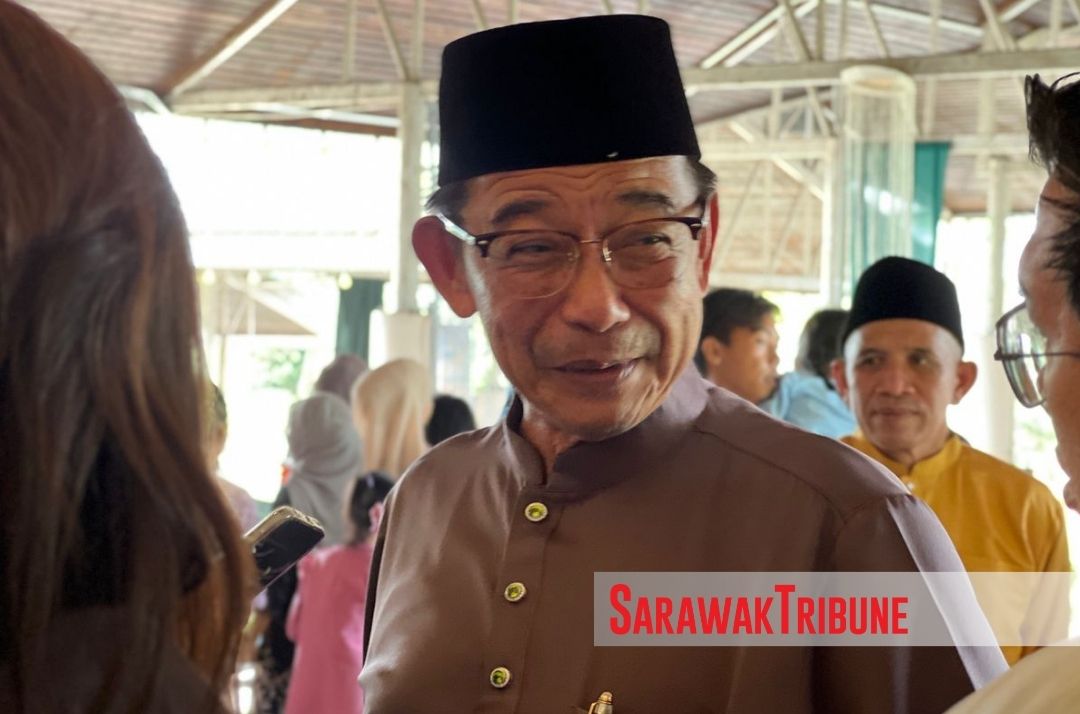
FOR over three decades, Datuk Khirudin Drahman has dedicated his life to safeguarding lives and properties as a member of the Fire and Rescue Department (Bomba).
From his early days as a recruit to his roles as Director of Bomba Sarawak and Deputy Fire Commissioner of Bomba Malaysia, he has witnessed the evolution of firefighting in the country and played a pivotal role in shaping the department’s progress.
Khirudin often emphasises the importance of fire prevention with his signature reminder: “We want to see you before the fire, not after.”
He also frequently warns about the dangers of the 3L syndrome — Lupa (forgetfulness), Lalai (negligence), and Leka (complacency) — which can lead to devastating consequences.
With his retirement set for July this year, Khirudin reflects on his journey, the challenges he has overcome, and his aspirations for the future in this exclusive interview with Sarawak Tribune.
Sarawak Tribune: Can you share how your journey in Bomba began?
Khirudin: My journey with Bomba began in 1989 when I first joined the service. At that time, firefighting was not a career many considered prestigious, but I was drawn to it because I wanted to serve the people. I saw the role of a firefighter as more than just putting out fires — it was about saving lives, responding to disasters, and protecting communities.
Over the years, I climbed the ranks, serving in various roles across the country. I had the opportunity to lead different units, from operations to fire safety education. It was a challenging but rewarding journey. One of my greatest motivations was seeing the impact of our work — every life saved, every fire prevented, and every community educated made all the hardships worth it.
Sarawak Tribune: Looking back at your career, what were some of the biggest challenges you faced?

Khirudin: One of the biggest challenges I faced was ensuring that fire and rescue services were accessible to all, especially in a state like Sarawak, which is vast and has many remote areas. Unlike urban centres, where fire stations are easily accessible, many villages in Sarawak are deep in the interior, where road access is limited or non-existent. This made response times longer, which was a major concern.
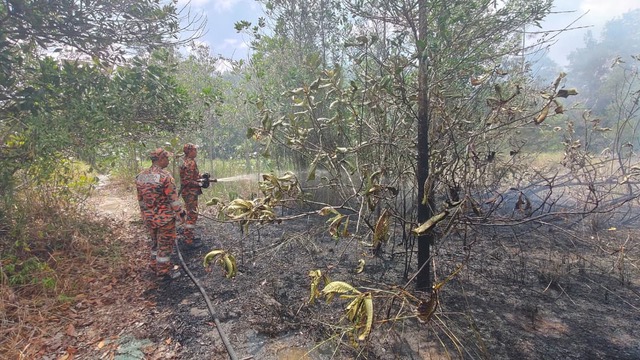
Another challenge was changing public perception about fire safety. Many people take fire prevention lightly, believing that disasters won’t happen to them. A significant number of fires are caused by negligence — unattended stoves, faulty wiring, or open burning. Educating the public about fire safety has been an ongoing effort throughout my career.
Then, of course, there were budget constraints. Modern firefighting requires advanced equipment and continuous training. Ensuring that we had enough resources to equip and train our firefighters was always a challenge. However, we made do with what we had and found ways to optimise resources.
Sarawak Tribune: How did you and your team overcome these challenges?
Khirudin: We had to be innovative. One of the solutions we implemented was decentralising our services. We established auxiliary firefighter teams and introduced the concept of community-based volunteer firefighters. This allowed us to have trained personnel in rural areas who could respond quickly before our professional teams arrived.
To improve public awareness, we ramped up our outreach programmes. We introduced school-based fire safety education, collaborated with local councils, and conducted more community engagement programmes. Instead of waiting for people to come to us, we went to them.
Saraeak Tribune: What are you most proud of from your time leading Bomba Sarawak?
Khirudin: There are many things I am proud of, but one of the biggest achievements is improving our emergency response times. Through our initiatives, we significantly reduced the time it takes for our teams to reach a fire scene. This has led to fewer casualties and minimised property losses.
I am also proud of the cultural shift in fire safety awareness. More people now understand the importance of fire prevention. Our community programmes, fire safety talks, and school engagements have helped create a more safety-conscious society.
But above all, I am most proud of the team I led. Seeing young firefighters develop their skills, embrace the mission, and serve with dedication gives me immense satisfaction. They are the future of Bomba, and I have full confidence in their ability to take the department to greater heights.
Sarawak Tribune: You have witnessed many changes in the fire and rescue service over the years. How do you see its future?

Khirudin: The future of firefighting will be shaped by technology and data-driven strategies. We are already seeing the impact of artificial intelligence (AI), drones, and thermal imaging in fire detection and response. These advancements will make firefighting more efficient and safer for personnel.
Community engagement will also play a bigger role. Fire safety is not just the responsibility of firefighters — it’s a shared duty. I hope to see more involvement from the public in fire prevention efforts, from businesses ensuring compliance to homeowners taking proactive measures.
Another area of focus should be disaster preparedness. With climate change causing more extreme weather conditions, fire and rescue services must adapt to handle floods, landslides, and other natural disasters. Multi-agency coordination will be key to ensuring a swift and effective response.
Sarawak Tribune: With your retirement approaching, what your thoughts as you prepare to step down?
Khirudin: It’s a mix of emotions. On one hand, I feel a deep sense of gratitude for the opportunities and experiences I have had in this career. Firefighting is not just a profession — it’s a way of life. Over the years, it has become part of my identity, and stepping away from it is not easy.
At the same time, I believe every leader must know when to step aside and let the next generation take over. I have full confidence in the officers and firefighters who will continue the mission of saving lives and protecting properties. The fire and rescue service has evolved tremendously, and I know it will continue to improve in the years to come.
Retirement, for me, is not the end of my journey — it’s just the beginning of a new chapter.
Sarawak Tribune: As you prepare for retirement, what are your plans for the future?
Khirudin: While I will no longer be in active service, I don’t see myself completely stepping away from fire safety and disaster management. I plan to be involved in consultancy and advisory roles, sharing my knowledge with organisations that want to improve their emergency preparedness.
I am also considering opening a boutique café where I can showcase the numerous memorabilia I have collected over the years. I envision the boutique café as more than just a place to enjoy a good cup of coffee — it will be a space where stories are shared, history is preserved, and generations connect. I want it to be an educational hub for young people, especially those interested in firefighting, emergency response, and public safety. The memorabilia I’ve collected over the years — old uniforms, helmets, equipment, medals, and historical photos —will be displayed, offering visitors a glimpse into the evolution of Bomba and the sacrifices made by those in the service.
Beyond that, I am looking forward to spending more time with my family. This career has been demanding, with long hours and high-stress situations. Now, I can take a step back and focus on personal well-being. I also enjoy outdoor activities, so I plan to stay active.
Sarawak Tribune: Lastly, how do you want to be remembered as a leader?
Khirudin: I hope to be remembered as someone who truly cared — not just about firefighting, but about people. My goal has always been to make a difference, whether through improving fire response systems, advocating for public safety, or mentoring young officers.
I want my legacy to be one of progress, where Bomba continues to evolve, innovate, and serve the people with excellence. More than anything, I hope that I have inspired those around me to continue this mission with passion and commitment.
As I retire, I leave with no regrets, only gratitude. It has been an honour to serve, and I will always be a firefighter at heart.