By Siti Nurain Ratani
KAPIT: Tattoos and long ears were once the ultimate marks of beauty and aristocracy among the Dayak Kayan women. Today, only a few still bear them.
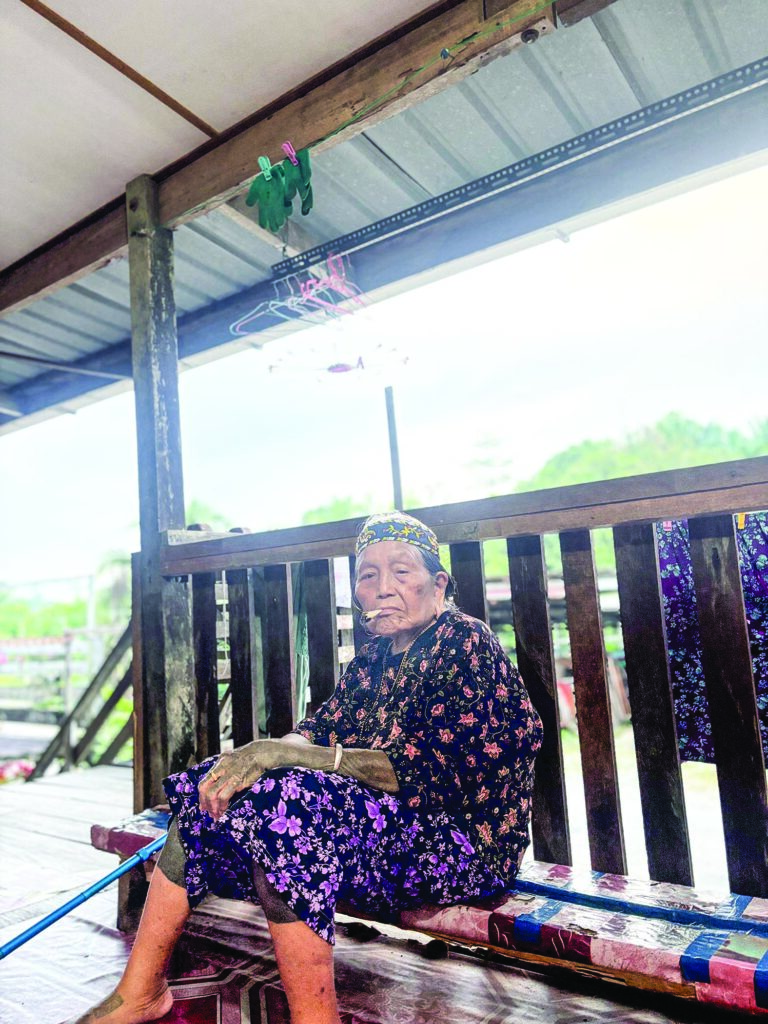
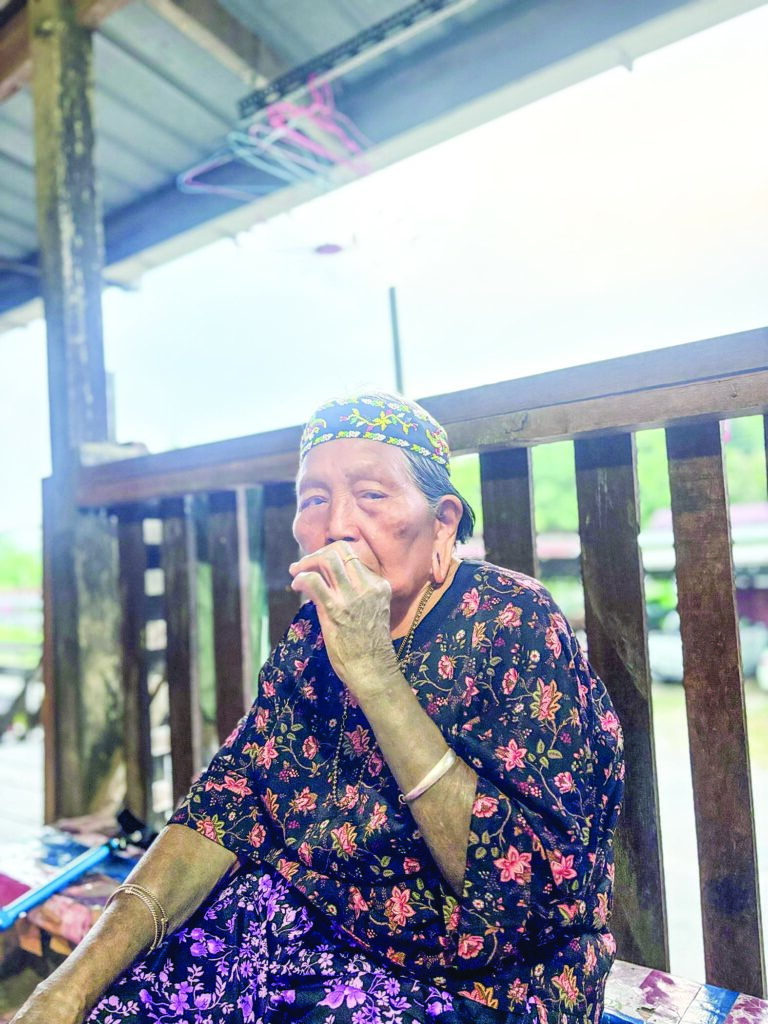
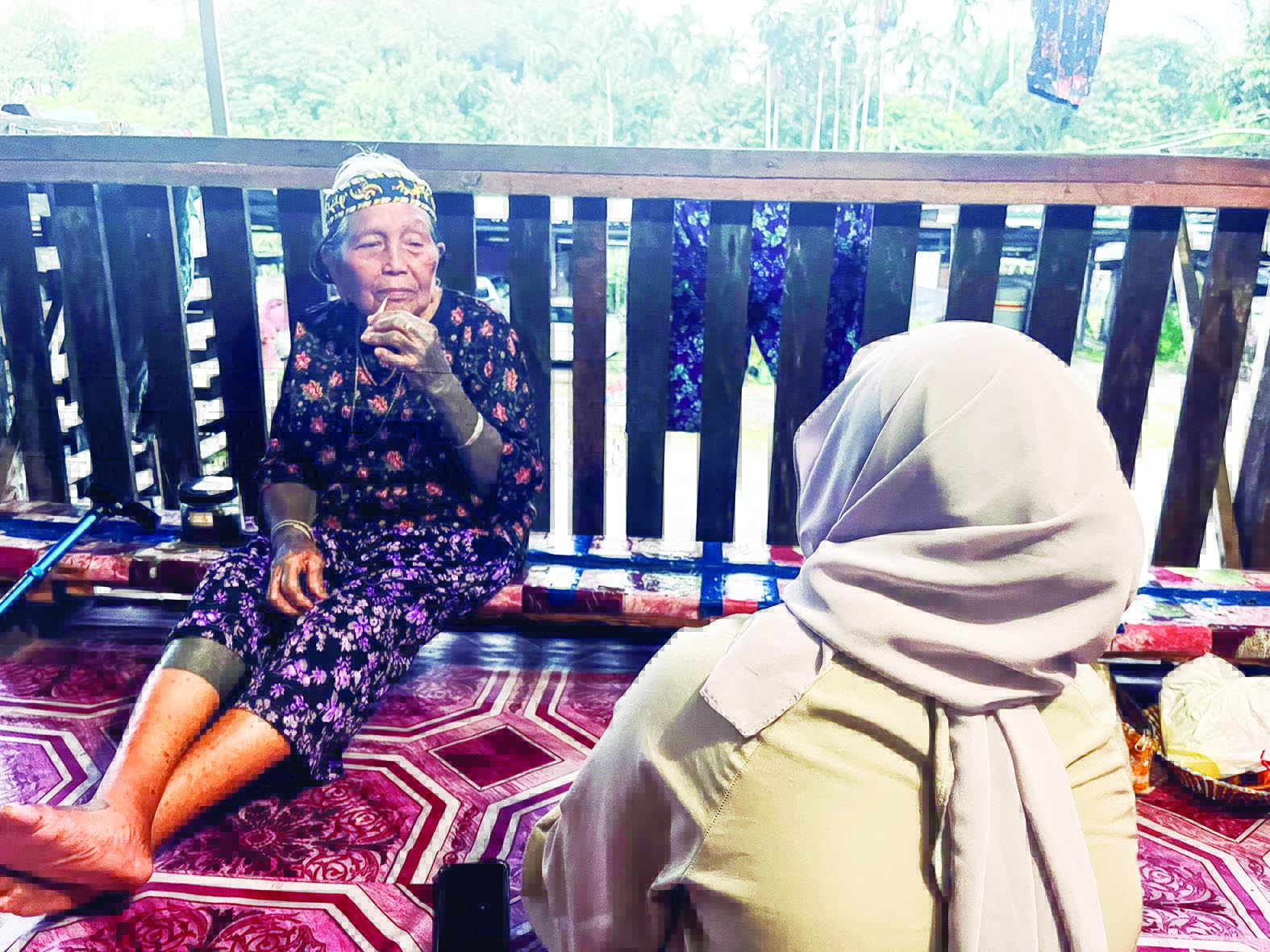
At Uma Belor longhouse in Sungai Asap, 82-year-old Min Avun sits quietly on the hawa (veranda), lighting a roll of homegrown tobacco.
She is among the last women still carrying the tradition.
Her body is etched with spirals across her wrists, calves and thighs.
Her ears, stretched to her shoulders by weights worn since childhood, reflect a culture where tattoos and long ears signified not only beauty, but also courage, social rank and identity.
“It was painful – we were tattooed as children without painkillers, only traditional ways,” she said, recalling the chants of ritual healers who used needles to pierce the skin.
The process took months, filled with pain, but it was a proud duty for aristocratic women.
“We followed many taboos, even diet restrictions, so the tattoos would heal well and look beautiful,” she said.
Today, Min Avun and her 94-year-old sister, now bedridden after a stroke, are the last in Uma Belor to keep the practice.
“These are memories from our ancestors, a heritage passed down for generations,” she said.
But times have changed. Younger people now see tattoos and long ears as outdated.
Even her five children – three biological and two adopted – did not continue the custom.
“They say it doesn’t suit today’s times and it’s too painful,” she explained.
Still, Min Avun remains proud.
“I am not ashamed. For us, tattoos and long ears are not just outward symbols, but an identity,” she said.
She no longer wears the metal ear weights, but the marks remain.
In her twilight years, she is a living witness to a fading tradition.
On the hawa of Uma Belor, she continues to enjoy her tobacco, keeping alive the flame of a heritage that is slowly disappearing.