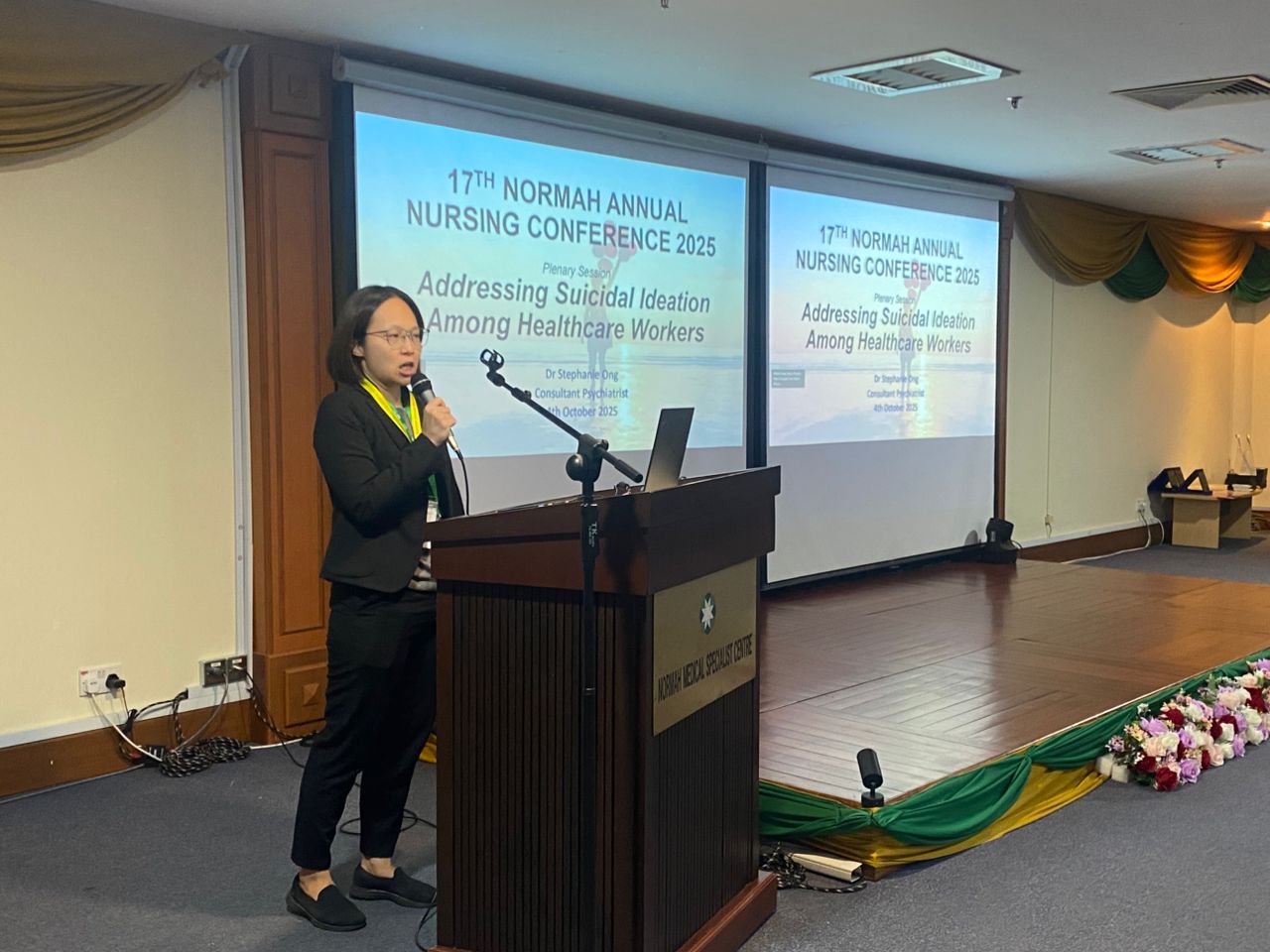
KUCHING: Suicide among healthcare workers is a silent crisis that demands urgent and systemic action, not only in emergency response but also in prevention, support systems and workplace culture, cautioned mental health expert, Dr Stephanie Ong Boon Kheng.
Delivering her keynote address at the 17th Normah Annual Nursing Conference (ANC) here on Saturday, she said that healthcare workers face a disproportionate burden of suicidal thoughts and behaviours due to pressures unique to their profession.
“Suicide is a complex global issue, but for healthcare workers, the risks are even greater because of long hours, exposure to trauma, and access to medications,” Dr Ong said.
She emphasised that risk is not isolated but cumulative.

“Stressors at the individual, work, and institutional levels all interact,” she explained.
Dr Ong also cautioned against the widespread misconception that suicide is triggered by a single event.
“That is not true. There are many factors that drive a person to suicidal ideation and, ultimately, suicide.
“It is never a one-to-one cause. It is always a complex interplay between personal vulnerabilities, workplace environment and broader social pressures,” she stressed.
Citing local research, she pointed out that during the early phase of the COVID-19 pandemic, 10 per cent of healthcare workers in Malaysia reported current suicidal ideation, a rate far higher than pre-pandemic levels.
She also referred to international reviews, which found female healthcare workers may be particularly at risk, due to both work and societal gender roles outside their medical duties.
“Access to lethal means, such as medications or sharp instruments, makes attempts more likely to be fatal,” she said.
Dr Ong reminded the audience that language matters when addressing the issue.
“We should use terms like ‘died by suicide’ instead of ‘committed suicide’ to reduce stigma and to create respectful, supportive discussions,” she advised.
Calling for systemic change, she urged institutions to prioritise early detection, confidential psychological services, peer support networks and safeguards such as reasonable work hours, mental health training, debriefing after traumatic events and zero tolerance for workplace bullying.
Concluding her session, Dr Ong reminded the audience that mental illness is common and should never be met with stigma or judgment.
“Mental illness affects one in four individuals, and that person could be us at some point. Don’t be judgmental,” she urged.
Those experiencing mental health issues or contemplating suicide can reach out to the Mental Health Psychosocial Support Service (03-2935 9935 or 014-322 3392); Talian Kasih (15999 or 019-261 5999 on WhatsApp); JAKIM’s Family, Social and Community Care Centre (011-1959 8214 on WhatsApp); and Befrienders Kuala Lumpur (03-7627 2929).