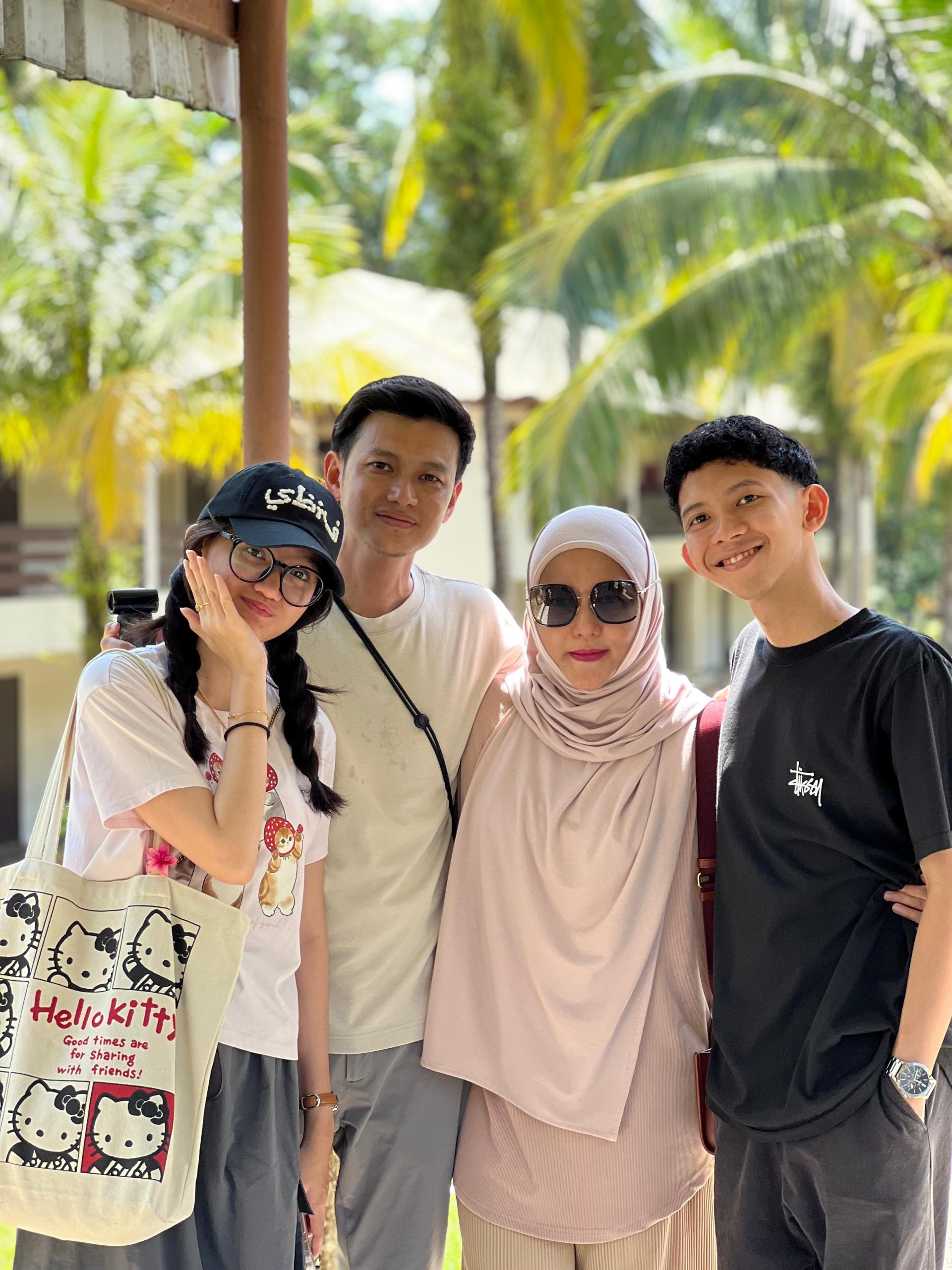
When Mahathir Abu Bakar was declared ‘clear’ of cancer, the word carried relief, certainty, and a sense of release for him.
But for his wife, Nurhafizawati Rahman, it meant something quieter — gratitude, vigilance, and a continuation of care that never really ended.
At 43, Nurhafizawati does not frame herself as a caregiver in any heroic sense. She speaks plainly, without embellishment.
Yet her days, especially during and after her husband’s illness, were shaped by attentiveness — to appointments, moods, recovery, and most consistently, to food.
Her role did not dramatically change after treatment ended. Instead, it softened into routine, becoming part of daily life.
In her words, love did not transform because of cancer; it simply revealed what was already there.
Below, Nurhafizawati reflects on what it meant to stand beside someone through illness — and what stayed with her even after the word ‘clear’ was spoken.
When your husband was declared ‘clear’, what did that word mean to you personally?
For me, it was a deep sense of gratitude. I was happy, of course, because the doctor said he was clear. It felt like a heavy weight was lifted. At the same time, it was not something I celebrated loudly. It was more a quiet relief, the kind you feel deep inside.
Your care for him continued in small, daily ways — especially through food. When did you start becoming so careful about what he ate?
It started immediately after we found out he was diagnosed with cancer. From that moment, I became more careful. Food was no longer just food. I paid attention to what he ate, what he should avoid, and how meals could support his recovery.
Did food ever feel like a responsibility — or even a source of anxiety — rather than just nourishment?
I wouldn’t say anxiety, but there was a lot of careful thinking. I had to be more mindful when choosing ingredients and preparing meals. It wasn’t stressful, but it required attention. I just wanted to make sure I was doing the right thing for his health.
Were you ever afraid that a small mistake could have consequences? How did you carry that fear?
This is a difficult question for me to answer, because I don’t feel like I went through that kind of fear. I didn’t experience it as worry or panic. I focused on being careful and doing my best with what I knew.
How did your role as a caregiver change after treatment ended, compared to during the illness itself?
Actually, it didn’t change much. The way I took care of him during treatment was the same after treatment ended. The concern and attention were still there. I just continued looking after him the way I always had.
People often check on the patient. Who checked on you during this period?
Our family and friends did. They were around, and they supported us in their own ways. That helped.
Was there a moment when you felt exhausted, even though the crisis was technically ‘over’?
No. I didn’t feel that way. I just stayed strong.
How did cancer reshape your understanding of love, partnership, or responsibility?
It didn’t really change it. The love was already there from the beginning. Cancer didn’t create it — it just became part of our journey.
What do you wish people understood about caregivers after a loved one is declared cancer-free?
Caregivers need a lot of patience. When you love someone, you want to take care of them properly until they are well again. That doesn’t stop just because treatment ends.
Looking back now, what part of that period stays with you the most — even today?
The moment when the doctor declared he had cancer. That fear stays with me — the fear that it might not be treatable. That was the hardest part.