KUCHING: Sarawak is stepping into the Age of Electricity, a crucial transition where grid capacity, storage technology, solar energy, and energy efficiency will be key determinants of the state’s competitiveness and future prosperity.
Premier Datuk Patinggi Tan Sri Abang Johari Tun Openg, said that Sarawak’s choices in its gas roadmap, clean energy strategy, hydrogen economy, grid and solar investments, as well as advances in microelectronics, did not happen by chance.
“They are deliberate responses to these global realities, so that our anak Sarawak will live under a roof that is not only prosperous, but secure, sustainable and respected by the world,” he said.
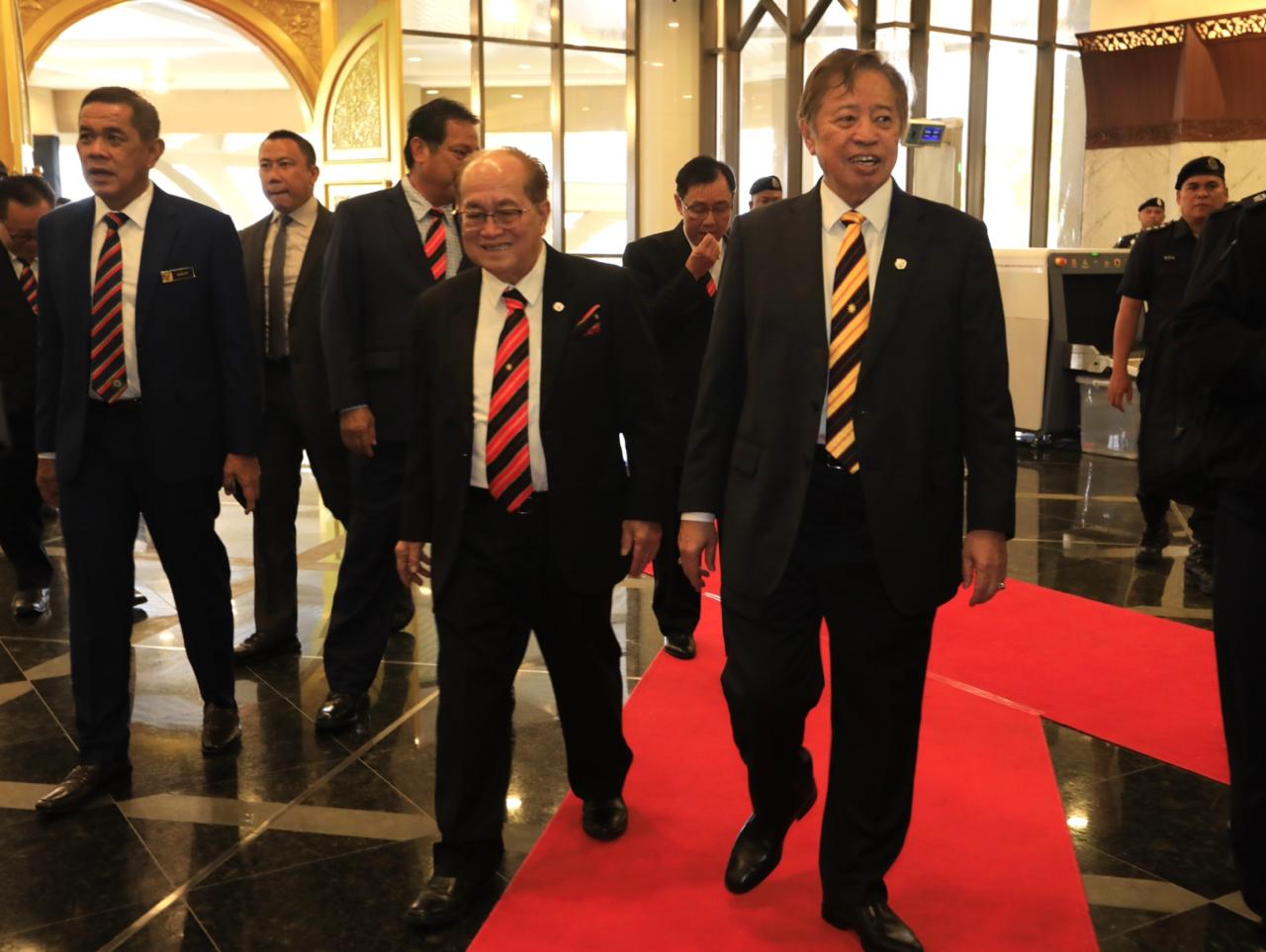
He said this during his ministerial winding-up speech at the Sarawak State Legislative Assembly (DUN) sitting here today.
He added that on the ground, Sarawak has already surpassed its 2030 renewable energy target in its generation mix, driven primarily by hydropower.
The state’s grid carbon emissions have also dropped significantly compared to a decade ago.
“In 2025, Sarawak Energy Berhad (SEB) also commissioned a series of major transmission projects, including the new Northern Grid link to Lawas and Sabah, strengthening reliability for our people and opening the door for cross-border power exports.
“At the same time, we have secured conditional approval from Singapore’s Energy Market Authority for the Sarawak–Singapore undersea interconnection – a key step towards the ASEAN Power Grid and our aspiration to be a green powerhouse for the region,” he said.
He said that energy will be a catalyst for the state and the industrial and transport sectors will undergo comprehensive decarbonisation.
“We will eliminate routine flaring by 2030, electrify operations and deploy carbon capture, utilisation and storage (CCUS) at scale within our main industrial hubs by 2035.
“Looking ahead, the scale of our energy transition is large, and so are the investments required. We will approach this with discipline, partnering with the private sector and international institutions to ensure that our projects are financially sound and socially meaningful,” said Abang Johari.