Economist says history shows technology creates more jobs than destroys
KUCHING: Artificial intelligence (AI) may disrupt jobs, but history suggests it is unlikely to eliminate work altogether.
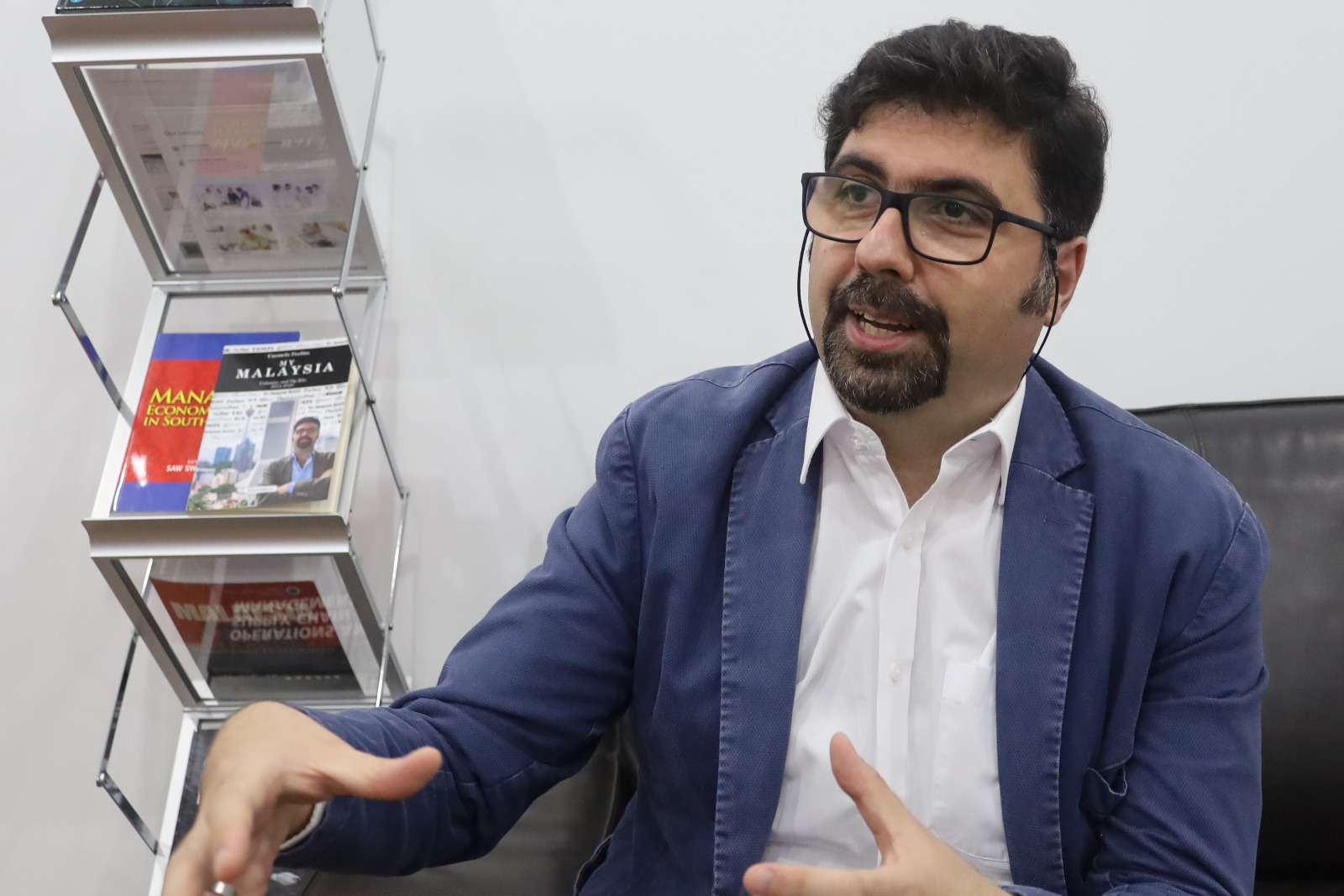
Center for Market Education CEO Carmelo Ferlito said concerns about AI mirror long-standing anxieties that have accompanied every major technological breakthrough.
“AI has taken centre stage as the latest technology seen as a threat to employment, with concerns ranging from automated writing tools to self-driving systems.
“The fear was that machines were no longer replacing only specific tasks, but entire professions,” said the economist.
He noted that, unlike earlier waves of innovation, many now believe jobs lost to AI may not return.
“While the concern was understandable, history and sound economic reasoning suggested the view was deeply misguided.”
Ferlito explained that productivity gains from technologies like AI often allow businesses to produce more with fewer inputs.
“At first glance, this appeared to threaten jobs because fewer people might be needed for a task.
“However, this was only part of the story. Higher productivity lowered the cost of goods and services, which could lead to lower prices or better quality.
“This would benefit consumers by raising their real purchasing power.”
He stressed that human demand is not fixed, and tends to expand alongside rising purchasing power.
“As purchasing power increased, people demanded more goods and services, including entirely new ones that did not previously exist.
“This created opportunities for entrepreneurs to develop new products, industries and forms of employment.”
As a result, labour displaced by automation does not simply disappear, but is redirected into new economic activities.
Ferlito said fears that technology destroys jobs faster than it creates them have surfaced repeatedly throughout history.
“In the early 19th century, English textile workers known as Luddites smashed mechanised looms out of fear that automation would make their skills obsolete.
“Similar predictions of permanent joblessness later followed the spread of industrial machinery, electricity and computers.
“Yet, while some occupations declined or disappeared, overall employment continued to grow and living standards rose sharply.”
He added that the Austrian school of economics offers a useful lens to understand this pattern.
“From that perspective, the economy was not a static system with a fixed number of jobs to be distributed, but an evolving process driven by human creativity, entrepreneurship and the constant discovery of new ways to satisfy human wants.”
Pointing to agriculture, he noted that a large share of the workforce was once employed in farming.
“Today, mechanisation and improved techniques meant only a small fraction of workers was needed to produce vastly more food.”
If technological unemployment were permanent, he said, such large-scale displacement would have led to widespread joblessness.
“Instead, workers moved into manufacturing, and later into services, technology, healthcare, education and other fields earlier generations could scarcely have imagined.”
Ferlito said the same dynamics are likely to apply to AI.
“While AI could automate certain tasks, especially routine or repetitive ones, it could also create new roles that used human skills in different ways.
“In many cases, AI would complement human labour rather than replace it outright.
“This would increase the productivity and value of workers who could use these tools effectively.”
He likened AI’s impact to earlier tools such as spreadsheets, which reshaped rather than eliminated professions.
He also highlighted the role of price signals in guiding the transition.
“When AI reduced the need for labour in a particular sector, wages in that sector would tend to fall relative to others.
“This sent a signal to workers and employers, encouraging labour to move towards areas where it was more highly valued.
“At the same time, lower production costs in AI-enhanced industries would reduce prices, stimulate demand and free up income to be spent elsewhere.”
He said this creates a continuous adjustment process in which labour shifts towards more productive uses.
However, Ferlito cautioned that the transition may not be smooth.
“Transitions could be difficult, especially for workers whose skills were closely tied to tasks that became automated.
“The adjustment process would take time, and not everyone would benefit equally or immediately.
“Still, this was a challenge of adaptation and policy, not evidence of an inevitable march towards mass unemployment.”
He emphasised that AI does not operate independently, but is shaped by market forces and human decisions.
“If an AI application did not create value for consumers, it would not be widely adopted.
“Conversely, when it did create value, it tended to expand economic activity rather than contract it.”
He said new industries would emerge, existing ones would expand, and demand for complementary goods and services would rise.
“The deeper mistake in the technological unemployment narrative was the assumption that there was a fixed amount of work to be done.
“In reality, work was defined by human wants, which evolved and expanded over time.
“As long as people continued to want better, cheaper and more diverse goods and services, there would be opportunities for human effort to be applied productively.”
Ferlito said AI will undoubtedly reshape the nature of work.
“Some jobs would disappear, others would be transformed and entirely new ones would emerge.
“However, there is little reason to believe that AI would usher in an era of permanent mass unemployment.
“The more likely future was not one without work, but one in which human labour continued to adapt, specialise and create value in ways yet to be fully imagined.”