KUCHING: Artificial intelligence (AI) is set to revolutionise Sarawak’s economy, public services, and workforce productivity, paving the way for the state’s ambition to achieve developed-state status by 2030.
Professor Patrick Then, Chief Executive Officer of the Sarawak AI Centre, said that AI can significantly boost workforce efficiency without replacing human employees.
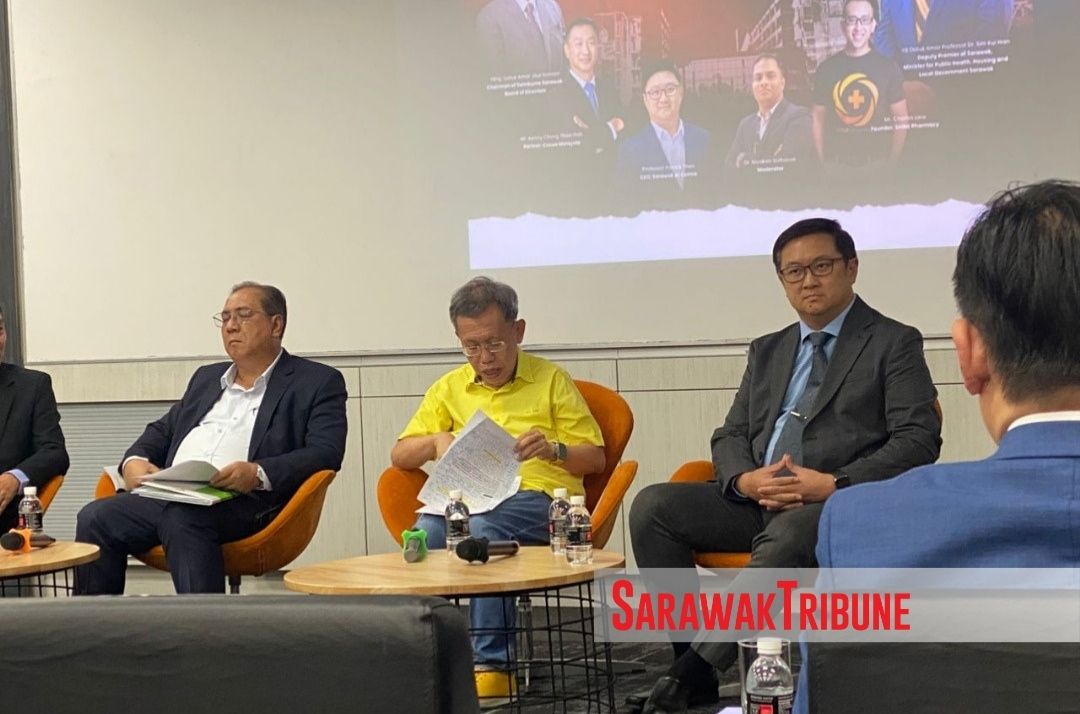
“One AI system can perform tasks equivalent to three human workers – not to replace them, but to increase overall capacity,” he said during the SwinTalk session themed ‘AI-Driven Futures: Reimagining Budget 2026 for a Smarter Nation’ held at Swinburne Sarawak Campus today.
He highlighted the practical impact of AI across both government and business operations.
Tasks that previously took two weeks, such as compiling reports, can now be completed in minutes.
“Before, you would spend two weeks compiling data for a report. Now, the same work can be done in seconds or minutes. The potential to multiply productivity is enormous,” Patrick explained.
Patrick also demonstrated how AI can streamline public services.
Platforms such as DeepSAR, named by the Premier, can automatically fill and submit forms for eligible applicants.
“For example, if I want to apply for the Sarawak Basic Needs Contribution (SKAS) 2.0, I just tell DeepSAR, ‘Check my eligibility and fill in the form.’ It’s done. This is how AI can speed up processes for every public user,” he said.
Businesses, too, can benefit by using AI for scheduling, budgeting, and operational planning.
Addressing the digital divide, Patrick acknowledged that AI could inadvertently widen gaps within urban areas and between urban and non-urban regions.
“Even within urban settings, AI can widen the gap if not managed properly. Closing this divide is urgent but requires effective change management,” he said, noting that senior decision-makers often underestimate the costs and infrastructure required for AI projects.
To address these challenges, the Sarawak AI Centre has developed a strategic roadmap, which will be unveiled in the first quarter of next year.
“This roadmap will guide how we coordinate AI initiatives with leadership and ensure equitable access across the state,” Patrick said.
Patrick emphasised that integrating AI across public services and industry is crucial for achieving Sarawak’s Post COVID-19 Development Strategy (PCDS) 2030 ambitions.
“AI is not just a tool; it is a multiplier for productivity, efficiency, and inclusive growth,” he said, underscoring its potential to support the state’s economic expansion, performance monitoring, and public service delivery.