When Hari Raya Lights the Sky
This Aidilfitri, the nights in Kuching feel louder, brighter, and more alive than they have in years, as bursts of fireworks light up the sky, bringing families, neighbours, and fleeting moments of joy into shared view.
“The sharp cracks of fireworks do not come from one place, but many, echoing from kampung lanes and housing estates alike, each one answered by another somewhere in the distance.”
IN Kuching — particularly in residential areas like Petra Jaya — Hari Raya does not end at the doorstep. It continues in the sky.
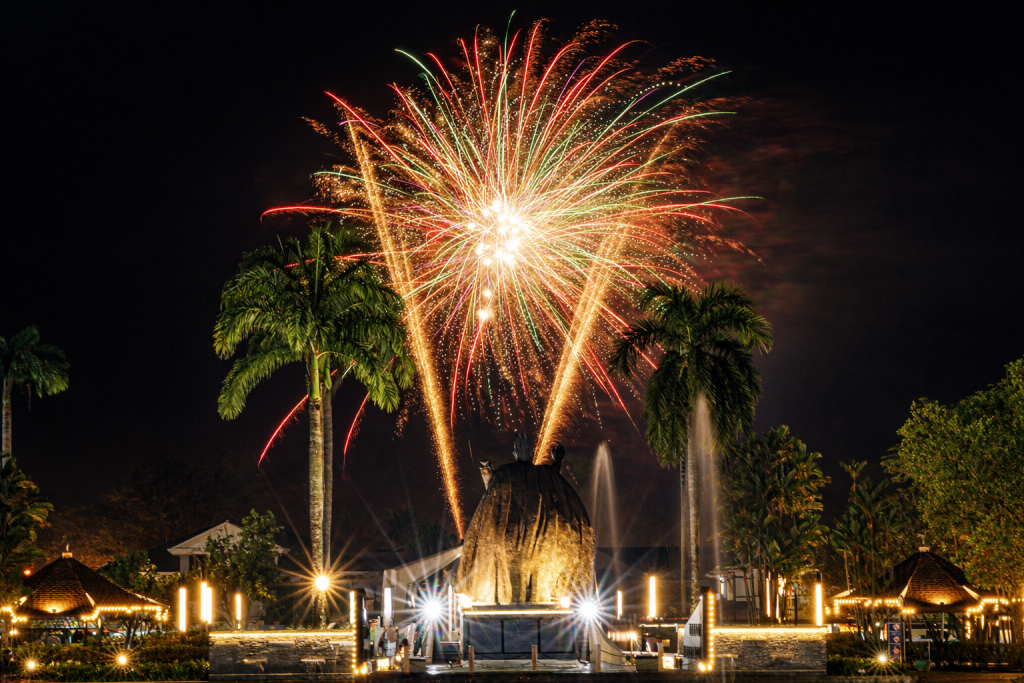
Long after the last plates of rendang are cleared and the final guests step out into the dark, the sky reclaims the celebration — bursting into streaks of gold, green, and red that bloom briefly against the darkness, colouring the night across neighbourhoods.
The sharp cracks of fireworks do not come from one place, but many, echoing from kampung lanes and housing estates alike, each one answered by another somewhere in the distance.
This year, the difference is hard to ignore.
From where I stand — moving between neighbourhoods over the first few nights of Raya — the skies feel brighter this year, almost restless with colour.
Not just with the soft glow of sparklers in children’s hands, but with the kind of fireworks that rise, bloom in colour, and briefly take over the night, drawing eyes upward and momentarily stilling conversations.
At one point, I found myself so taken in by the bursts of colour overhead — fireworks answering one another across the neighbourhood — that I did not even manage to take a photograph, too mesmerised to look away.
For a few seconds at a time, everything else gives way.
And then, just as quickly, the moment passes — only to begin again somewhere else.
For many here, this is what Raya feels like this year — not just in the daytime rituals of forgiveness and feasting, but in the way the night refuses to fall silent.
Where the children gather
Children are often the first to claim the space.
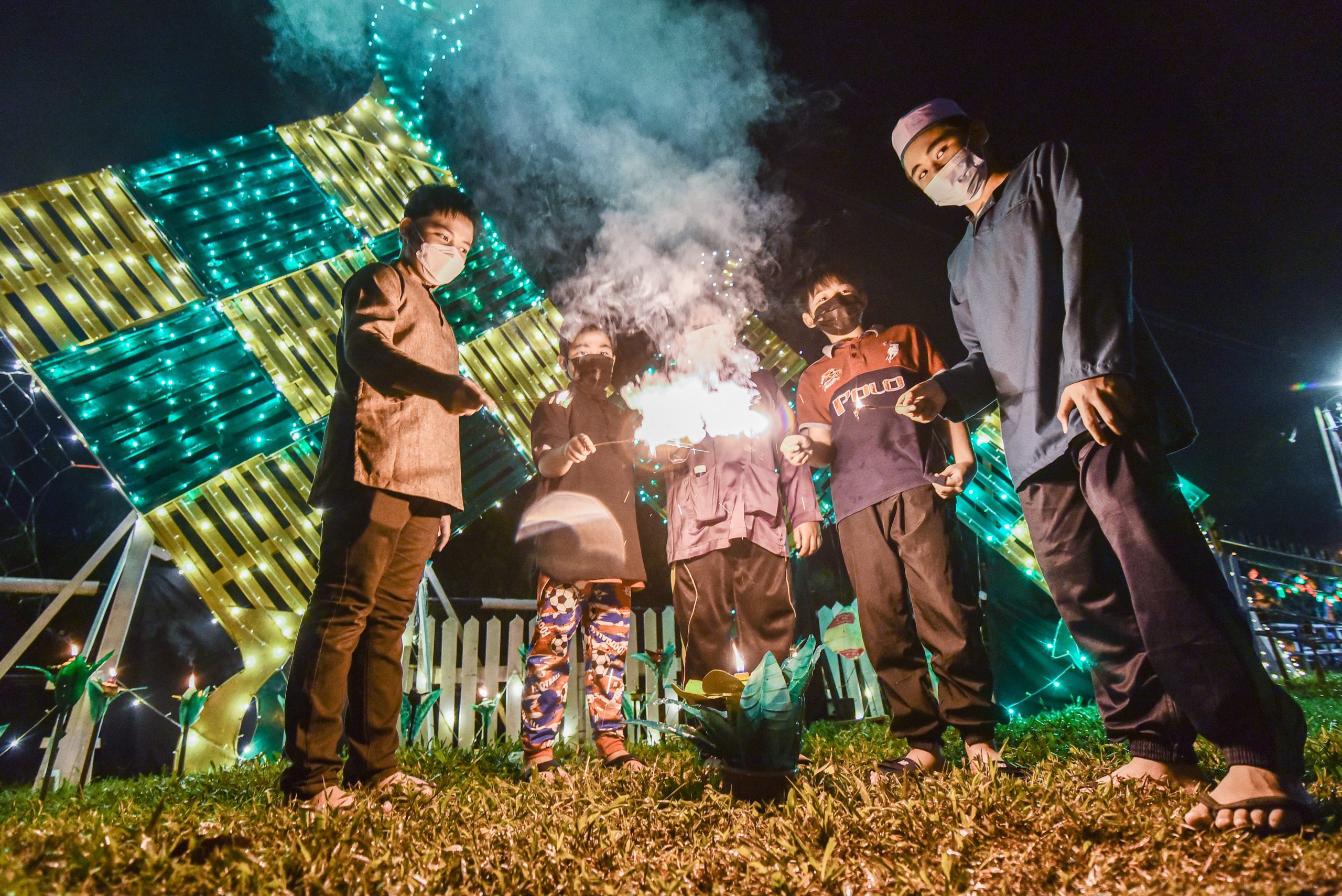
In the open compounds of kampung homes and the small front yards of terrace houses, they gather in loose circles, clutching sparklers with careful excitement. Their laughter rises above the occasional caution from parents standing nearby, watching closely as sparks fall and fade into the ground.
“It’s fun because I can play with everyone,” said my seven-year-old son, his attention divided between answering and eagerly waiting for his turn to light the next stick.
But even as the children remain grounded — their world contained within the reach of a sparkler — their attention drifts upward each time the sky opens into colour above them. Conversations pause. Heads tilt back. For a moment, everything else fades into the background.
Then the moment passes, and the laughter resumes.
There is a rhythm to it. Someone lights a fuse. A pause. Then a sharp pop that sends a ripple of cheers through the group. Moments later, another sound answers from across the road, or from the next lane over, as if the entire neighbourhood is loosely keeping time with one another.
A shift in how Raya feels
For parents, the scene is both familiar and slightly more layered.
Many remember their own childhoods, when fireworks were approached with a different kind of thrill — louder, less regulated, sometimes riskier.
“They used to be much louder — the kind that would make you jump. Now it’s more about the beauty,” one father remarked with a small laugh, recalling a conversation with my husband in our residential lane, arms folded as he watched his children play.
He gestures briefly towards the sky, where another burst of colour spreads before fading into the dark.
It is perhaps this shift — from sound to spectacle — that defines the nights this year. The fireworks are not just heard, but watched. Not just experienced in passing, but anticipated.
Phones are raised. Small countdowns begin. Someone shouts, “Jap, jap (Wait, wait)!” just before the next one goes off.
And when it does, there is that brief, shared pause again — a collective stillness under a sky that, for a few seconds, belongs to everyone.
Kuching in shared light
In many ways, the City of Cats provides the perfect setting for this.
Unlike more densely packed urban centres, much of the area still holds onto a sense of openness. Kampung houses with wide compounds sit alongside newer residential developments, creating pockets of space where families can gather, watching both the ground and the sky light up in colour without feeling confined.

It is in these spaces that the celebrations stretch outwards — and upwards.
“You could hear it from everywhere. When one place started, others would follow,” said a neighbour who has lived in this area for more than two decades.
That sense of fireworks answering one another feels especially strong this year.
What might begin as a single burst quickly turns into a chain reaction, with different parts of the neighbourhood joining in, almost instinctively.
Yet beneath the light and laughter, there is also an awareness of the risks that come with it.
Parents remain watchful, stepping in when needed, offering quiet reminders to keep a safe distance. The joy is allowed, but not without limits. It is a balance that most seem to understand — a shared effort to keep the celebration from tipping too far.
Still, the nights stretch a little longer than usual.
Bedtimes are pushed back. Plastic chairs appear by gates and along driveways. Some join in, others simply sit and watch, letting the moments unfold without needing to be part of them directly.
There is comfort in that, too.
A rhythm that gradually fades
As the days of Raya move forward, a pattern begins to emerge.
The first few nights are the liveliest — the sky at its busiest, the sounds overlapping with barely a pause in between. Families are still arriving, reunions still fresh, energy still high.
Then, gradually, the bursts become less frequent.
The gaps between each crack and shimmer grow wider. The children begin to drift indoors earlier. The chairs outside are left empty a little sooner than before.
The nights begin, slowly, to quieten.
But not before leaving an impression.
Because for a while, at least, Petra Jaya has felt more alive after dark than it has in years — its skies brighter, its sounds fuller, its spaces more shared.
And perhaps that is what lingers most.
Not just the fireworks themselves, but what they momentarily reveal — families stepping out of their routines, neighbours acknowledging one another in passing, children claiming small pockets of freedom under watchful eyes.
Moments that do not last long, but matter anyway.
By the time the final nights of Aidilfitri arrive, the sky begins to settle. The bursts of light grow fewer, the echoes softer, until eventually, the darkness returns in full.
But for a while, in Petra Jaya, the nights refused to dim.
And in that refusal, they carried something more than celebration — a reminder that even the briefest flashes of light can make a place feel unmistakably alive.