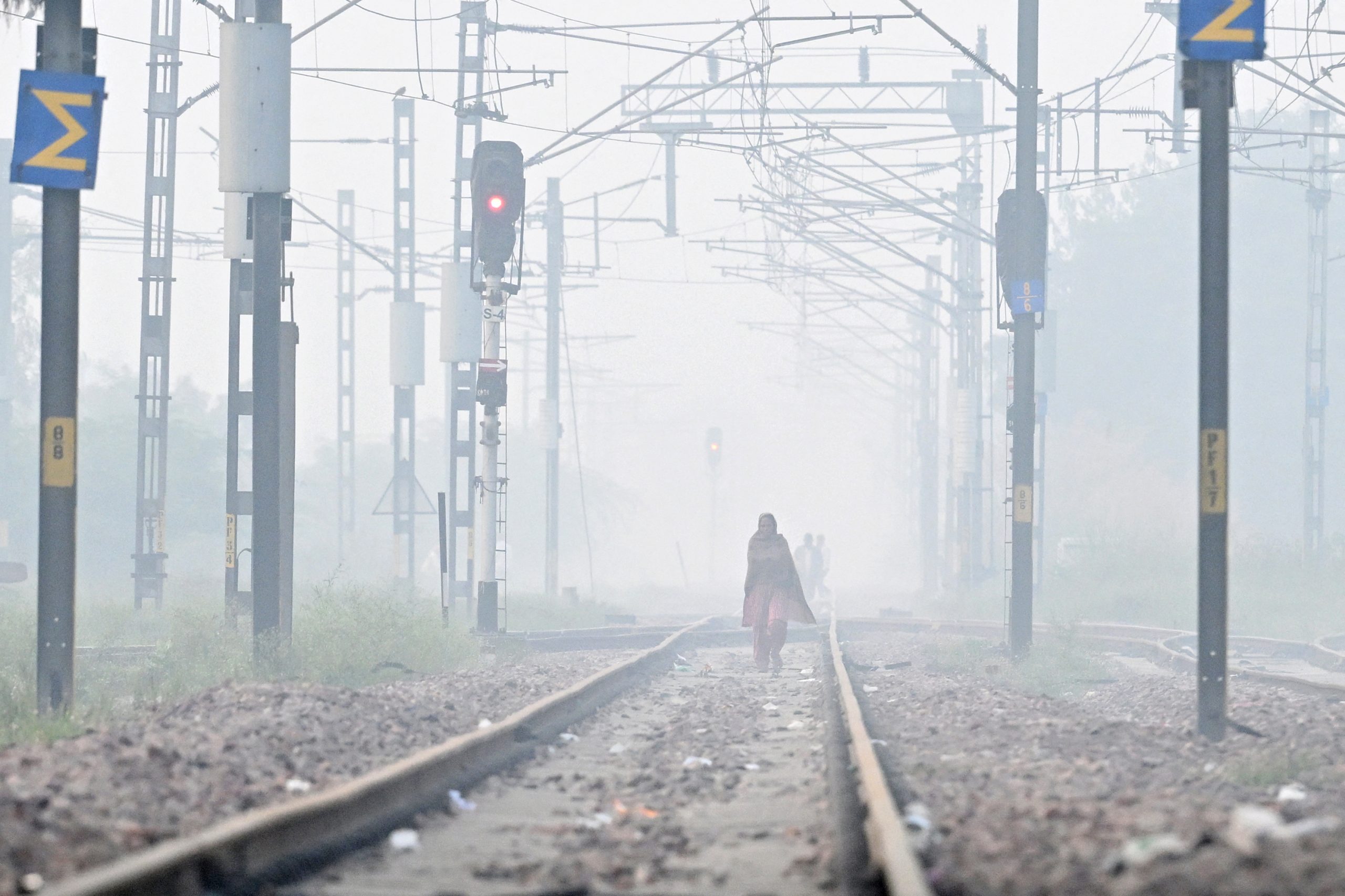
NEW DELHI: India’s air pollution monitoring stations were overwhelmed by toxic smog during Diwali celebrations, with pollution levels exceeding their measurement capacity and reaching the equivalent of 66 times the World Health Organisation’s (WHO) recommended daily limit, regulators said.

The disclosure came amid opposition allegations that authorities deliberately allowed gaps in official readings for several hours overnight from Sunday to Monday, when fireworks triggered a sharp surge in pollution.
New Delhi, one of the world’s most polluted capitals, regularly suffers from winter smog caused by vehicle emissions, agricultural fires and industrial activity.
Opposition politicians accused the authorities of concealing the severity of the pollution after monitoring stations stopped recording data during the worst period.
However, the Central Pollution Control Board (CPCB) denied deliberately under-reporting pollution, attributing the gaps to limitations in its monitoring equipment.
The board said its particulate matter analysers, introduced in 2015, were calibrated to measure concentrations of up to 1,000 microgrammes per cubic metre. Under the automated validation system, hourly readings exceeding the calibrated range were excluded from official calculations.
PM2.5, fine particles capable of penetrating deep into the lungs, are associated with serious health risks, including cancer. The WHO recommends a daily maximum of 15 microgrammes per cubic metre.
Monitoring organisation IQAir, citing city government data, recorded PM2.5 concentrations of 879 microgrammes per cubic metre in Mandir Marg on Monday, more than 58 times the WHO limit.
Congress lawmakers warned that missing data did not mean pollution had disappeared, highlighting the continuing threat to residents’ health and life expectancy. – AFP