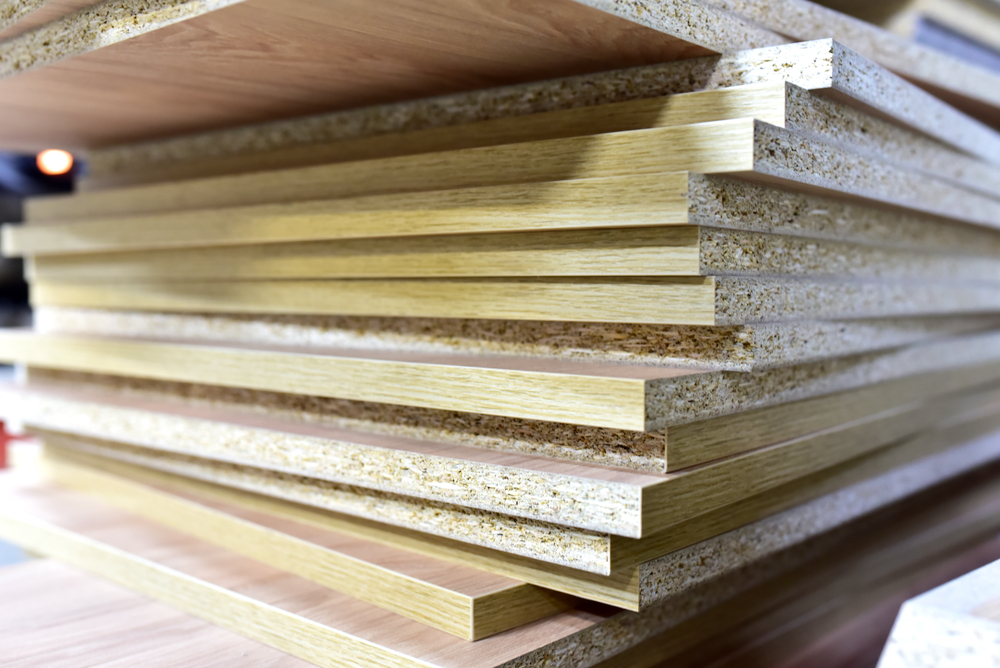
KUCHING: Vietnam’s Industry and Trade Ministry has imposed provisional anti-dumping duties on certain fibreboard products originating from China. The duty rate ranges from 2.59 per cent to 39.88 per cent.
The move is based on a comprehensive investigation and assessment conducted by the relevant Vietnamese authorities in accordance with the Foreign Trade Management Law on whether there is dumping of imported products originating in China and Thailand.
In the preliminary investigation, the ministry pointed out that there is dumping of fibreboard products from China and Thailand, which poses a significant threat of substantial damage to Vietnam’s local fibreboard industry.
It is particularly noteworthy that since the launch of the anti-dumping probe, the import volume of related products involved in the case has not decreased but instead increased by more than 52 per cent over the same period in 2024, further exacerbating the pressure on the domestic industry.
In the first half of 2025 (1H2025), China’s fibreboard exports to Vietnam soared by 145 per cent to 363,000 tonnes, accounting for 21 per cent of China’s total exports of 1.718 million tonnes, according to China Customs data. Vietnam is China’s top export destination for fibreboard.
The ministry said that the temporary anti-dumping measures are aimed at curbing the rapid increase in dumped imports in the short term and avoiding irreparable damage to the country’s manufacturing industry.
As the anti-dumping duties imposed are temporary, the Vietnamese authorities will continue to communicate with various stakeholders to further collect and verify information to make a final decision on the basis of a comprehensive and objective assessment, reported the International Tropical Timber Organisation (ITTO) Tropical Timber Market Report (September 16-30, 2025).
Meanwhile, in 1H2025, China cut its imports of wooden furniture from Vietnam by 32 per cent to US$20 million compared with the same period in 2024, as the country’s total imports slipped by eight per cent to US$295 million.
“Italy and Germany were the main suppliers, but the value of China’s wooden furniture imports from the two countries dropped by 15 per cent and 4 per cent respectively (to US$133 million and US$43 million), accounting for 60 per cent of the national total. The drop directly resulted in the decrease of the national total,” said the ITTO report.
During the same period, China’s wooden furniture imports from Indonesia fell 13 per cent to US$5.5 million, while imports from France dropped 10 per cent to US$7.9 million.
In contrast, China’s imports from Poland, Thailand, Slovakia, and Romania grew by 24 per cent, 13 per cent, 63 per cent, and 25 per cent (to US$17 million, US$10 million, US$7 million, and US$5.6 million, respectively). The growth was spurred by the China-Europe freight train services.
On the other hand, China also recorded a drop in wooden furniture exports by nine per cent to US$11.26 billion in 1H2025 from a year ago. The United States, the largest buyer, paid about US$2.86 million for 25 per cent of China’s total exports, but this was down 18 per cent during the period under review.
China’s wood furniture is well sought after worldwide as it is exported to more than 200 countries, with shipments to the top 10 destination countries accounting for 65 per cent of total exports in 1H2025.
The United Kingdom was the second-largest buyer, absorbing US$792 million worth of products (+7 per cent), followed by Australia (US$705 million), Japan (US$640 million), South Korea (US$432 million), and Canada (US$423 million). Malaysia, which was among the top 10 buyers, imported US$343 million in 1H2025.