\KUCHING: The Sarawak Archives Building Project must prioritise sustainability by incorporating green elements into both its architectural design and surrounding environment.
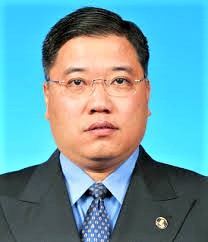
Premier Datuk Patinggi Tan Sri Abang Johari Tun Openg, said approaches that can be implemented include a rainwater harvesting system and landscape designs to retain water and reduce temperature, in line with the Sarawak Government’s commitment to sustainable development.
“The design changes made during the COVID-19 pandemic led to some original elements being adapted according to the needs of that time.
“We can adjust it in terms of the compound and rainwater harvesting system, which can help retain water and reduce heat — the green features are still there,” he said after a working visit to the Archive Building Project near Sarawak State Library (Pustaka) here on Wednesday.
The Premier’s working visit aimed to provide a comprehensive update on the progress and current status of the building project from the Sarawak Public Works Department (PWD) along with the project’s consultants and contractors.
He was also given a comprehensive briefing on the construction timeline, technologies used, implementation challenges, and the contributions of agencies and stakeholders involved in the project.
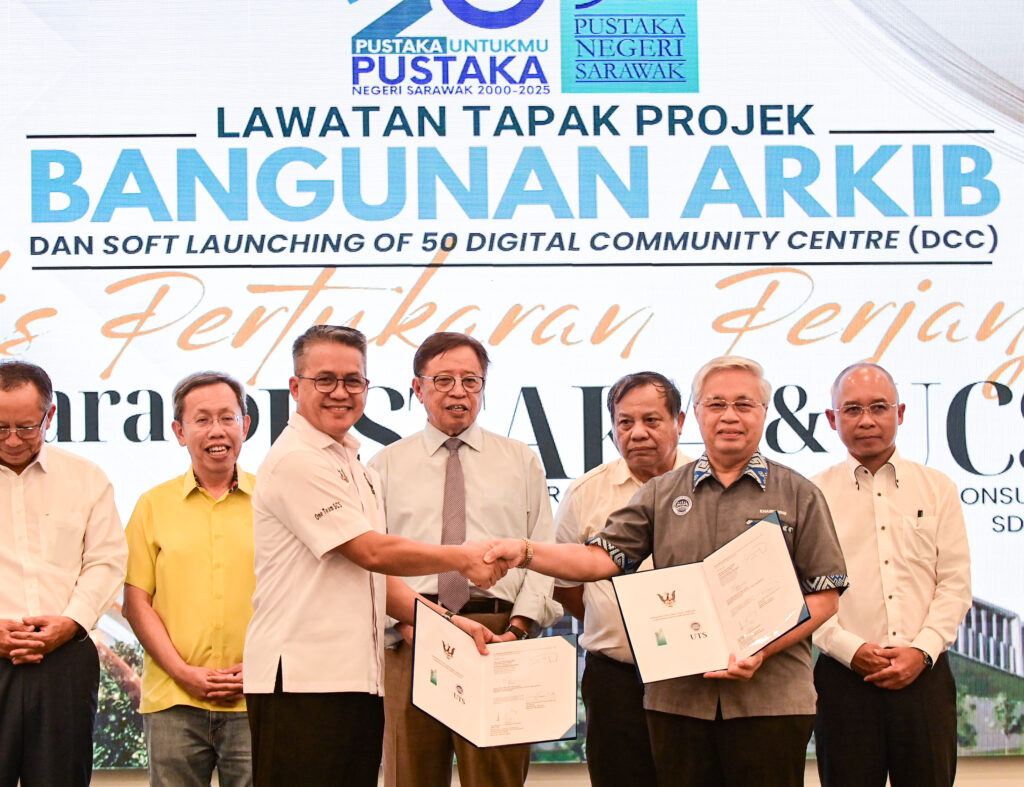
vice chancellor Prof Datuk Dr Khairuddin Ab. Hamid (second right) during the archive building project site and 50 Digital Community Centre soft launching. Photo: Mohd Alif Noni

The Sarawak State Archives Building Project is being developed on a 17.6-acre site next to the Sarawak State Library, with a total gross floor area of 25,476 square metres and expected to be completed on July, 2026.
It is designed as a modern two-and-a-half-storey facility that will serve as the official repository for the state government’s important documents and records, including archival materials requiring strict temperature and humidity control.
A key feature of the project is the implementation of a 10,000-square-metre Automated Storage and Retrieval System (ASRS) — an automated system that enables more efficient and secure storage and retrieval of archival materials.
The ASRS technology is expected to reduce the risk of physical damage to documents, ease access, save storage space, and improve workflow automation.
Following the work visit, Abang Johari also witnessed the exchange of Memorandums of Agreement (MOAs) between Knowledge Research Group (KRG) and Universiti Teknologi Sarawak (UTS), as well as between Pustaka and UCTS Consultancy Services Sdn. Bhd.
The event also included the presentation of 12 Librarian in Every Home (LieH) Training Kits as a symbolic soft launch of 50 Digital Community Centres (DCCs).