SARAWAK’S renewable ambitions are no longer just local headlines.
They are drawing attention from major financiers watching how the state turns hydropower and hydrogen into long-term investment stories.
Among them is Maybank, which sees Sarawak as one of ASEAN’s most ready and investable regions in the net-zero race.
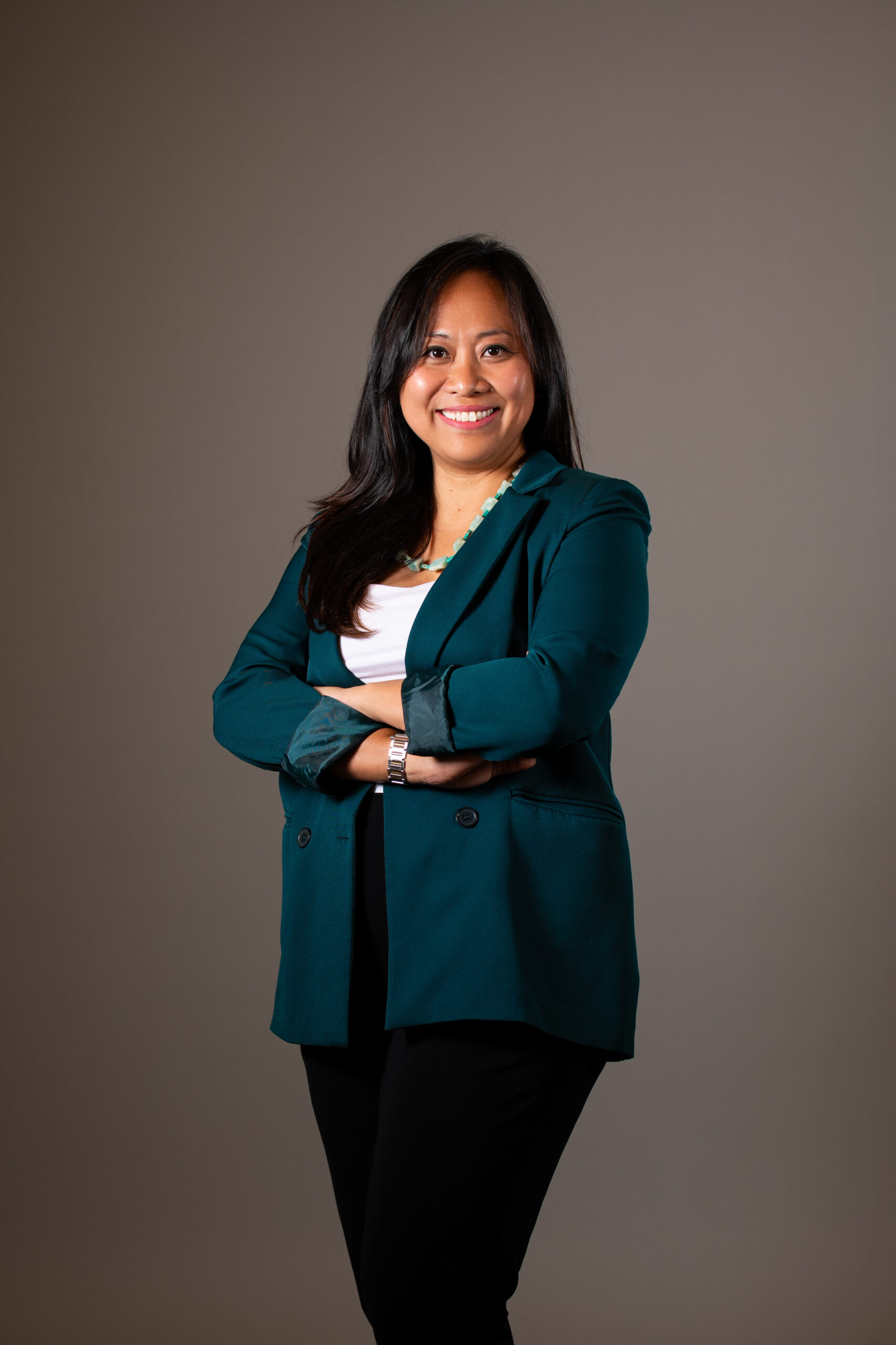
Sarawak Tribune spoke with Maybank’s Group Global Banking Head of ESG Strategy and Solutions, Ranita Abdullah, on what drives that confidence and what investors look for in the region’s emerging clean-energy economy
SARAWAK TRIBUNE: Sarawak has set its target to reach net zero by 2050. How realistic is this goal?
RANITA: In Malaysia, Sarawak is the strongest overall in terms of readiness to reach net zero by 2050.
It is underpinned by real assets such as hydropower, gas and forest cover, and guided by consistent policies that give investors’ confidence. Sarawak’s progress is not built on slogans but on long-term planning.
The state has invested in hydropower for more than two decades, developed its own energy transition policy, and introduced safeguards through biodiversity and greenhouse-gas frameworks.
What makes this credible is the balance between ambition and practicality.
The state is not only reducing emissions but also looking outward, complementing the existing West Kalimantan link and building interconnection with Sabah, Brunei and the Philippines as part of the ASEAN Power Grid.
That kind of regional integration shows long-term commitment.
Hydrogen and CCUS technologies are still new. How can companies make these projects more bankable?
The rule is simple: green does not trump credit. A project can be sustainable, but if it is not financially sound, it will not attract financing.
Banks still assess three fundamental risks, pre-completion, post-completion and financial.
For new sectors such as hydrogen or carbon capture utilisation and storage (CCUS), construction risks are the single largest pre-completion risk.
You can have a good idea on paper, but delays or cost overruns can affect repayment.
That is why we look for strong contractors, fixed-price contracts and credible performance guarantees.
Hydrogen projects are also exposed to what we call projecton-project risk. If one component, such as the port or storage facility, lags behind, the entire project suffers.
So we prefer integrated project structures where ideally, power generation, electrolysis and export, moves in sync.
The Demak Laut Industrial Park project between SEDC Energy and Petronas’ Lestari H2 Gas subsidiary is a good example.
It aims to build Malaysia’s first large-scale electrolyser with a capacity of 500 megawatts within five years.
When you have clear planning and alignment across agencies, it gives lenders confidence.

Transition finance is still developing in ASEAN. What needs to change before the market can grow?
In 2023, fossil fuels still made up about three-quarters of ASEAN’s electricity, and coal nearly half. So the transition cannot happen overnight.
Transition finance is critical, but right now it is constrained by inconsistent definitions.
What one country calls a transition activity may not qualify elsewhere, and that makes crossborder funding difficult.
Blended finance can help bridge that gap.
Development banks can take early-stage risk through credit guarantees before commercial lenders step in.
This was how solar became bankable globally.
At Maybank, we launched our Transition Finance Framework in 2023 to fund hard-to-abate sectors like cement, aluminium and steel, and have set clear Net Zero pathways for industries such as power, palm oil, steel, aluminium, automotive, and commercial real estate.
We have also set four core ESG commitments: to deploy RM80 billion in sustainable finance by 2025 (which we already surpassed), uplift two million ASEAN households, achieve net-zero equivalence by 2050 and dedicate one million sustainability hours each year.
As of mid-2025, we have already mobilised close to RM140 billion, showing that capital is available when projects are ready and well-structured.
From an investor’s perspective, what are the main concerns about Sarawak’s energy projects?
Investors first look for policy stability.
They want to know that commitments made today will be honoured for decades.
For Sarawak, that means translating policies into enforceable regulations that align with Malaysia’s national taxonomy.
The second is revenue certainty. Investors will ask who the offtakers are, at what price and for how long. Long-term purchase agreements with stable or in the case of hydrogen, indexed pricing are vital.
They also look for clear frameworks around new markets such as CCUS.
For example, who pays for the stored carbon, how liabilities are managed, particularly if regulation changes, operations are halted or after site closure.
Beyond that, investors now expect projects to respect environmental and social standards.
They want assurance that biodiversity and indigenous rights are protected, often through mechanisms like Free, Prior and Informed Consent.
When a state like Sarawak can show that level of governance and transparency, it immediately boosts investor confidence.
It signals maturity
What kind of financing tools can accelerate Sarawak’s cleanenergy development?
Malaysia’s Islamic capital market offers a deep pool of funding, which is an advantage.
Sukuk and sustainability-linked loans can be structured for renewable projects, providing longer tenures and fixed rates.
Maybank has supported a cumulative total Sukuk programme of RM41.5 billion for, among others, Sarawak Energy, Sarawak Hydro and Petros, and the next step is to align the financing with sustainability principles.
We are also seeing new tools emerging globally, such as Carbon Contracts for Difference, which can stabilise the price of hydrogen or CCUS revenue, and Transition Credits that can create additional revenue for verified emission reductions.
When blended finance is combined with these mechanisms, backed by strong development partners, it becomes possible to unlock much larger flows of capital for Sarawak’s projects.
What should Sarawak prioritise as it aims to become a regional renewable-energy hub?
I would highlight five priorities.
First, institutionalise your policies and continuous harmonisation between state and federal levels.
Predictability builds investor confidence. Second, strengthen grid connectivity and infrastructure.
The Sabah Southern Link and the West Kalimantan to Sarawak interconnection are vital for regional exports.
Third, develop hydrogen-ready infrastructure such as electrolysers, hydrogen liquefaction or ammoniaconversion plants, and export terminals in Bintulu.
Fourth, scale up blended finance and explore carbon and blue credit markets to support projects that are still in early development.
And finally, build human capital.
The energy transition needs engineers, technicians and specialists. Sarawak’s focus on green-collar education and university partnerships is a strong foundation. If these five elements move together, Sarawak can lead not just Malaysia but the wider region.
How is Maybank supporting smaller businesses in this transition?
SMEs are the backbone of every supply chain, and their inclusion is vital for a just transition.
Many of them are part of the renewableenergy ecosystem such as construction, logistics and services, but they often struggle to access affordable finance because ESG feels too technical.
Maybank participates in national schemes like the Low Carbon Transition Facility and High Tech and Green Facility, which offer lowinterest loans with government guarantees. To help SMEs prepare, we created the myimpact SME. It helps businesses measure their carbon footprint, assess ESG readiness and get advisory support.
We are also introducing SustainabilityLinked Loans for SMEs, following a successful pilot in Singapore. Our goal is to connect smaller firms to larger energy projects so the entire ecosystem benefits. When SMEs succeed, Sarawak’s transition succeeds withthem.
What is next for Maybank in Sarawak?
We are hungry.
We want to finance every layer of the economy, from the hydrogen plant owner to the component supplier.
Maybank already has a dedicated client coverage team in Kuching and a sustainable finance and decarbonisation team in Kuala Lumpur.
Together, we can deliver tailored advisory and financing solutions for Sarawak’s green economy.
Looking ahead, we believe Sarawak should consider creating an integrated Sustainable Finance Framework that aligns its policies with investor expectations.
If the state does this, it could become the first state in Malaysia to have a unified sustainable finance plan. We want to be Sarawak’s transition partner of choice as it realises its net-zero goals. With the right partnerships, it can truly become the battery of ASEAN.