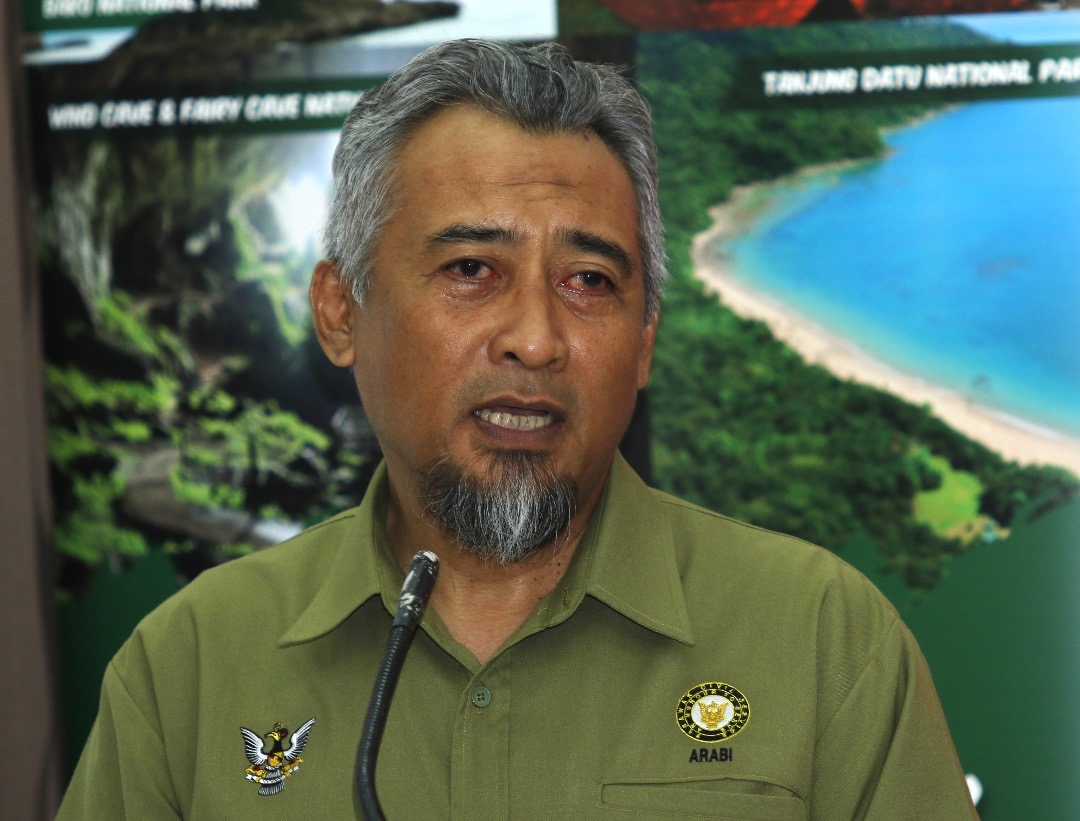
KUCHING: The outcome of Bako National Park’s nomination for ASEAN Heritage Park (AHP) status is expected to be revealed in September.
According to Sarawak Forestry Corporation (SFC) general manager Abang Arabi Abang Aimran, if the nomination is approved, the official handover ceremony will be held in Vietnam this November.
“The decision will involve two national parks — Bako National Park and Lambir National Park in Miri,” he told reporters after the launch of the Bako Research Station today.
He said the recognition would not only strengthen Bako’s status as a key conservation area in the region but also highlight its importance in terms of geology, natural heritage, and sustainable development in Sarawak.
Regarding the new research station, Abang Arabi said it would serve as a hands-on training and nature-based learning hub for students and young researchers.
“They won’t just read from books or observe specimens in labs — they’ll have the chance to track wildlife, assess forest structure and composition, conduct biodiversity research and apply scientific methods directly in the field,” he said.
“For example, students majoring in botany, zoology, or ecology can now carry out fieldwork systematically and safely, without the need to move between sites or rent external facilities — ultimately saving both time and cost.”
One of the main advantages of the station, Abang Arabi added, was its capacity to support long-term biodiversity research.
“With permanent facilities in place, researchers can set up fixed plots to monitor tree growth, species distribution changes or the impacts of climate change.
“Consistent data can be collected over time, making the findings more reliable and impactful for conservation purposes,” he said.
The research station is also equipped with facilities such as a research laboratory, field equipment storage and spaces for teaching and briefings.
He said various courses and training could be conducted on-site, including techniques for insect and bird sampling, studies on mammals and herpetofauna, as well as the use of camera traps and field sensors — with direct access to real-time data.