Managing a complex automotive relationship
MALAYSIA’S automotive industry is entering a new phase of growth shaped by electric vehicles, battery technology and regional supply chains.
At the centre of this shift is China, now a dominant player in battery electric vehicles and a major supplier of battery materials, components and related technologies.
For Malaysian automotive firms, the issue is no longer whether to work with China but how to manage this relationship strategically.
The growing relationship between the automotive industries of China and Malaysia shows that firms cannot rely on simple choices such as “friend or foe” or “open or closed”.
Instead, they must respond to strategic interdependence by deciding when to derisk and when, if necessary, to decouple.
This distinction is important because Malaysian firms operating in Southeast Asia must balance the benefits of Chinese technology with the risks linked to competition, market access and geopolitical pressure.
Why interdependence matters
Interdependence between Malaysia and China is both necessary and complex. China brings advanced battery electric vehicle technology, production scale and access to key components.
Malaysia, meanwhile, offers manufacturing capability, assembly experience and a strategic location within ASEAN.
These roles create opportunities for both countries. Chinese technology can accelerate product development while Malaysian manufacturing capabilities can support new pathways for industrial growth.
However, interdependence also creates exposure. When firms depend heavily on one source of technology, materials or components, they become more vulnerable to disruption.
For example, Malaysian-assembled vehicles using Chinese batteries could face scrutiny in international markets if they are perceived to benefit from unfair subsidies.
Similar concerns have already emerged in Europe, where investigations into Chinese battery electric vehicles have raised questions about subsidies, competition and market fairness.
Derisking without disconnecting
This is where derisking becomes important. Derisking does not mean ending relationships.
It means reducing exposure to risks while preserving the benefits of interdependence.
Derisking can be achieved through three practical responses: balancing,
pacifying and bargaining. Balancing means diversifying suppliers, technologies and markets so that firms are not overly dependent on a single source.
Pacifying means reducing tensions through communication, collaboration and trust-building with industry partners.
Bargaining means negotiating clearer agreements that protect firms’ interests while keeping future options open.
These responses allow firms to manage uncertainty without immediately moving towards decoupling.
Decoupling should be treated as a last resort, used only when risks become unavoidable or when continued dependence threatens long-term competitiveness.
Building resilience through adjustment
For Malaysian automotive firms, the priority should be to reduce exposure without weakening strategic relationships.
This can be done by identifying alternative suppliers for battery materials and components within ASEAN, redesigning production processes to allow supplier substitution and investing in domestic technological capability.
These steps can help firms respond more quickly when disruptions occur.
At the same time, firms must recognise that formal commitment alone is not enough.
A company may decide to diversify its suppliers but if it does not adjust its operations, procurement systems and production processes, it will remain vulnerable.
Commitment must be matched by operational adjustment.
Business practice, not policy statements alone, determines whether firms can manage interdependence effectively. This means Malaysian firms should continue focusing on assembly and manufacturing while gradually localising sensitive parts where possible.
They should also work with ASEAN partners to pool demand, coordinate supplier development and strengthen regional sourcing.
Such collaboration can help reduce single-supplier exposure while supporting regional capability building.
The role of policy support
Malaysia’s institutions also have an important role to play. Policy incentives under the National Automotive
Policy 2020 can be expanded to support supplier development, regional sourcing and domestic technological capability.
This would be consistent with Malaysia’s ambition to become a regional leader in automotive manufacturing, particularly in next-generation vehicles and sustainable mobility under the Industrial Master Plan 2030.
Towards adjusted interdependence
Ultimately, Malaysia’s automotive industry should pursue adjusted interdependence.
This means retaining access to China’s technological advancements while building stronger domestic and regional capabilities.
By combining balancing, pacifying and bargaining, Malaysian firms can reduce exposure to tensions, strengthen competitiveness and support long-term resilience across regional supply chains.
Derisking, when done well, sustains interdependence. It gives firms room to grow, adapt and compete without forcing them into unnecessary separation.
For Malaysia’s automotive industry, the challenge is not to avoid interdependence but to manage it wisely.
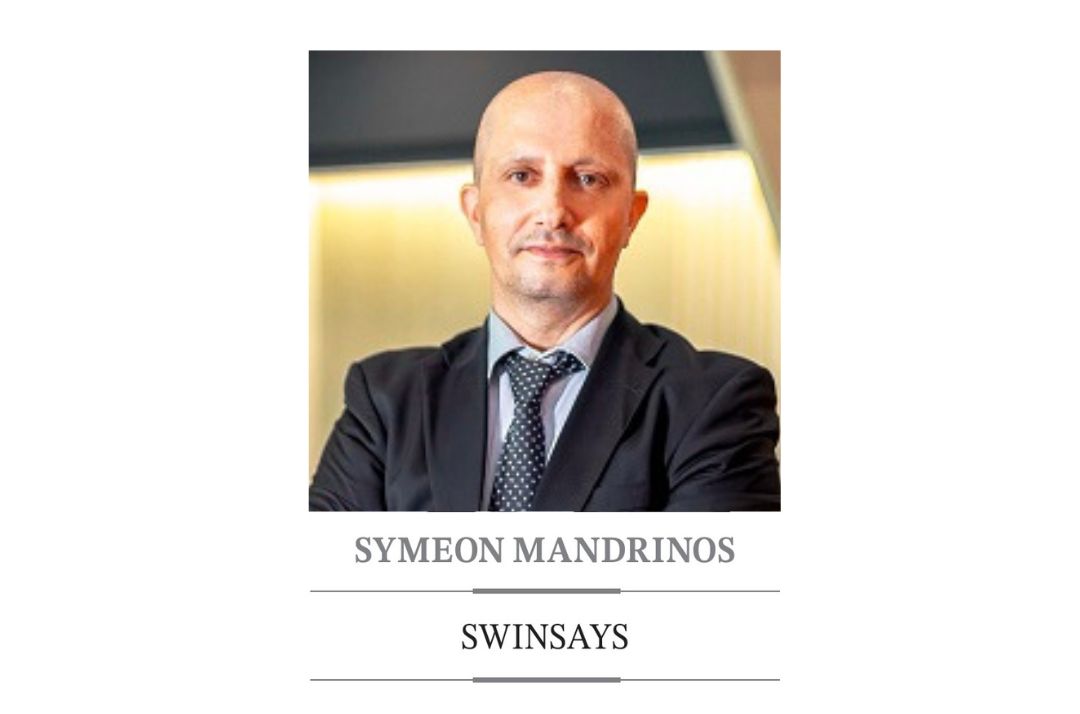
• Dr Symeon Mandrinos, School of Business, Faculty of Business, Design and Arts, Swinburne University of Technology Sarawak Campus
The views expressed here are those of the writer and do not necessarily represent the views of Sarawak Tribune. The writer can be reached at mvoon@swinburne.edu.my.