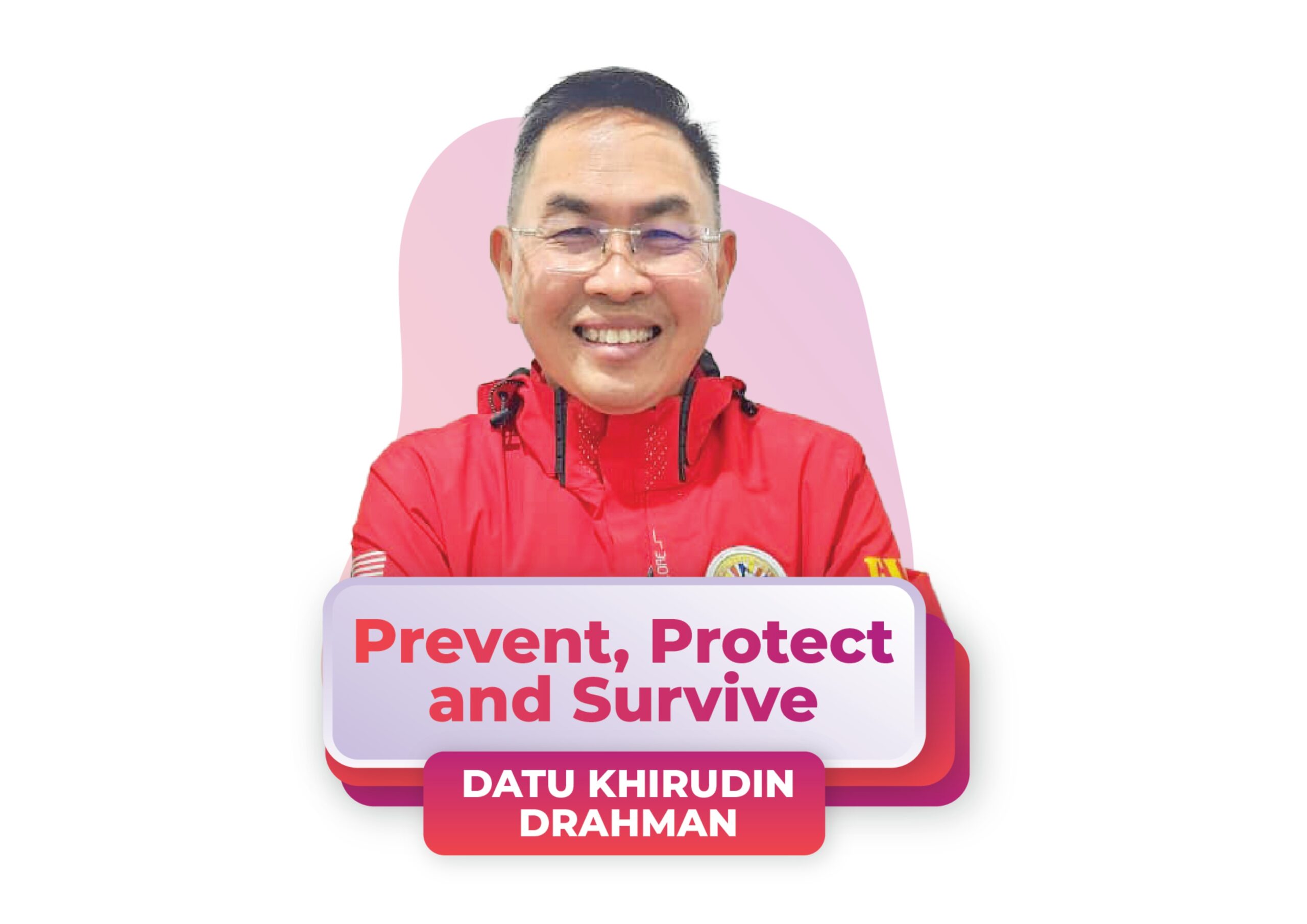
‘Thunder is good, thunder is impressive; but it is lightning that does the work.’
– Mark Twain, American essayist
I was about to leave my home in Petaling Jaya at about 2pm on Monday, November 9, when a sudden thunderstorm erupted, accompanied by flashes of lightning at regular intervals.

I have always been wary of lightning and would, as far as possible, avoid walking in the rain during a thunderstorm. I would rather postpone an appointment or remain indoors than take unnecessary risks.
This is particularly relevant during the current rainy season, when it has been raining almost daily. Certain parts of Kuala Lumpur and other areas throughout the country have experienced flooding, which has become an annual disturbance and inconvenience. Shah Alam, the Selangor state capital bordering Petaling Jaya, has also experienced serious flooding in recent days.
After waiting about 20 minutes for the thunderstorm to subside, I decided against going out when the rain and lightning continued. As it turned out, the rain persisted for another two hours. I was glad I had made that decision.
However, what happened shortly afterwards gave me an even greater reason to be thankful that I had stayed home.
I read a report that three men, including two teenagers aged 16 and 18, had been killed by lightning while taking shelter under a tree in Bandar Baru Salak Tinggi, Sepang.
According to police, the three victims, aged 16, 18 and 26, had apparently stopped to repair a vehicle nearby. When the thunderstorm arrived, they sought shelter under a tree. Tragically, all three were struck by lightning and died.
It is heartbreaking to think that three lives, including those of two very young men, were lost in circumstances that many people might consider perfectly ordinary. They were simply trying to keep themselves dry while waiting for the rain to stop.
But a tree is among the most dangerous places to seek shelter during a thunderstorm.
This latest tragedy is not an isolated incident. Malaysia has witnessed several other fatal lightning strikes this year.
On October 12, a 14-year-old schoolboy, Muhammad Ziad Zikri Abdul Hadi, died after being struck by lightning while fishing near a paddy field in Pasir Mas, Kelantan. He was reportedly returning from a fishing trip when the tragedy occurred.
On July 5, a 28-year-old footballer, R Thanesh, died after being struck by lightning during a friendly football match at the Rakan Muda Lendu Complex in Alor Gajah, Melaka. A referee was also injured after lightning struck the field. Reports indicated that the match had continued despite the onset of drizzle and a loud clap of thunder.
There was another disturbing incident just across our northern border. On August 4, during a Golok FA Cup football match at Santiphap Stadium in Sungai Golok, Thailand, lightning struck the pitch amid heavy rain. A 24-year-old Thai footballer, Sofwan Awae, died, while 12 others, including Malaysian player Mohamad Alif Ezzahan Zulkifli, were injured.
These incidents should serve as a serious wake-up call, particularly for those organising outdoor sporting events, recreational activities and public gatherings.
So, how many of us actually know what to do when caught in a thunderstorm? Allow me to share the following which I’ve read after googling for some rules to guide us through.
When you hear thunder, seek proper shelter immediately. Do not wait until the rain becomes heavy or until lightning appears directly above you. Thunder means lightning is already close enough to pose a danger.
A substantial, enclosed building is the safest option. If one is not accessible, an enclosed vehicle with a metal roof and its windows fully closed offers protection.
Never take shelter under an isolated tree, even if it looks large enough to protect you from the rain. Avoid open fields, football pitches, playgrounds, hilltops, beaches and bodies of water. Stay away from metal fences, poles and other objects that can conduct electricity.
One particularly important piece of advice is to remain indoors for at least 30 minutes after the last thunder is heard. A common mistake is to assume that the danger has passed once the rain stops. Lightning can still strike some distance from the area experiencing heavy rain.
Malaysia’s Meteorological Department (MetMalaysia) already provides useful advice on thunderstorm safety. However, I believe we need to do much more to bring these warnings to the attention of ordinary citizens.
We can learn valuable lessons from other countries in strengthening public awareness and preparedness against lightning strikes. India, for example, has developed the Damini lightning alert application, which uses location-based notifications to warn users about nearby lightning activity.
The application provides timely alerts and safety advice, allowing people to make informed decisions before venturing outdoors or continuing their activities. Such technology can help reduce exposure to potentially life-threatening weather conditions.
In the United States, the National Weather Service conducts extensive public education campaigns to promote lightning safety. One of its most recognisable messages is simple but effective: “When thunder roars, go indoors.”
This straightforward advice reinforces the importance of seeking shelter immediately rather than waiting for rain to begin or lightning to become visible.
Malaysia should consider adopting similar initiatives, including making lightning alerts more accessible through mobile phones, social media, radio and television. Timely warnings can give the public an opportunity to suspend outdoor activities and seek safe shelter before conditions become dangerous.
Sports organisers, in particular, must establish clear and consistent lightning safety procedures. Matches and outdoor events should be suspended immediately when thunder is heard, while participants and spectators should be directed to proper shelter.
There should be no debate over finishing a match or completing an activity when lives are at stake. Safety must always come first.
Lightning safety notices should also be displayed prominently at public parks, football fields, recreational areas, beaches and other locations where people are exposed to the elements.
These reminders can help reinforce safe behaviour and ensure that visitors understand the risks.
Ultimately, public awareness is just as important as accurate weather forecasting. While we cannot prevent lightning from striking, we can reduce the risk of people being caught in dangerous situations through timely warnings and sensible precautions.
I am not suggesting that we should live in fear whenever it rains. Thunderstorms are part of our tropical climate, and we must learn to live with them. However, we should never underestimate their dangers.
I was fortunate to have stayed home on Monday afternoon. The three victims in Sepang were not so fortunate.
Let us not wait for another tragedy before taking lightning safety seriously. A little caution, a timely warning and common sense could save lives.
The views expressed here are those of the columnist and do not necessarily represent the views of Sarawak Tribune. He can be reached at sirsiah@gmail.com.