
Our bodies are not fixed by genetics alone. By understanding how strength, conditioning and the brain adapt to challenge, we can push beyond perceived physical limits and unlock far more resilience than we think possible.
Rethinking Genetics, Strength and Human Potential
THERE is a moment in every physical endeavour, whether you are running a marathon or simply trying to carry four bags of groceries up a third-floor walk-up, when the body whispers, “Stop.”
It is a persuasive voice. It tells you that your lungs are too small, your legs are too heavy, and your genetic lineage did not prepare you for this specific hardship. For decades, we have treated this voice as an absolute authority – a biological stop sign erected by our DNA. We look at the naturally muscular athlete or the effortless runner and sigh, resigning ourselves to the “fact” that we were simply built differently. We tell ourselves we are “hard gainers” or “not built for speed”, accepting these labels as if they were medical diagnoses.
But there is a growing understanding in the worlds of physiology and strength conditioning that this voice is often lying – or, at the very least, negotiating.
The limits of the human body are far more elastic than we generally assume. While it is true that we cannot rewrite the genetic code we inherited from our parents, we have vastly underestimated our ability to influence how that code is expressed. We view our bodies as static statues made of stone, chipped away by time. In reality, we are more like rivers – constantly flowing, changing shape based on the obstacles we encounter and the volume of rain we receive.


The myth of the genetic ceiling
To understand how to overcome physical constraints, we must first make peace with the role of genetics. It is undeniable that some people are born with a greater proportion of fast-twitch muscle fibres, making them explosive sprinters, while others possess the efficient oxygen delivery systems of natural endurance athletes. These are the blueprints we are handed at birth.
However, a blueprint is not a building. You can hand the same architectural plans to two different builders and the results will vary wildly, depending on the materials they use, the care they take, and the conditions they endure during construction.
For the average person, “genetics” often becomes a convenient excuse for insufficient stimulus. The body is an incredibly miserly machine; it will not build muscle or expand lung capacity unless it is absolutely convinced that it must do so to survive. If you live a life of comfort, your body will optimise for comfort, shedding “unnecessary” muscle and efficiency to conserve energy. To overcome your baseline genetics, you must present your body with a compelling argument for change.
The argument of iron
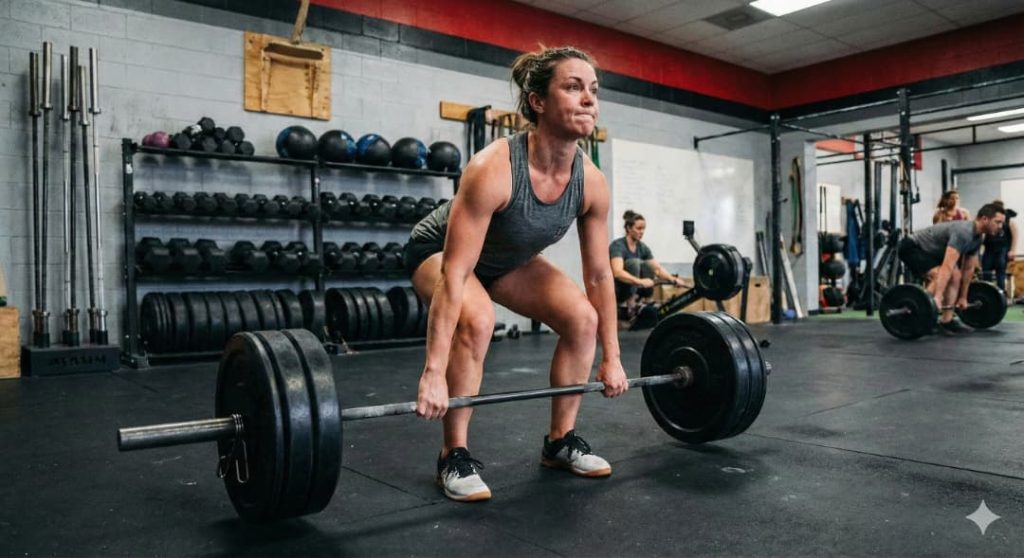
This argument is best made through strength training. We often associate lifting weights with vanity, imagining oiled bodybuilders posing in front of mirrors. Yet at its core, strength training is survival signalling. When you lift a heavy object, you send a distress signal to your central nervous system. You are telling your body, “The environment is heavy. If we do not get stronger, we may be crushed.”
Responsive and alarmed, the body adapts. It reinforces tendons, increases bone density, and thickens muscle fibres. This process does not care about your genetic predisposition to be “skinny” or “weak”. It is a biological imperative. If the stimulus is consistent and intense enough, the body must adapt.
The mistake most people make is not rooted in genetics, but in politeness. They exercise gently. They stop when it starts to burn. They treat the gym like a spa rather than a laboratory of adaptation. To push past a genetic “limit”, one must introduce progressive overload – the practice of continually increasing the demands placed on the body. You must force the body into a corner where its only option is to become stronger.

The engine room
If strength is the chassis of the car, conditioning is the engine. Cardiovascular health is often neglected in the pursuit of strength or, conversely, pursued in isolation without muscular support. True physical resilience requires both.
Conditioning is the body’s ability to process energy. It is the plumbing of the human house. You may have the genetic potential for a Ferrari engine, but if your fuel lines are clogged, you will never leave the driveway.
Overcoming the “winded” feeling – that sensation of gasping for air after climbing a flight of stairs – is rarely a matter of lung size. It is a matter of efficiency. By engaging in sustained, often uncomfortable conditioning work, we force the body to grow new capillary networks. We literally build new roads for oxygen to reach our muscles. This is where the genetic argument falls apart; almost every human body, regardless of age or background, retains the capacity to improve cardiovascular efficiency. You can teach an old heart new beats.
The governor in the brain
Perhaps the most fascinating barrier to human potential lies not in the muscles or lungs, but in the brain. Scientists have proposed the existence of a “central governor” – a mechanism that regulates physical exertion to prevent harm.
Think of it as a safety switch. When you feel completely spent, convinced you cannot run another step or lift another pound, you are often operating at only around 40 per cent of your true physiological capacity. The brain induces fatigue to keep you in reserve, just in case you need to flee a predator later in the day.
Athletes who appear to defy genetics – those who push beyond what seems reasonable – are often simply better at negotiating with this governor. They understand that the sensation of fatigue is information, not an instruction. By consistently training in this uncomfortable zone, you can recalibrate the safety switch and teach the brain that the red line lies much further out than it believes.
The daily reconstruction
So how does the everyday reader apply this? How do we take a body that feels average and transform it into something capable?
It begins with rejecting the “maintenance” mindset. Many of us exercise to “maintain” our health, yet maintenance is a myth. In biology, you are either growing or decaying; there is no standing still.
To overcome the hand you were dealt, you must embrace voluntary hardship. This means seeking out physical challenges that unsettle you slightly. It means lifting the weight you doubt you can lift. It means running until the conversation in your head turns negative – and then running a little further.
It also requires a near-religious respect for recovery. Growth does not occur during the workout; it happens in the sleep that follows. You cannot override a genetic predisposition towards frailty while under-sleeping and under-eating. You must build the house with bricks, not straw.
There is profound freedom in realising that you are not trapped in the body you inhabit today. You are merely living in the body you have built – or neglected – over recent years. The human form is not a fixed sculpture; it is a project. It is a responsive, adaptive, miraculous vessel waiting for you to demand more of it.
We may not all run like Olympians or lift like powerlifters. Yet almost every one of us carries a vast reservoir of untapped potential, hidden behind the false walls of “I’m just getting older” or “I’m not athletic”.
Tear down those walls. Pick up something heavy. Run until you breathe hard. Remind your body what it was designed to do. You may discover that your limits were never truly limits at all – they were merely suggestions, and you are free to ignore them.