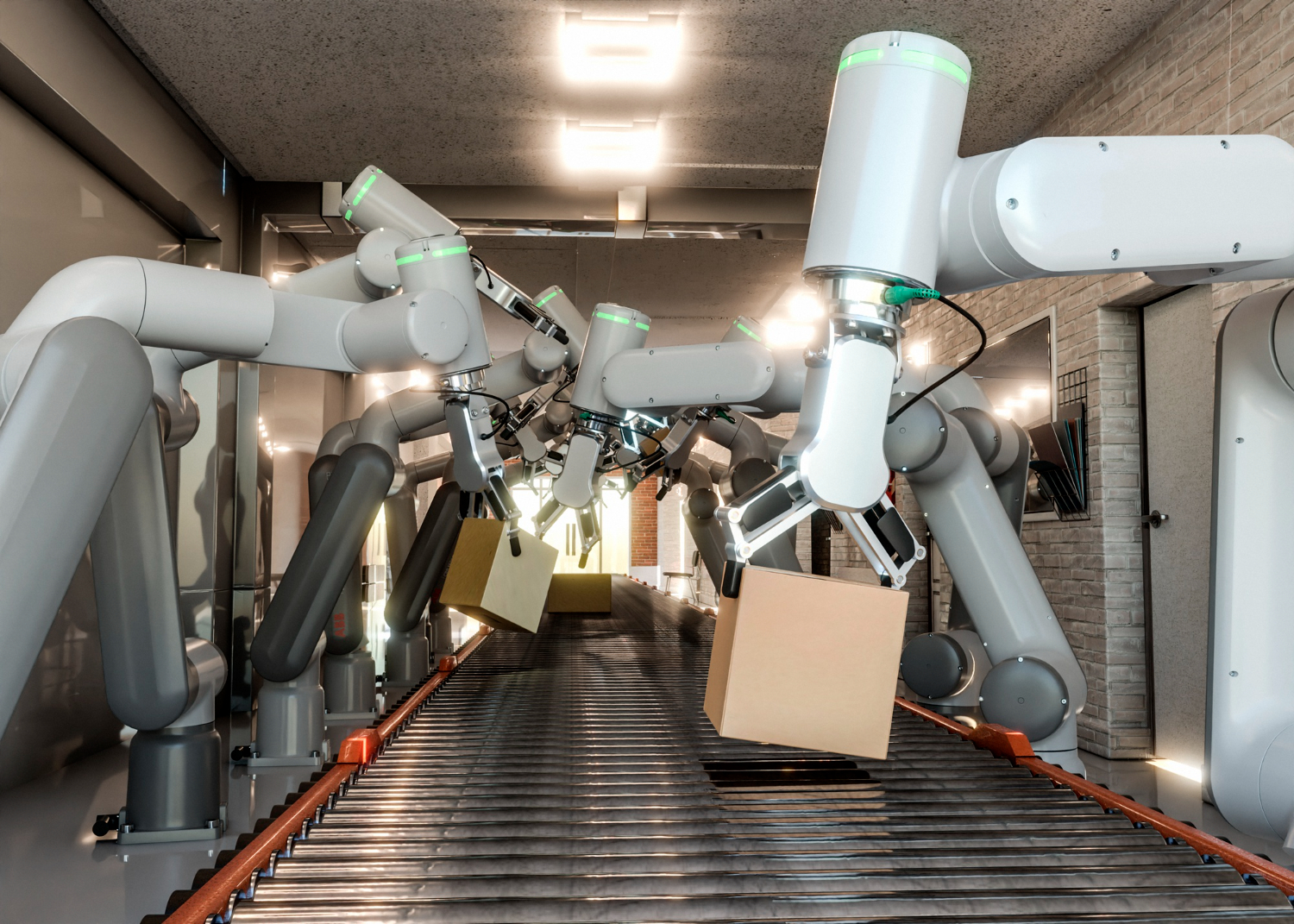
Robotics is no longer confined to large-scale manufacturing — it is now a practical tool helping businesses streamline operations and improve efficiency. From logistics to product development, companies are using robotics to boost productivity, reduce errors and support sustainable growth.
Robots were once seen as part of a distant future. Today, they are shaping everyday business decisions, cost structures and even how teams operate. What has changed is not only the technology, but also the growing recognition that robotics is no longer limited to major factories or vast R&D budgets. Small and medium-sized enterprises are now adopting it too — often without even labelling it as “robotics”.
The result is a clear shift in productivity, operational stability and long-term competitiveness across a wide range of industries.
Below are several ways robotics is quietly — and sometimes dramatically — driving business growth today.
1. Automation is moving from heavy industry to everyday operations
For decades, robots were fixed to the floors of automotive plants. Today, they are taking on far more flexible roles: assisting warehouse teams, managing packaging lines, sorting goods and even supporting office workflows through automated systems and robotic platforms.
Businesses adopt robotics for straightforward reasons:
- predictable performance
- fewer operational disruptions
- the ability to work safely alongside people
- consistent output, even during peak periods
Companies that once relied on fluctuating staffing levels can now stabilise their operations. The real gains are not just from reducing manual labour, but from minimising errors, maintaining steady throughput and ensuring more reliable delivery schedules.
2. Robotics helps businesses launch products faster
One of the biggest bottlenecks in modern product development is the time between an idea and a working prototype. Robotics innovation is helping to accelerate this process.
Designers can now test movement, balance and interaction much earlier by combining physical prototypes with digital simulations. This hybrid approach allows teams to explore ideas more rapidly — turning “what if” scenarios from weeks into days.
For businesses expanding into hardware, automation, logistics or smart devices, this speed is critical. Being first to market — or simply avoiding delays — can determine who captures the largest share of an emerging niche.
An increasing number of companies are also turning to specialised engineering partners for early-stage support. These teams help translate concepts into functional motion models, reducing the time lost to trial and error.
3. Robotics improves accuracy where human workloads are high
In sectors where precision is essential — such as medical packaging, electronics assembly, food sorting and high-volume logistics — robotics helps reduce the hidden costs of small mistakes.
Unlike humans, robots do not tire, rush or lose focus. They repeat tasks with consistent accuracy.
This reliability delivers three key advantages:
- reduced waste, as errors are minimised
- consistent quality, strengthening customer trust
- increased capacity, allowing businesses to take on larger contracts
The fastest-growing companies in these sectors are not always those with the largest budgets, but those that establish a strong foundation of precision early on.
4. Logistics and retail are becoming increasingly robotics-driven
Few sectors benefit as immediately from robotics as logistics. Automated picking systems, sorting robots and mobile units enable warehouses to maintain efficiency, even during seasonal surges.
Retailers are also seeing gains through robotics used for shelf scanning, inventory tracking and backroom operations. These are not high-profile humanoid machines, but practical tools that allow employees to focus on higher-value tasks such as customer service, floor management and sales.
Each avoided stock shortage or inventory error contributes directly to revenue. In retail, these small improvements quickly add up.
5. Robotics helps businesses manage fluctuating workloads
Workloads in factories and warehouses often vary from day to day. Robotics provides the flexibility to manage these fluctuations without disrupting operations.
A robot might handle packing tasks in the morning, then be reassigned later to inspect products or transport materials. Additional units can be deployed as needed, while employees continue focusing on tasks that require human judgement.
This adaptability allows businesses to respond efficiently to demand, maintain continuity and reduce operational strain during busy periods.
No longer a distant vision
For many business leaders, robotics once seemed complex or futuristic. Today, it is simply a practical investment — one that directly influences cost, speed and reliability.
Whether modernising production, improving quality or accelerating development cycles, robotics is increasingly becoming the unseen engine behind business growth.
As design, testing and simulation tools become more accessible, companies of all sizes can adopt robotics with greater confidence and lower risk.
Robotics is not replacing business strategy — it is strengthening it, helping organisations adapt and grow in a rapidly changing environment.