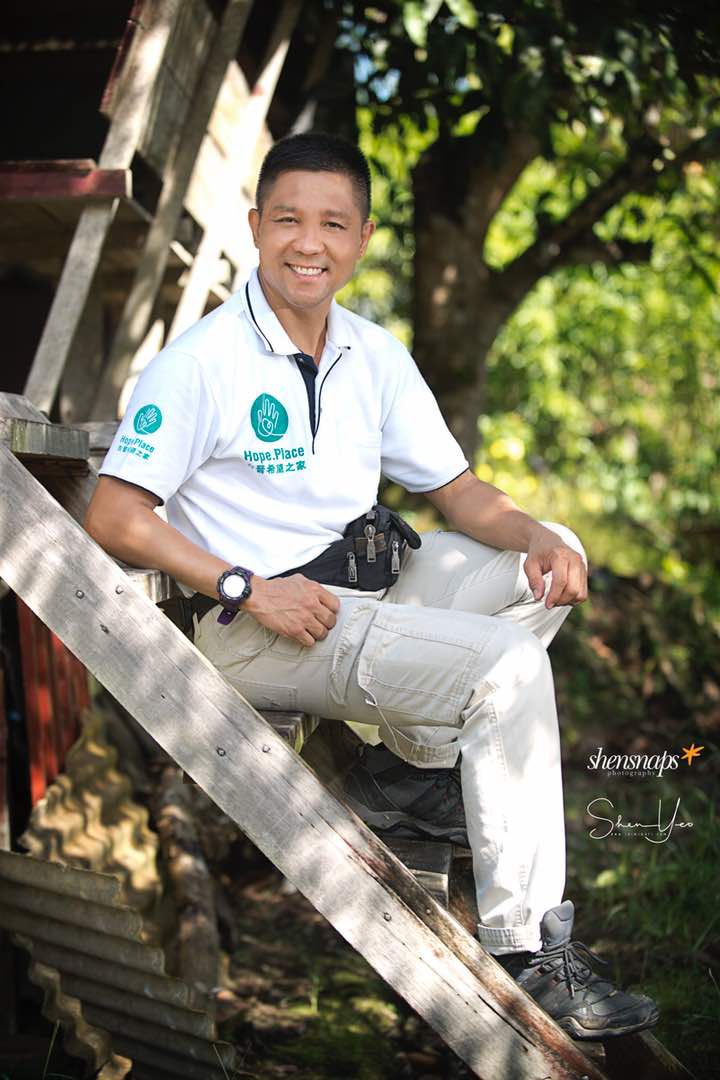
Breast cancer awareness goes beyond mammograms and pink ribbons — it’s about compassion, family, and access to care. Oncologist Dr Heng Fook Yew speaks about the emotional, cultural, and financial realities behind Malaysia’s most common cancer.
The Power Of Support In Breast Cancer Care
In today’s world, caring for someone with breast cancer goes far beyond medical treatment. Support from all corners — from husbands and families to workplaces and even insurance providers — can make all the difference between despair and recovery.

Dr Heng Fook Yew, resident consultant clinical oncologist at Borneo Medical Centre, believes that emotional strength is often just as crucial as medical treatment.
“Sometimes, I receive feedback from female patients who refuse treatment because they fear their husbands won’t love them after they lose a breast. That’s why spousal support is the most important,” he stressed.
He urged men to play a more active role — encouraging their wives to get checked and seek early treatment rather than worrying about physical changes.
Modern medicine, he added, now prioritises both survival and self-esteem. With early detection, there’s often no need to remove the entire breast — and even when total removal is required, breast reconstruction can help women regain their confidence.
The goal, he believes, is not only to control cancer but to help women return to normal life — to feel whole again.
As he shifted the focus beyond the home, Dr Heng noted that workplaces, too, play a vital role in recovery.
“Many women delay treatment because they can’t get time off work or fear losing their jobs. Employers need to be more compassionate — to give women the time and space they need.
“We lose too many patients to delayed treatment. Everyone, from family to organisations, has to play their part,” he said.
When care meets cost
While emotional support helps patients stay strong, financial security often determines whether they can access the best possible care.
As healthcare costs continue to rise, having insurance, said Dr Heng, “is no longer a luxury — it’s a necessity.”
“With the escalating cost of healthcare, we cannot rely entirely on the government to subsidise the best treatments for us.
“My advice to the public is to buy insurance — it ensures you can afford the care you need, especially if you ever face cancer,” he pointed out.
The importance of insurance, he added, becomes painfully clear when patients reach the later stages of cancer — a point that ties closely to another ongoing struggle: late detection.
At that stage, treatment is no longer about cure but about prolonging life and controlling symptoms — and affordability often determines how much time a patient has left.
“We cannot cure stage four breast cancer — only prolong life and control symptoms. Survival depends on several factors, including the type of cancer, treatment access, and, sadly, affordability,” he said, noting that a single course of immunotherapy can cost between RM10,000 and RM20,000.
“That’s why I always tell patients — please, get insured. With insurance, you have options. Without it, you may not get the best treatment,” he added.
When awareness comes too late
Dr Heng has seen firsthand how access, awareness, and support intertwine in shaping cancer outcomes — particularly for breast cancer, which remains the leading cancer among women in Malaysia.

“Based on the 2024 statistics, we diagnosed about 3,000 new cancer cases in Sarawak, and breast cancer tops the list — just as it does nationally,” he shared.
Yet despite decades of awareness campaigns, he admitted that Malaysia still struggles with early detection.
“More than half of our patients are diagnosed at a late stage — and in Sarawak, the figure may be even higher,” he emphasised.
Still, he noted, efforts to catch the disease early have made a real difference.
Free government initiatives such as mammograms and Pap smears have already helped identify cancers at very early stages — sometimes as small as a one-centimetre tumour.
“When detected early, the outcome is excellent. Some patients only need a simple resection, with no chemotherapy,” he noted.
Accessibility remains a major challenge in Sarawak, where vast rivers and rugged terrain often separate communities from hospitals.
But even where healthcare is available, many women still delay seeking help — not because they don’t care, but because of fear, modesty, or cultural taboos.
“Because breast cancer is usually painless in its early stages, many women don’t realise anything is wrong until it bleeds or spreads — often when it’s already too late.
“But not all delays stem from distance or lack of awareness — some are rooted in culture. Asian women are generally more reserved. They don’t like exposing their bodies for examination, and that makes early detection even harder,” he said.
He added that some patients still turn to traditional healers or alternative medicine before seeking proper care — often with devastating consequences.
Dr Heng has seen many who sought traditional treatment first, only to return when the cancer had already spread.
Not all supplements or direct-sales products are helpful, he cautioned — and many can be misleading.
To illustrate the point, Dr Heng often reminds patients of his grandparents.
“My grandfather lived to 98, my grandmother to 96. Did they take supplements? No. They lived simply — planting vegetables, raising chickens, sleeping early, and waking up early. Natural food is still the best nutrition we have,” he reflected.
Stories like these remind him that good health often starts with simple habits — and that prevention remains the most powerful form of care.
Prevention begins at home
For Dr Heng, the fight against breast cancer does not end with treatment or emotional care — it begins long before diagnosis, with prevention.
While genetics play a role, he emphasised that lifestyle choices are equally influential. Factors such as smoking, alcohol consumption, obesity, long-term use of oral contraceptive pills, and delayed childbirth can all increase a woman’s risk of developing breast cancer over time.

“Women who have never had children or who have used long-term oral contraceptives have a slightly higher risk, especially for hormone receptor-positive cancers.
“But there are always ways to protect oneself,” he explained.
He pointed out that breastfeeding offers natural protection by regulating hormone levels and reducing breast cancer risk over time.
Regular physical activity, he added, can also lower risk by improving metabolism, reducing body fat, and keeping hormones in balance.
“Staying active, eating healthily, and managing stress are simple but powerful habits that make a real difference,” said Dr Heng.
Studies have shown that maintaining a healthy weight and engaging in 150–300 minutes of moderate-intensity aerobic exercise per week can lower overall cancer risk — a reminder that prevention often begins with small, consistent choices made at home.
Ultimately, Dr Heng believes prevention isn’t about fear — it’s about empowerment.
“You can’t change your genes, but you can change your lifestyle,” he pointed out.
TNBC: The silent aggressor
While prevention is key, not all breast cancers can be avoided — and some, like triple-negative breast cancer (TNBC), remain particularly aggressive and challenging to treat.
“Triple-positive breast cancer has three receptors — ER, PR and HER2. These are the weaknesses that help us target the cancer with specific drugs.
“But triple-negative means there are no weaknesses. We can’t target anything except through chemotherapy,” Dr Heng explained.
TNBC accounts for about 15 per cent of all breast cancers in Sarawak, matching national figures. It is also more common among younger women — often due to genetic mutations such as the BRCA gene.
That’s why, whenever he meets a newly diagnosed TNBC patient, Dr Heng takes time to help them understand the road ahead.
“I always tell them to be prepared, because the treatment will be more intense than for other subtypes.
“Not only is the treatment itself more aggressive, but the duration is usually longer, and we often need to combine several modalities, such as chemotherapy and radiotherapy.
“For TNBC, we tend to do more treatment overall — and that’s the first thing I make sure they understand,” he emphasised.
He therefore encouraged younger women, especially those with a family history of breast cancer, to consider genetic screening — as mutations such as BRCA can significantly increase their risk.

Over the years, treatment for TNBC has also evolved beyond surgery alone.
“In the past, we used to operate first. Now, we often start with chemotherapy — called neoadjuvant treatment — before surgery. This helps us see how well the tumour responds. If it doesn’t respond, we intensify treatment. If it does, we can scale it down,” he clarified.
With each breakthrough, doctors are not only improving survival rates but also transforming how breast cancer is treated in Sarawak.
Dr Heng highlighted that Sarawak General Hospital is now one of Malaysia’s leading research centres in oncology, giving local patients access to some of the world’s latest cancer therapies.
“We are now using targeted therapy and immunotherapy for TNBC, and there’s a promising new drug called an antibody-drug conjugate (ADC), which delivers chemotherapy directly to cancer cells without harming normal ones,” he explained.
These advancements, he added, are the result of years of research and collaboration — and they continue to open new doors for patients seeking hope beyond conventional treatments.
One of those doors, he said, is clinical research — an avenue often misunderstood but increasingly vital for progress. That’s why he often encourages patients not to fear clinical trials.
“Clinical trials don’t mean you’re being used as an experiment. These drugs have already passed early testing stages.
“Participants may even gain access to treatments not yet available on the market. In fact, clinical trials often provide the best care available today,” he said.
A Message for All Women
Dr Heng urged women not to ignore any signs that could indicate breast cancer.
He reminded them to seek medical advice early, stressing that early diagnosis is the only way to improve survival — and that delaying treatment or relying on alternative remedies could be dangerous.
He also offered reassurance to older women who fear that seeing an oncologist automatically means facing chemotherapy.
“Not all cancer treatments involve chemo. We now use hormonal or targeted therapy, which are gentler options — especially for the elderly,” he said.
Above all, Dr Heng believes that while science saves lives, compassion sustains them.
“Cancer care isn’t just about treating a disease — it’s about helping a woman regain her dignity, her confidence, and her place in life. That’s what we aim for,” he pointed out.
Pink October and Beyond
For Dr Heng, campaigns such as Pink October play a vital role — but awareness shouldn’t be confined to a single month.
“This campaign is a great initiative because it raises awareness about early detection. But cancer doesn’t only happen in October — it happens every month of the year. Our efforts to fight it should be just as continuous,” he shared.
As Pink October draws to a close, Dr Heng hopes the month’s momentum will carry into the rest of the year — turning awareness into action.
“Awareness is only the first step. What truly saves lives is action — from regular self-checks to seeking medical advice early,” he emphasised.
In the fight against breast cancer, awareness begins with self-care — but survival depends on community. Husbands, families, employers, and the healthcare system all have a role to play.
And while modern medicine continues to advance, one truth remains constant: the earlier the detection, the brighter the hope.