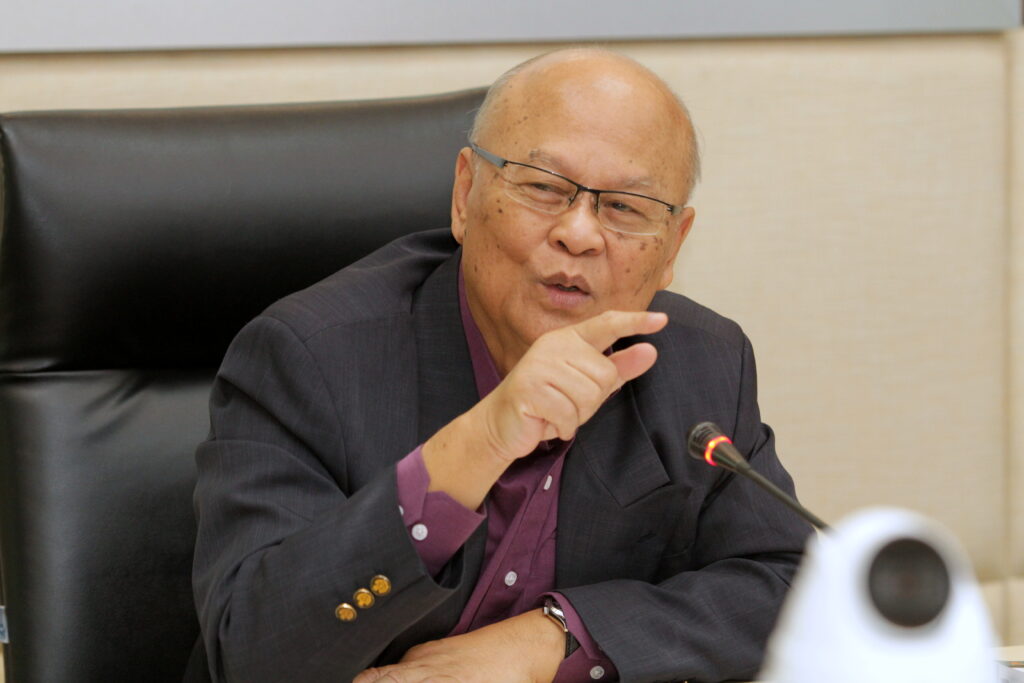
KUCHING: Gabungan Parti Sarawak (GPS) is in good stead to maintain its dominance in Bidayuh-majority constituencies, according to political analyst Datuk Peter Minos.
The veteran political observer said this is because the ruling coalition remains politically strong and stable under the leadership of Premier Datuk Patinggi Tan Sri Abang Johari Openg, giving voters confidence in the current administration.
“GPS should be able to retain all the Bidayuh-majority seats, including the closely watched Opar, in the coming state election,” he said.
Minos said incumbent Opar assemblyman Billy Sujang still has a strong chance of retaining the seat despite growing discussions on the future role of the Sarawak United Peoples’ Party (SUPP) in Bidayuh areas.
He said although SUPP is often perceived as a Chinese-based party, despite describing itself as multiracial, it can gain wider acceptance among the Bidayuh community if it continues to serve their interests well.
“It very much depends on the incumbent’s commitment to consistently delivering and doing the best for the Bidayuhs. Problems arise when the incumbent is perceived as not contributing enough, and that is when dissatisfaction and complaints begin to surface,” he said.
He believes the Bidayuhs are generally neither racial nor extreme in their political outlook, saying what matters most to them are development and political stability.
“These are realities that elected representatives must understand and respond to accordingly. Anyway, it will still be GPS winning Opar with strong support from members of the other component parties in GPS,” he added.
Minos also expressed confidence that Tasik Biru and Serembu would remain under GPS control despite occasional criticism and opposition sentiments on the ground.
“Some people may say this or that, but I think Tasik Biru and Serembu will also go to GPS,” he said.
He also predicted that the remaining Bidayuh-majority seats – Mambong, Tarat, Bukit Semuja, Tebedu and Kedup – would comfortably stay with PBB candidates.
Addressing perceptions that Parti Pesaka Bumiputera Bersatu (PBB) is largely a Malay-Muslim party, Minos said the party has long been accepted by the Bidayuh community as a bumiputera party.
He believes the Bidayuh voters were increasingly prioritising political stability and effective governance over racial politics.
“The Bidayuh political mindset is relatively straightforward: it is better to be part of a large bumiputera party within the government than to remain outside the governing structure and gain little influence or benefit.
“That is where DAP faces challenges among Bidayuh voters. The party is not viewed as part of the Sarawak government and is also not regarded as a bumiputera party.”
Minos noted that PBB continues to enjoy strong grassroots backing because of its position within the government and the unity shown within GPS.
Sarawak’s current 19th State Legislative Assembly term began following the December 2021 state election and is scheduled to expire in early 2027.
Speculation has been growing over a possible early dissolution of the Sarawak Legislative Assembly, although no official indication has been given by the state leadership.
Minos said any unexpected losses by GPS in the coming election would likely be linked to local candidate factors rather than dissatisfaction with the coalition itself.
“If anything goes wrong with GPS or they lose in any of the seats they contest, then maybe it is something to do with the individual YB,” he said.