KUCHING: ASEAN’s rapid shift towards digital payments is accelerating regional financial integration, with Malaysia recording a sharp 550 per cent year-on-year rise in cross-border QR payment usage in 2024.
A study by the International Monetary Fund (IMF), titled Asean’s Digital Payment Revolution: A New Frontier for Regional Integration and published in February 2026, said the expansion of digital retail payments — particularly those using local currencies — is helping reduce exposure to external exchange rate shocks while supporting financial stability across the region.
Over the past five years, domestic fast payment systems, including QR-based transactions, have grown significantly across ASEAN, laying the foundation for cross-border integration.
Building on this, countries in the region are linking their payment systems through QR connectivity and real-time fund transfers, allowing travellers and businesses to transact seamlessly using mobile numbers or QR codes.
While still small in overall value, cross-border QR payments are expanding rapidly. Thailand recorded growth of over 300 per cent in 2024, while Malaysia led the region with a 550 per cent surge, reflecting strong adoption and rising consumer confidence.
The growth is partly driven by the recovery in intra-ASEAN tourism, which made up 42 per cent of total visitors in 2023, up from 36 per cent in 2019.
With tourism contributing about 8 per cent to regional gross domestic product (GDP) and 12 per cent of employment, wider use of digital payments is expected to generate positive spillover effects, particularly in the services sector.
The IMF noted that small and medium-sized enterprises (SMEs) are among the key beneficiaries, as digital payments improve efficiency, lower transaction costs and help build financial records — improving access to financing, especially for firms without formal credit histories.
However, challenges remain. Cross-border payments in Asia — which accounted for 32 per cent of global transactions in 2024 — are projected to rise to 37 per cent by 2032, with volumes nearly doubling to 23.8 billion transactions.
Despite this growth, payment speeds still lag due to reliance on intermediary banks and compliance requirements.
The report also warned of rising risks related to financial crime and money laundering, particularly in cross-border
transactions where regulatory gaps may be exploited.
In addition, the current system of multiple bilateral linkages has led to fragmentation, limiting efficiency and interoperability across jurisdictions.
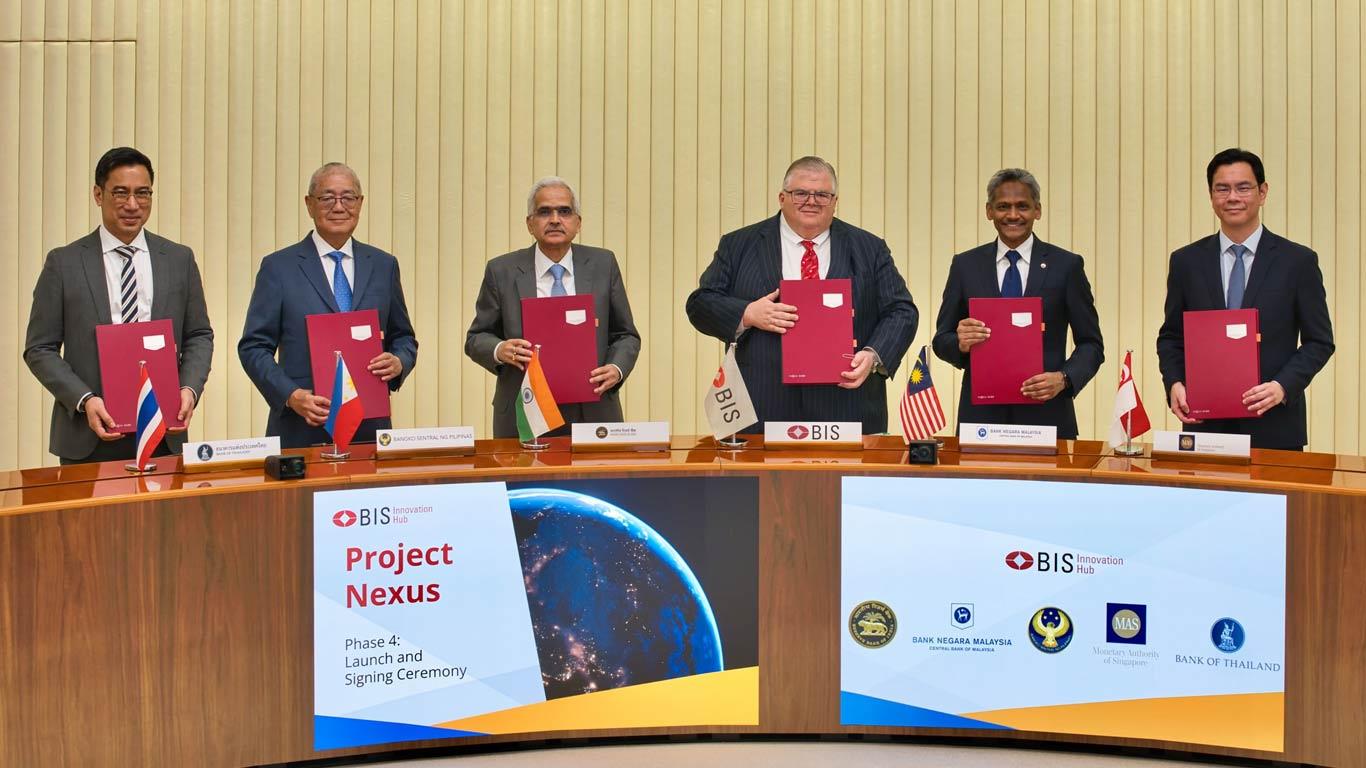
To address this, regional central banks are working on initiatives such as Project Nexus — a multilateral framework designed to connect domestic fast payment systems through a single hub.
The platform is expected to be operational by 2027.