
LILO was the only child of Murin, a woman who died sometime in the late 1950s, less than a year after giving birth. In her earliest days, Lilo knew hunger, heat, and the bustle of other people’s lives, but no one told her that her father, Jali, had already decided her life would be built on a secret.
Rumin, Jali’s wife, had wanted a baby for so long that wanting became a kind of daily ache. Year after year, her body disappointed her, and each disappointment settled inside her like a heavy stone.
During one of those stretches of longing, Jali strayed. Murin was his mistress. When Murin died, leaving her infant, Jali saw an opening for redemption.
Rumin, exhausted by years of failure, eventually said what she had been thinking for months: she wanted to adopt. The idea felt like a door finally cracking open. Jali agreed too quickly. He said he knew where to find a child, and he left for a few days.
When he returned, he carried a baby in his arms. He told Rumin the baby’s name was Lilo, exactly as it appeared on the birth certificate. He did not say that the paper also contained a truth he refused to speak aloud. He did not say that Lilo had come from his betrayal, from Murin’s brief, damaged happiness.
He convinced himself the lie was mercy: mercy for Rumin, who had endured enough; mercy for Lilo, who deserved a father and a home. However, beneath those explanations was fear and a shame that soured his mouth when he tried to swallow it down.
For a time, the lie held.
Rumin loved Lilo with a fierce, relieved tenderness. The child became the centre of her days, the reason to wake early and the reason to come home. Rumin’s love was not careful or provisional; it arrived like rain after drought.
But lies are flimsy builders. They look solid until the years press on them. Eventually, as these things usually do, the truth surfaced – through whispers, through mismatched details, through the way a secret never stays entirely buried in a small community.
When Rumin finally found out what Jali had done, it cut cleanly through her. Her anger was immediate and white-hot. She had been made into a shelter for another woman’s child without her consent. Grief and fury took turns inside her, and for a long while, the pain did not sleep.
Yet she did not turn that rage on Lilo.
She looked at the girl and saw not Murin, not her husband’s sin, but a child who had already lost too much: first orphaned by death and then placed in a family shaped by deceit. Rumin understood that Lilo had been wronged as deeply as she had – perhaps more, because Lilo had had no say in any of it.
So, the betrayal did not drive mother and daughter apart. If anything, it bound them with a strange, stubborn thread. What blood could not provide, shared hurt and effort did. Rumin became Lilo’s mother not by accident or obligation but by choice – a choice made over and over again in ordinary moments: stirring porridge, mending a torn dress, wiping a fevered brow, walking her to church.
Between them stood Jali, remorseful and diminished. Rumin had every right to despise him, and at times she tried. But Jali did not swagger through his wrongdoing. He did not defend himself or demand forgiveness. He carried himself as though he were always atoning: steady and gentle with Lilo, and careful with Rumin, as if one careless movement might shatter what remained.
In the end, Rumin grew weary of carrying rage. She cried until she ran out of tears; she sat with the bitterness until it softened into something dull and heavy. And then, for her own peace, she forgave him – not because he had earned it, but because she deserved to breathe again without choking on the past.
Jali received that forgiveness the way one receives a gift far beyond one’s worth. He knew the fault would never vanish; it would only fade, become a scar that ached in certain weather.
Life did not become perfect. The scar remained. Still, the house quietened and then warmed again. Lilo grew up loved – and loving – though she carried an odd, on-and-off feeling that something about her life did not quite line up. But she ignored it, partly because she didn’t know how to ask and partly because she was afraid of what the answers might take away.
She might have gone on like that longer, suspended between suspicion and denial, if not for a chance encounter in Serian town on a Saturday morning.
She had just come out of the town’s only theatre after watching P. Ramlee’s Labu dan Labi when a man approached her.
His voice was uncertain. “Amu Lilo, yuh?” Are you Lilo?
She nodded. “How do you know my name?”
“I don’t. I just guessed,” he replied, studying her face in a way that made her skin prickle.
“Why?” she asked, feeling something tightening in her chest.
The man swallowed. “You look very much like my sister. Her name was Murin. After she passed away, her daughter was adopted by a family in another kampung.”
“I see,” Lilo managed, but she did not see at all. The world felt suddenly too bright, too loud, as if someone had yanked away a curtain and the sun had hit her straight in the eyes.
“I’m sorry. I didn’t want to disturb you, but I had to ask,” the man added. “I miss my sister very much.”
“Who are you?” Lilo croaked, the question scraping out of her.
“Ruso,” he said at once. “If you’re really what I suspect you are, give your father my best wishes.” Then he walked away.
For a long moment, she stood rooted to the spot, mind racing in tight circles. Murin. Sister. Adopted. Jali. The fragments kept striking the same place in her chest. Then she remembered her friends were waiting at the bus station for the journey back to the village.
When she reached home, Rumin was slicing onions for dinner while Jali was repairing a broken chair leg. Everything looked familiar, reliable.
“Lilo, you’re back,” Rumin said, smiling warmly. “Did you enjoy the movie?”
Lilo nodded, unable to trust her voice. She sat stiffly at the table. Jali glanced up, his eyes narrowing with concern.
“Is something wrong?” he asked gently.
She could have lied, pretended. But the question rose up on its own, unstoppable.
“Who was Murin?”
The room changed. It was as though the air thickened.
Rumin froze. Jali’s hand tightened around the chair leg. For a heartbeat, no one spoke.
“Where did you hear that name?” Jali asked at last, voice strained.
“In Serian,” Lilo said, her throat tight. “A man – Ruso. He said Murin was his sister. He said she had a daughter. That you adopted her.”
Rumin turned to face Lilo, her expression pale. Jali looked from Rumin to Lilo and released a breath that sounded like surrender.
“We knew this day would come,” Rumin said, tears shimmering in her eyes. “You deserve the truth. You always have.”
What followed came out in heavy pieces: Murin’s death, Jali’s betrayal, the decision to adopt the baby, the lie that had held the household together and also poisoned it.
“I loved you not because I had to,” Rumin told her, voice breaking. “But because I wanted to.”
“I don’t know what to say,” Lilo whispered.
“You don’t have to say anything,” Rumin replied. “Just know we love you. We always have.”
Jali nodded. “I’ve made mistakes,” he said. “But you’ve always been my daughter. Nothing will change that.”
Lilo wanted to accept it immediately, but the revelation was too raw. Love didn’t erase the fact that her beginnings had been hidden from her.
Late one evening, Lilo found herself by the river that ran past the village. She sat on a smooth rock, washing her clothes, the water cold around her hands. And there, she let herself cry.
She cried for Murin, the mother she would never meet. She cried for Rumin, who had been betrayed. She cried for Jali, whose selfishness had shaped all their lives. And she cried for herself for having stood in the middle of adult choices without ever being consulted.
When the tears ran dry, a strange calm arrived. The pain didn’t disappear, but it stopped feeling like it would swallow her whole. She remembered Rumin’s words: We’ve always loved you. Not perfect love, not clean love, but love that had endured.
Life, she realised, was not neat. People hurt one another. They make choices out of fear, shame, desire, loneliness. Yet they also repair, apologise, forgive; keep making meals and mending things, and showing up the next morning. It was all tangled together – sorrow and joy, hope and regret – and somehow there was still beauty in it.
When life handed her something bitter, she could not make it sweet by pretending. She could only decide what to do with it – and she decided, slowly and honestly, to make a life worth living.
DISCLAIMER:
The views expressed here are those of the writer and do not necessarily represent the views of the Sarawak Tribune. The writer can be reached at www.hayhenlin@gmail.com.
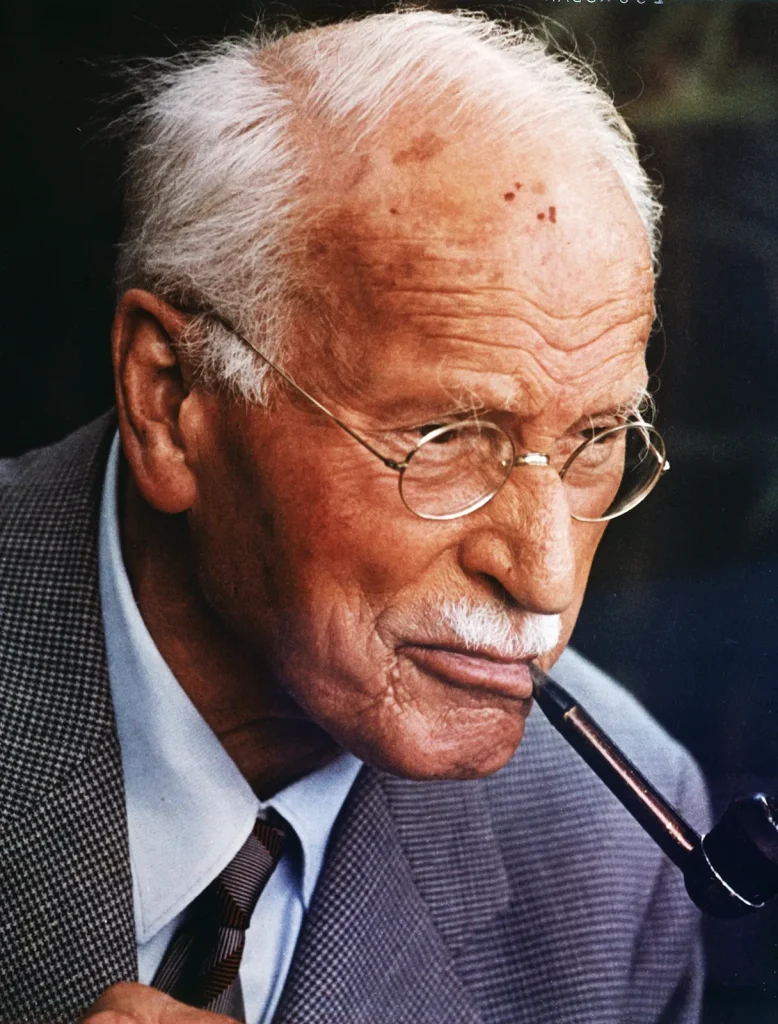
“You are not what happened to you. You are what you choose to become.” – Carl Jung (1875-1961), a Swiss psychiatrist, psychotherapist and founder of analytical psychology, and one of the most influential thinkers in the history of psychology.