As the world marks the International Day for the Eradication of Poverty, JCI Batu Kawa’s upcoming president, Justine Yong, champions empowerment over charity – driving sustainable change and restoring dignity within Sarawak’s communities.
Building Systems of Empowerment for Sarawak’s Future
THEY say it takes a village to raise a child — and while that rings true, building strength and resilience to create lasting impact takes an entire community. With today’s focus on the International Day for the Eradication of Poverty, United Nations (UN) Secretary-General António Guterres shared a statement: “Poverty is not a personal failure; it is a systemic failure — a denial of dignity and human rights.”
This year’s theme aims to end social and institutional maltreatment by ensuring respect and effective support for families. It underscores that ending poverty is about dignity, justice, and belonging — not just income. The UN said in its statement that the clear goal is to put the furthest behind first and build institutions that help families stay together, thrive, and shape their own futures.
“Families in poverty often face stigma and punitive practices in places meant to help — schools, clinics, welfare offices, and child protection systems.
“Single mothers, Indigenous families, and historically discriminated groups report judgement and control that erode trust and agency, sometimes culminating in poverty-driven family separation with lasting emotional and social harm to children and parents,” it said.
Thriving amidst a community of strength

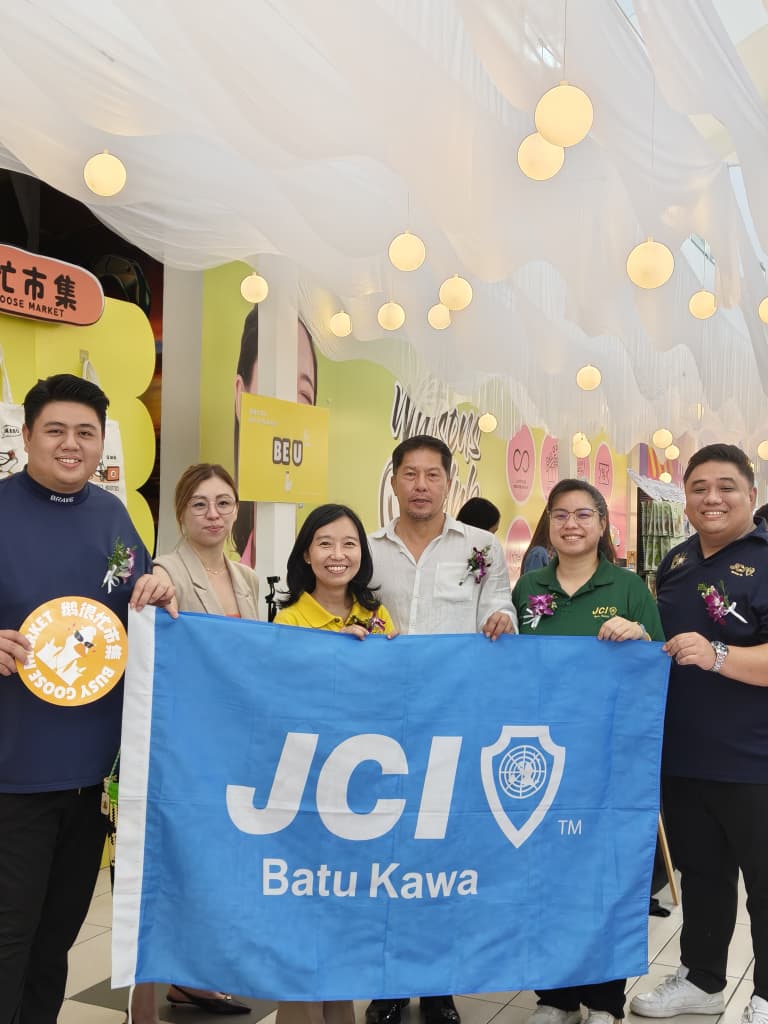
The strength of a united community in eradicating poverty is evident here in Kuching, Sarawak — particularly in Batu Kawa, where the global leadership development organisation Junior Chamber International (JCI) thrives as a catalyst for empowerment, uniting locals through initiatives that uplift lives and foster sustainable growth.
For JCI Batu Kawa’s upcoming 2026 Local President and 2025 Lions Club International District 308-A2 Region 1 Zone 1 chairperson, Justine Yong, her inspiration for philanthropy goes beyond donating to charity.
“I wanted to understand why poverty repeats itself across generations. Along the journey, I learned that poverty is not just about money. It’s about the absence of structure, lack of access, lack of connection networks, and lack of hope and belief in opportunity.”
Through JCI and Lions Club, Yong realised that true community development is not about giving handouts but about empowering people to rise with dignity. It’s about creating structures and frameworks where people can participate, contribute, and earn with integrity — without waiting and depending on ‘bantuan’ (help).
Sharing her vision in conjunction with the International Day for the Eradication of Poverty, Yong sat down with Sarawak Tribune to discuss her ongoing efforts, the community’s challenges, and how JCI Batu Kawa continues to drive meaningful change at the grassroots level.
As JCI Batu Kawa’s President for 2026, what vision are you bringing to the chapter, especially in empowering underprivileged communities?
My vision is to transform JCI Batu Kawa into a chapter that focuses on sustainable empowerment rather than one-off charity programmes. I want us to identify local talents, homemakers, youth, and micro-entrepreneurs and turn them into income creators, not just recipients of aid.
I want JCI Batu Kawa to be known as the chapter that creates real income channels and economic engines — not just donation programmes, but structured community income models. We want to build initiatives that help families generate consistent income, develop skills, and gain confidence to participate actively in Sarawak’s development.
Can you share some of the key lessons you gained from participating in JCI’s activities?
JCI taught me three key lessons:
Leadership is not a title — it’s a system you build for others to work in. Leadership must outlive the leader. If a project only works when one person is present, it’s not sustainable.
Charity provides relief, but empowerment builds resilience. Community projects must be designed like a business model — with cost, revenue, and continuity.
Youth networks are powerful when structured. Passion must be backed with proper planning and follow-through.


What does “poverty eradication” mean to you, personally and as a youth leader?
To me, “poverty eradication” means restoring dignity through opportunity. It means creating conditions where a person no longer waits to be helped but is equipped to move forward on their own.
As a youth leader, I believe our role is to build pathways, not just deliver donations. We can help by giving someone a platform to earn and rise, not just temporary relief. It’s when a single mother no longer waits for ‘bantuan’ but confidently earns extra income each month from a skill we helped her develop. That, to me, is dignity — and that is true poverty eradication.
In your experience, what are the most pressing issues faced by low-income families in Batu Kawa/Kuching?
• Unstable income — not enough savings, always in survival mode.
• Lack of financial literacy — many earn but don’t know how to grow.
• Skills not linked to market demand — people know how to make things, but not how to sell.
• Dependency mindset — waiting for bantuan instead of building independence.
How does JCI Batu Kawa identify and design projects that directly uplift marginalised groups or provide economic opportunities?
We begin by listening to communities before planning any initiative. We engage youth leaders to understand what resources they already have and identify realistic ways they can turn those into opportunities. Instead of imposing solutions, we co-create them — making empowerment more natural and sustainable.
Can you describe a project where you’ve seen tangible impact?
One project that JCI Batu Kawa carried out was transforming an underutilised mall area into a community market called Busy Goose Market. We established a local community network and platform generating income for homemakers, youth entrepreneurs, and small local suppliers.
We’ve seen impactful results when projects are designed with long-term follow-up and mentorship instead of being one-off events. A small success within our platform influenced an entire community to grow and seek the same positive impact.
When a person gains the confidence, knowledge, or market access needed to earn consistently — even in a small way — that change becomes lasting. That shift in mindset is a real victory. It showed me that when you structure a system well, one impactful event can feed multiple families sustainably — and that’s the income engine model I want to scale under JCI Batu Kawa.


How do you inspire young members to take part in community work that may not always bring instant results?
I always remind them that real change is not always visible immediately. But one day, they’ll look back and realise their effort became part of a bigger transformation. I lead by making them feel included and responsible — when members feel like builders rather than just volunteers, they stay committed.
There’s a sense of pride in being able to drive past a place and say, “I helped build that,” or “Change began there — and I was part of it.”
What challenges have you faced leading volunteers from diverse backgrounds, and how do you keep the team motivated?
The biggest challenge is alignment — everyone joins JCI for different reasons. Some join for leadership experience, some for service and exposure, some for connection, and some just to make friends.
I keep motivation strong by aligning personal growth with community purpose. I assign roles that match personal goals, so they grow while the community grows. When members see that serving others also shapes their own leadership journey, they stay engaged and connected to their purpose.
Do you think young leaders in Sarawak today have enough support to create systemic change?
We have passion, yes — but our biggest gap is access to support structures and mentorship. Many young leaders have ideas, but they lack the network to scale them. That’s why collaborations between youth organisations, government bodies, and companies are crucial. We don’t need more events — we need stronger bridges. Collaboration is key to systemic change.

How can local collaborations strengthen JCI’s poverty eradication efforts?
When we collaborate with schools for education, councils for legitimacy, NGOs like the Lions Club for community outreach, and private sector businesses for funding and market access, our initiatives gain continuity. Collaboration ensures our programmes don’t end after one term — they evolve into long-term community platforms.
If you could scale one JCI Batu Kawa project statewide, which would it be and why?
I would scale our community market, the Busy Goose Project — a capacity-building initiative that equips families and youths with practical skills, market access, and simple empowerment frameworks. Once a person learns how to sustain themselves, they no longer depend on aid — and that is a true victory over poverty. Sarawak is full of hidden assets; they just need a system and a market.
Final message for the International Day for the Eradication of Poverty?
In Lions, we meet humanitarian needs. In JCI, we design economic solutions. Together, they form a complete approach to poverty eradication.
As a Lions Club International Zone Chairperson and the upcoming President of JCI Batu Kawa, I believe leadership is about empowering others. We need to start asking what we can do to build a better Sarawak. Poverty eradication, to me, is not about distributing aid — it’s about designing income systems for local families so they no longer wait for bantuan, but stand up with dignity and participate in the Sarawak economy.
To every youth reading this: You don’t need to be rich to start helping. Do what you can to help another person and pay it forward. Start small, stay consistent, and remember — charity is temporary, but empowerment is forever.