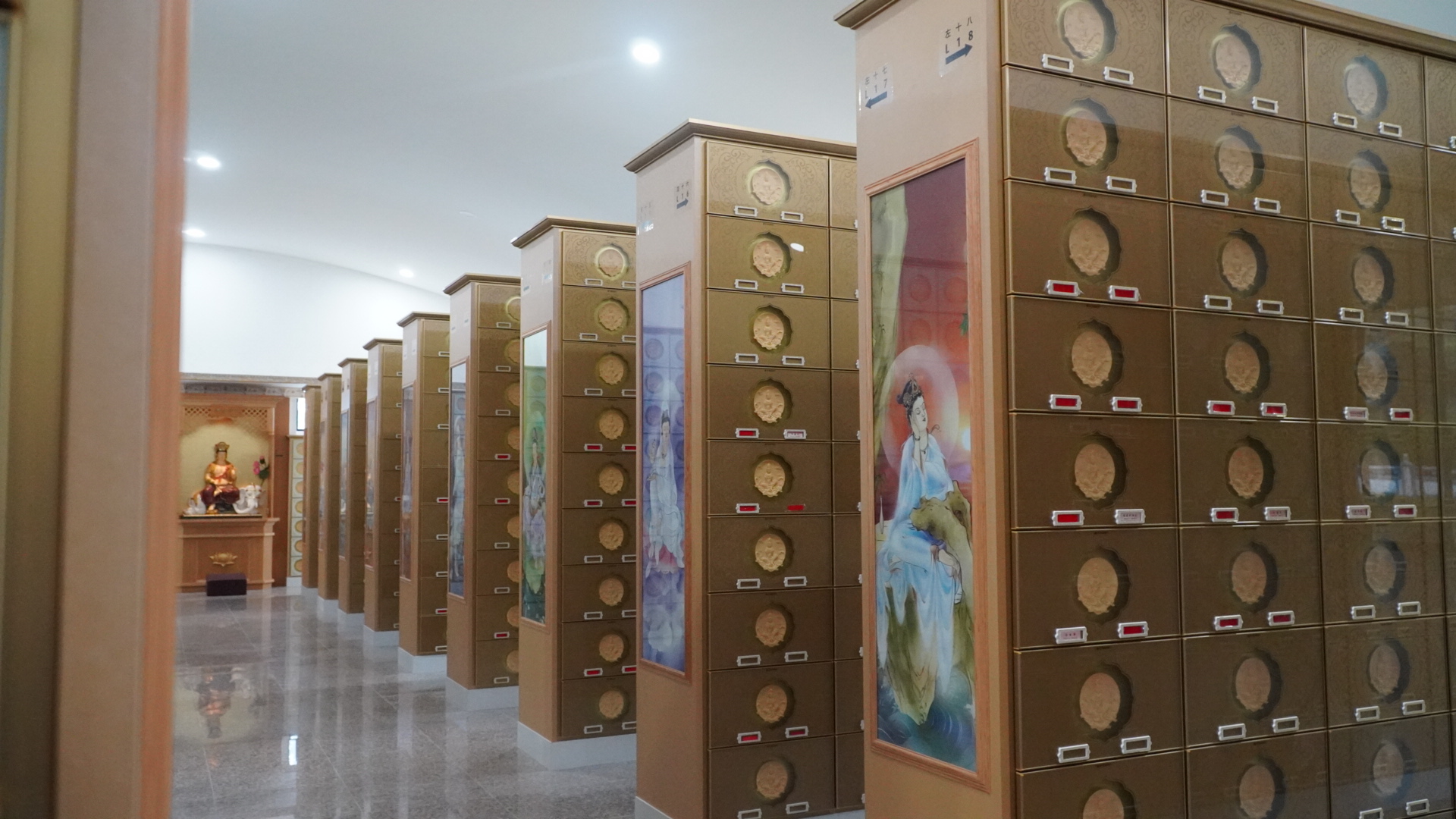
KUCHING: When a loved one departs, families often yearn for a farewell that is gentle and dignified.
For Buddhists here, that wish finds expression in Mi-Tuo-Yen Funeral Service, a community service established by the Kuching Buddhist Society (KBS).
The service, housed in KBS Buddhist Village, is rooted in compassion and tradition, offering funerals guided by the teachings of the Buddha.

Its executive supervisor Chai Kim Soon said that rather than functioning as a commercial enterprise, it provides families with an affordable and respectful arrangement, easing their burden in times of grief.
He pointed out that KBS, registered under the Societies Act as a religious body, has long balanced the spiritual with the social, nurturing Buddhist practice while reaching into the community.
He said that the creation of Mi-Tuo-Yen Funeral Service is seen as one of its most meaningful acts of service.
“In Buddhism, life and death form part of an endless cycle. Death is not the end, but a passage.
“Through rituals, chanting, and compassionate guidance, funerals are meant to help the deceased let go of worldly ties and allow the living to grieve with peace of mind,” he said.
He noted that a Buddhist funeral is kept simple and modest, reflecting the faith’s values of humility and clarity.
He added that it has shaped a system that allows people from all walks of life to approach farewell in a way that feels both practical and sacred.

“A typical service unfolds step by step, each marked by ritual and calm. The altar is arranged with offerings before chanting begins. Vegetarian food is prepared as part of the observances.
“The body is then placed into the coffin while monks or chanting groups recite prayers. A cortege follows, transferring the deceased to the crematorium by coach,” Chai explained.
“At each stage, chanting continues until the moment of cremation, after which the ashes are carefully collected and returned to the family.”
He described this service as part of its larger mission to walk with people through life’s natural stages of birth, sickness, old age and death, while cultivating the Buddha’s teachings and promoting social care.
“Every person hopes not only to live meaningfully, but also to leave this world quietly and peacefully when the time arrives,” he said.