There is a pressing need to improve Sarawak’s state average grade (GPN) in the Sijil Pelajaran Malaysia (SPM) examination to be on par with the national grade point.
Education, Innovation, and Talent Development Deputy Minister Datuk Dr Annuar Rapaee stated that the Sarawak Education Enhancement Programme (SEEP) will act as a catalyst to enhance the academic performance of students.
SEEP was unveiled as part of the 2025 Sarawak Budget by Premier Datuk Patinggi Tan Sri Abang Johari Tun Openg several weeks ago. With increased funding, the program is poised to play a pivotal role in ensuring the success of various education initiatives in Sarawak.
Dr Annuar mentioned that the Premier had allocated RM15 million for 2024 to support the programme, with RM20 million earmarked for the following year, reflecting a RM5 million increase.
“If we scrutinize the GPN based on SPM results, we are significantly below the national average, which stands at 4.7. Historically, our grade hovered around six, placing us marginally above Sabah. Regrettably, we trail behind other states in Malaysia.
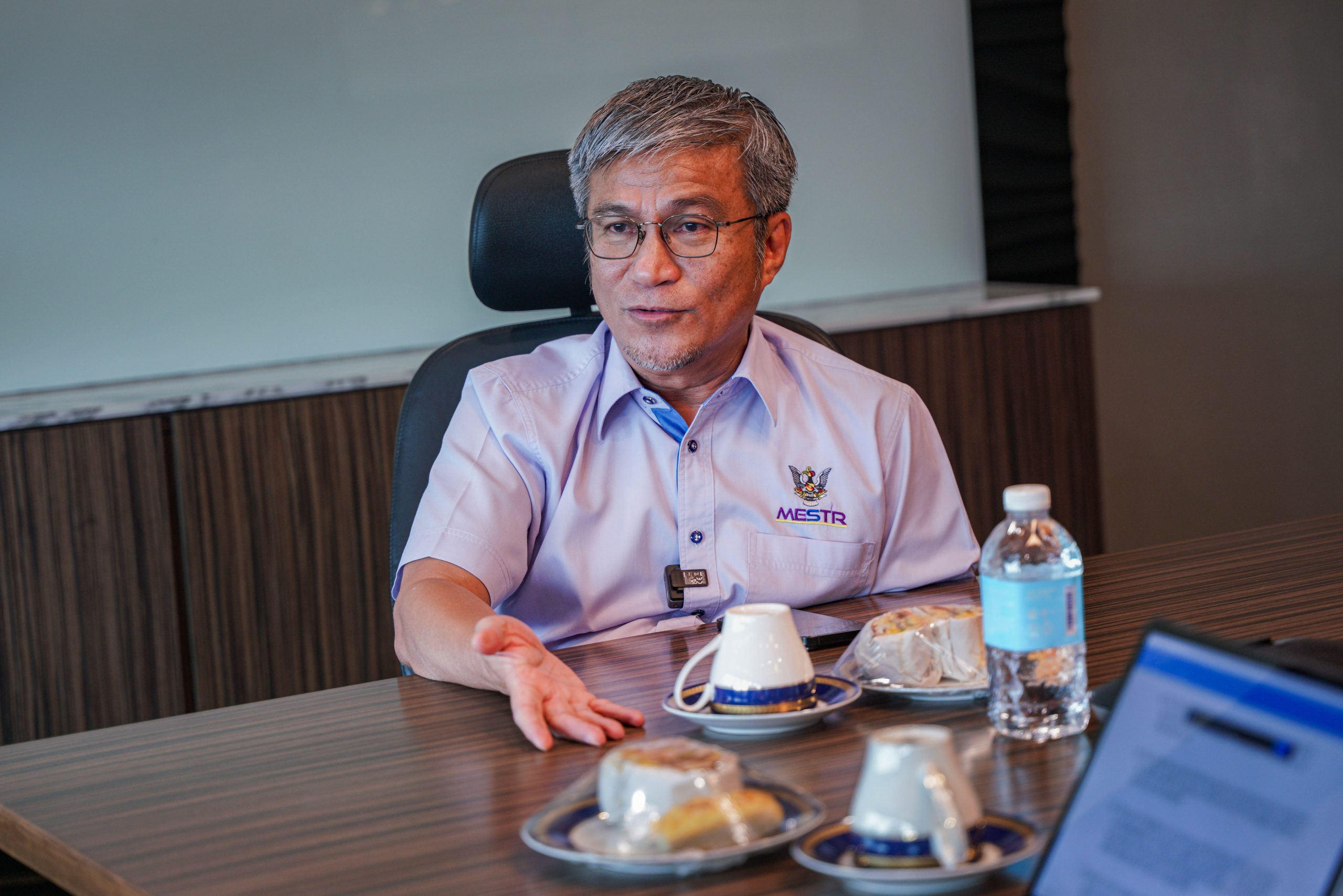
“We acknowledge the imperative to enhance our SPM results if we intend to use SPM as a benchmark. The SPM results are pivotal for admission into higher education institutions; hence, it is a crucial examination,” he disclosed in an exclusive interview with Sarawak Tribune.
The deputy minister emphasized that SEEP will not merely function as a tuition initiative but will adopt a holistic approach, encompassing various programs that address student needs, teacher support, learning infrastructure, teaching aids, and instructional methods.
“The delivery method will not be limited to traditional face-to-face tutoring. We are considering incorporating online learning, webinars, and workshops.
“Our focus will be on students who perform inadequately in their end-of-term examinations, providing them with additional support through this program. It is not solely subject-focused but also caters to students requiring extra assistance to enhance their academic outcomes,” he elaborated.
Setting high targets
Sarawak aims to elevate its position to rank among the top ten states in terms of GPN and school average grade (GPS) for SPM within the next five years, ultimately aspiring to secure a position among the top five states.
“We will empower teachers to identify students who should participate in SEEP, with each student receiving a personalized card.
“We will monitor their attendance, class engagement, and academic progress centrally.
“If we execute this initiative meticulously, with unwavering commitment from teachers, parents, and students, we can realize this vision.
“Through SEEP, we are highly goal-driven. With funding from the state government, our primary Key Performance Indicator (KPI) is to enhance our GPN within the next five to ten years,” he affirmed.

Dr Annuar emphasised the necessity of early intervention to elevate Sarawak’s average grade. Failing to do so would result in the state lagging behind the national average.
“While some interventions are currently being implemented by teachers, it is evident that Sarawak’s average grade has lingered at a low level for the past five to ten years.
“However, I can assert that early intervention can propel us beyond the national average grade,” he asserted.
The Sarawak Education, Innovation, and Talent Development Ministry advocate for structured learning as a means to assist students in enhancing their academic performance.
“We are prioritizing increased enrollment in boarding schools to instil a structured regime within educational institutions.
“This initiative enables teachers to provide dedicated support to students, with the aim of bolstering the average grade over the next five to ten years,” he added.
Dr Annuar highlighted that the data indicates that low GPS is not exclusive to rural schools but also affects urban educational institutions. Sarawak perceives the state average grade of 6 as inadequate. This year, the average grade dipped below five, achieving 4.9 for SPM 2023, marking a positive trajectory.
Whole-of-society approach
The deputy minister underscored his outreach efforts to engage the community in enhancing the academic performance of students in Sarawak and preparing them for future educational endeavours.
SEEP primarily targets secondary schools. Initially focused on Form 5 students, the initiative has expanded to include Form 3 and 4 students following increased funding.
Dr Annuar outlined this expansion to bolster the enrollment of students in science, technology, engineering, and mathematics (STEM) fields.
“As part of my initiative, I have engaged with young teachers in Sarawak, numbering 18,000 individuals aged below 45 years. I encouraged them to establish a non-governmental organization (NGO) known as the Persatuan Aspirasi Guru Sarawak.
“Supported by substantial funding from the state government, they have concluded their inaugural seminar and conference. I will convene with them by year-end, during the school holiday, to strategize how we can assist not only Form 3, Form 4, and Form 5 students but also Primary 4, 5, and 6 students.”
Dr Annuar highlighted the involvement of other NGOs such as the Sarawak National Dayak Union (SDNU) and political parties in these endeavours.
“We will conduct an in-depth analysis during our retreat to determine how best to support students, with the aim of devising effective modules and programs,” he added.
He emphasized the importance of focusing on primary school students to ensure inclusivity as Sarawak endeavours to enhance its educational quality through the establishment of international schools.
“We aim to prevent certain groups from being the sole beneficiaries of international schools, underscoring the significance of initiating these efforts at an early age.
“Moreover, the implementation of free tertiary education from 2026 onward raises concerns about ensuring equitable access, particularly for rural students,” he remarked.
The deputy minister stressed the urgency of implementing SEEP before 2026 to enable rural students to benefit from the forthcoming free tertiary education initiative.
“SEEP stands as a pivotal intervention in our collective mission to elevate the standard of education in Sarawak,” he concluded.