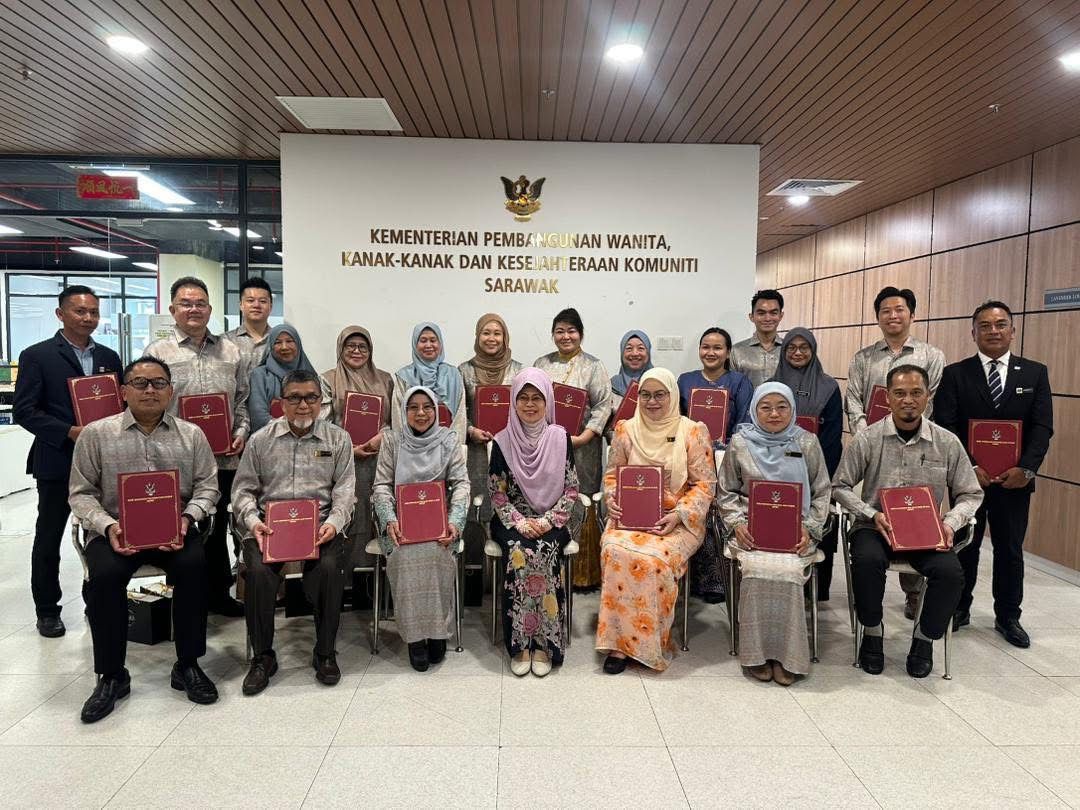
KUCHING: The early childhood care and education (ECCE) sector in Sarawak needs to undertake strategic adjustments following the introduction of a new policy allowing six-year-old children to enter Year One beginning in 2027.
Women, Early Childhood and Community Wellbeing Development Minister Datuk Seri Fatimah Abdullah said the policy introduced by the Ministry of Education (MoE) gives parents the option of enrolling their children in Year One at the age of six or keeping them in kindergarten until they turn seven.
According to her, although the implementation is not mandatory, its implications for the childcare centres and kindergartens ecosystem in the state are significant, particularly in terms of enrolment patterns, the financial sustainability of operators, and children’s developmental readiness.
“If a large number of parents choose to send their children to Year One earlier, the number of six-year-olds in kindergartens is expected to decline significantly, directly affecting operations and staffing requirements,” she was quoted as saying in an UKAS report after chairing the Sarawak Early Childhood Development Council (MPAKS) meeting here recently.
Fatimah, who is also MPAKS chairperson, said a reduction in student numbers would not only affect operators’ income but could also impact employment opportunities for preschool teachers if the need for teaching staff decreases.
At the same time, she noted that the majority of parents currently still prefer the existing approach, where children aged zero to four are placed in childcare centres and those aged four to six in kindergartens due to concerns over their children’s academic, emotional and social maturity.
In this regard, MPAKS is also examining a proposal for integrated licensing that would allow childcare centres and kindergartens to operate within the same premises, sharing facilities such as kitchens, outdoor play areas and administrative spaces, subject to space requirements and appropriate age-based zoning.
The approach is seen as capable of reducing operating costs, strengthening continuity in children’s learning, and facilitating collaboration among educators should issues arise concerning physical, emotional or social development.
She stressed that the ministry, together with MPAKS, will ensure that Sarawak is prepared to face the policy changes, including in terms of land-use planning and the coordination of operational guidelines, so that the interests and wellbeing of children remain a priority.