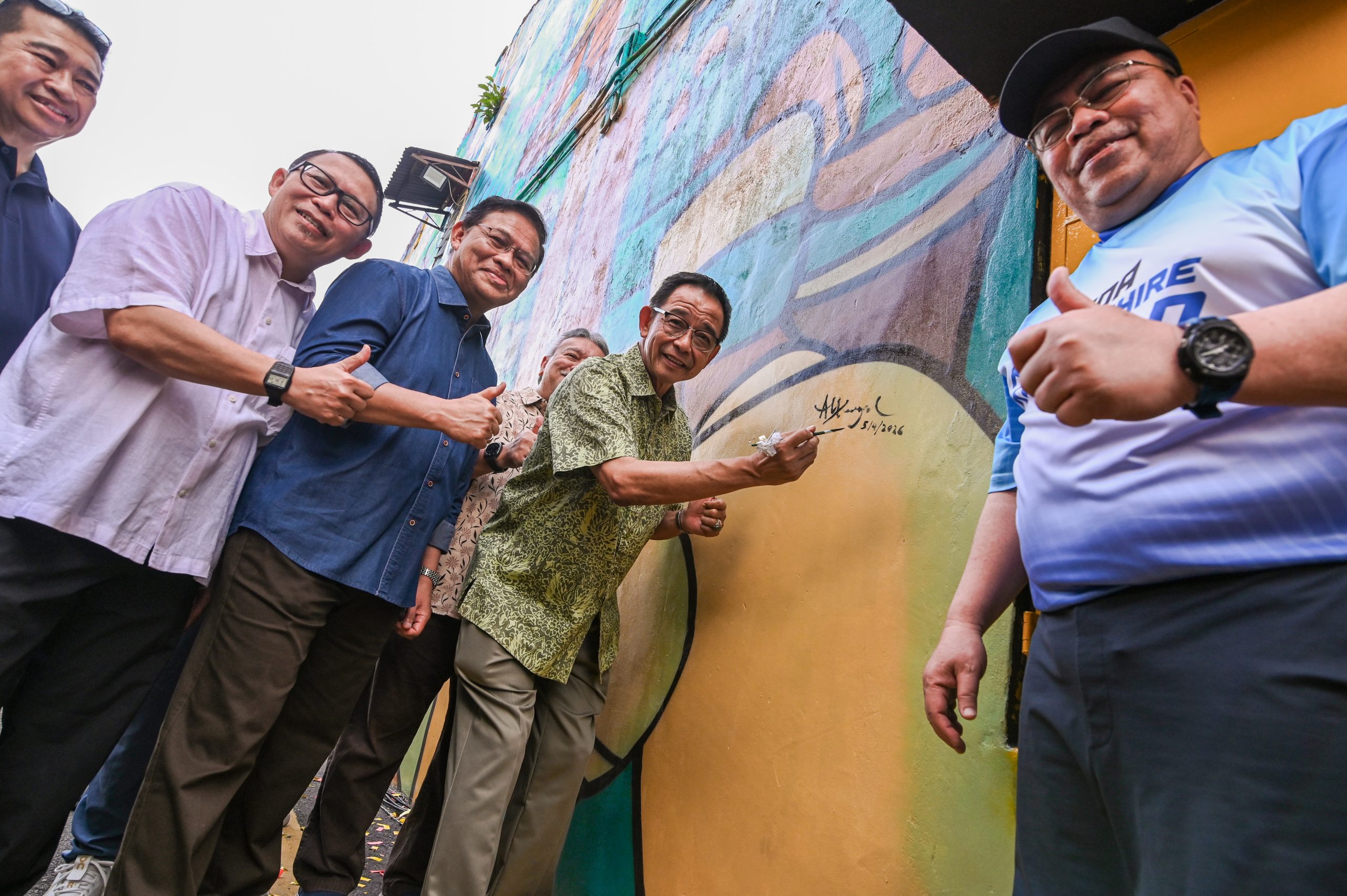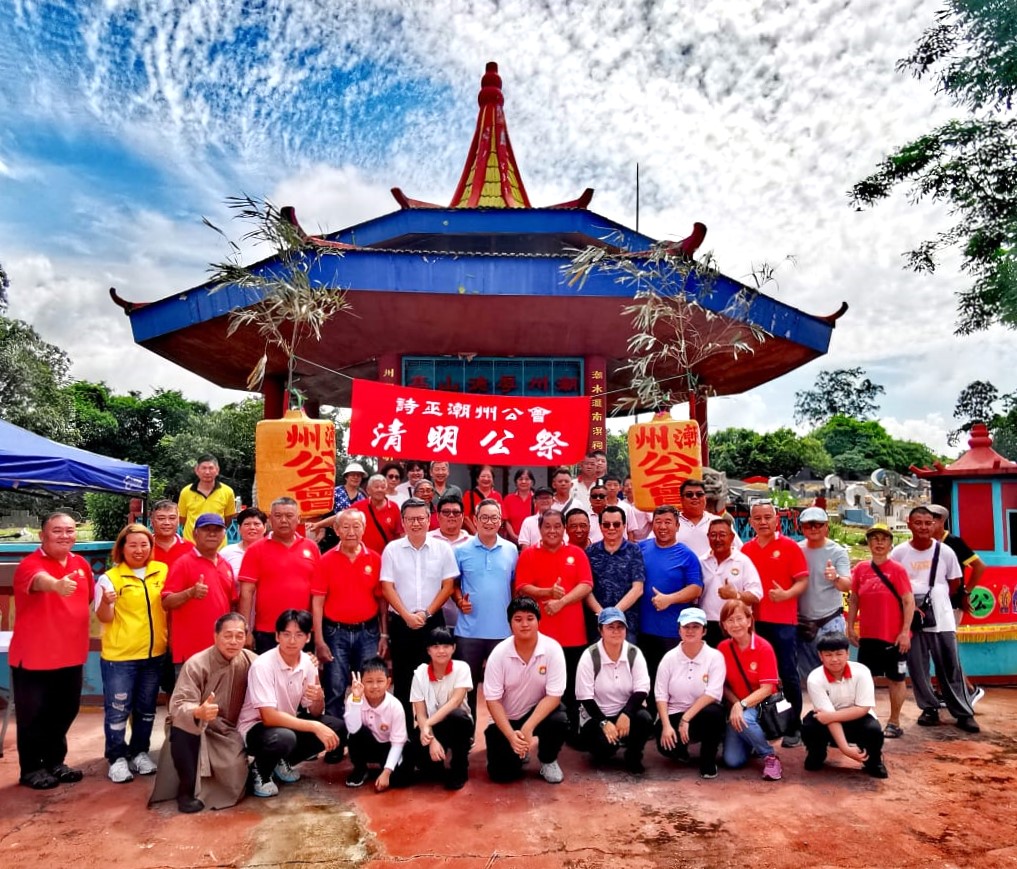
SIBU: The annual Ching Ming Festival celebration 2026 organised by the Teochew Association Clan Sibu (TACS) has highlighted the community’s enduring respect for ancestral heritage, cultural traditions, and intergenerational unity.
Deputy Minister of Public Health, Housing and Local Government, Datuk Michael Tiang Ming Tee said the event provided an opportunity to witness the association’s unique procession held in conjunction with the festival.
He noted that the ceremony is not merely symbolic but deeply meaningful, as it reflects the community’s gratitude to their forefathers who migrated from mainland China and established roots in Sibu.
“Our ancestors laid the foundation for generations. Through these rituals, we express our respect and appreciation so that we may continue to enjoy the fruits of their sacrifices,” he said at the TACS cemetery site, Jalan Teng Chin Hua here today(April 5).
Tiang, who is also Pelawan assemblyman, announced that RM200,000 has been allocated under the Rural Transformation Programme (RTP) to upgrade and renovate the ageing gazebo at the association’s cemetery.
The improvement will provide a more conducive space for ritual ceremonies and serve as a resting area for families visiting during the festival.
Gazebos at the site, he added, plays an essential role by offering shade and seating for visitors, particularly during the Ching Ming period when attendance is high.
Also present at the event were Bukit Assek assemblyman, Joseph Chieng Jin Ek, TACS honorary advisor, Penghulu Chua Hiong Kee and TACS chairman, Kapitan Su Ngio Kee.
Meanwhile, Chieng expressed his delight in seeing younger members actively participating in the association’s traditional Chinese musical group during the ceremony.
He said such involvement is crucial in ensuring that the rich cultural heritage of the Teochew community continues to thrive, especially among the younger generation.
“I am impressed by the strong teamwork and excellent organisation demonstrated by the committee. Their efforts have ensured that the ceremony runs smoothly every year,” he said.
Chieng added that the association’s commitment to preserving tradition reflects a deep appreciation for ancestral contributions, which have shaped the community’s present-day success.
He encouraged more youths to take part in such activities to ensure the continuity of their cultural legacy for future generations.
Chua also highlighted the importance of the annual practice of ancestor worship during the Ching Ming Festival.
“This is the time we bring our younger generations to honour our ancestors for their lifelong contributions to our community,” he said.
He stressed the importance of instilling a sense of identity and belonging among the younger generation, reminding them never to forget their roots regardless of where they may be in the world.
“Our ancestors built the foundation for everything we have today. Without them, we are nobody,” he said.
Chua added that this year’s procession carried the meaningful theme, “We Should Never Forget Our Root,” underscoring the importance of cultural continuity.
He noted that while many young people may not return home during Chinese New Year due to overseas commitments, they make a conscious effort to return during Ching Ming to pay respects to their ancestors.
According to him, many members of the Teochew community travel from countries such as China, Australia, Singapore, as well as Peninsular Malaysia, to participate in the annual observance.
“This tradition must be preserved and upheld, especially by our younger generation, so that our heritage continues to live on,” Chua added.