BY DERRICK MOH

Bringing together artists, galleries and creative communities, CIMB Artober 2026 offers visitors an opportunity to experience the diversity of Malaysian and international art, all under one roof.
Championing artists, strengthening communities, advancing creative economy
Art might not be tested in examinations.
But we need art in our lives.
I remember a former art teacher telling my parents this when they collected my report card. Having neglected my weekly art assignments, I paid little attention to the advice at the time, especially since art was not a compulsory subject in the lower secondary examinations.
Fast forward to today, and I have come to appreciate art, particularly during my time in Kuala Lumpur.
Wandering through galleries and hunting for art events have become weekend staples, offering a welcome escape from the weekday routine. Typically, this involves travelling from one venue to another, buying tickets and leaving with a few nice photographs.
But imagine being able to browse artworks across galleries, interact with artists, attend performances and join discussions, all under one roof and free of charge.
That is precisely what CIMB Artober 2026 (CIMBA) offered when it was held from Oct 28 to Nov 1 at Ombak KLCC, a retail destination that opened in late August.
Now in its sixth edition, CIMB Group’s annual flagship arts event continued its mission of championing artists, strengthening communities and advancing the creative economy.
Over five days, visitors enjoyed showcases by more than 15 galleries and creative entrepreneurs, alongside talks, screenings, performances, workshops and a curated charity auction.
The variety was impressive, with everything from sculptures and fine art to digital works, installations and traditional crafts on display.
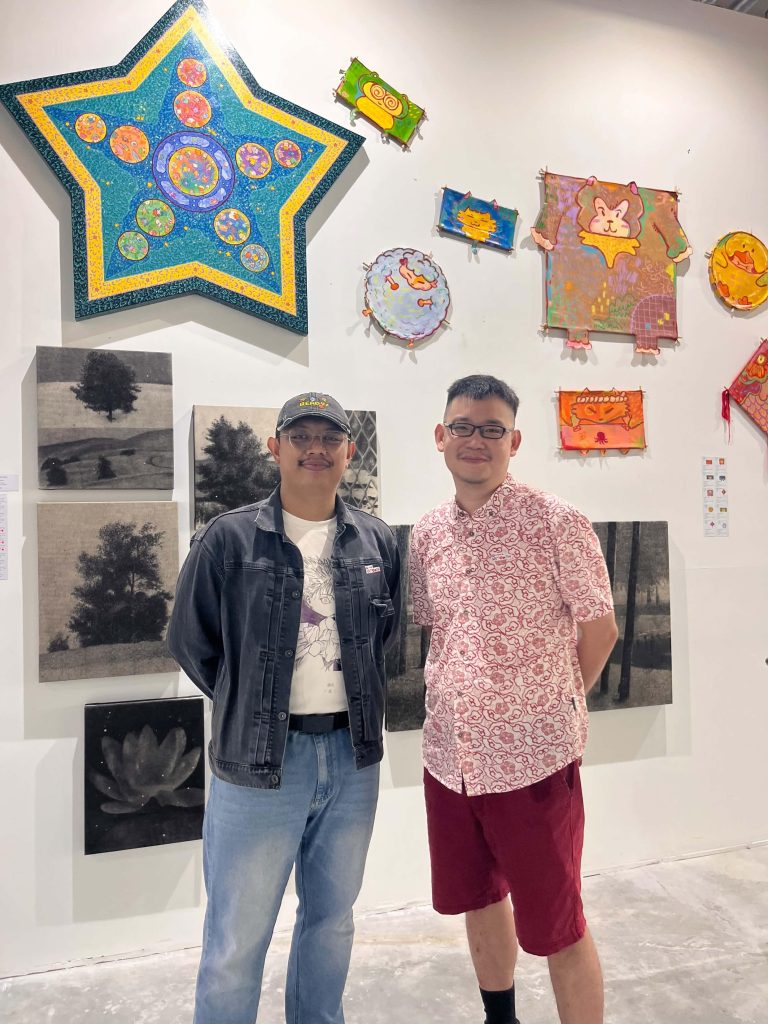
I had the pleasure of visiting on the fourth day, taking in the atmosphere and speaking with some of the participating artists and personalities.
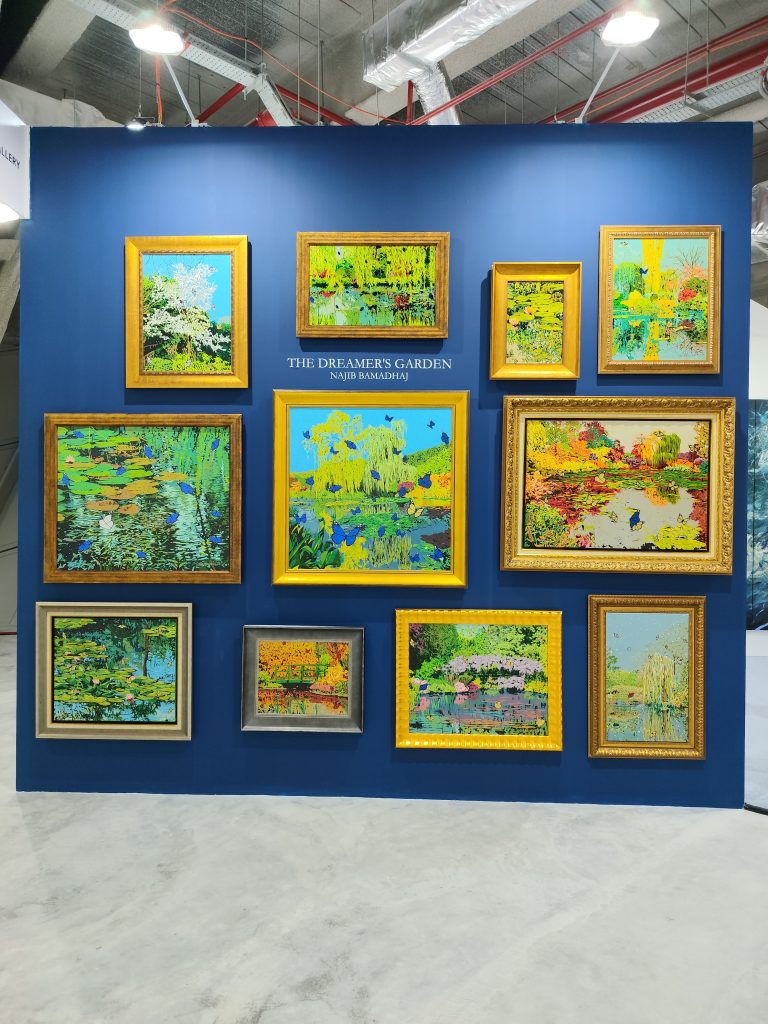
One of the highlights was The Dreamer’s Garden by Najib Bamadhaj, a collection of 11 serene botanical scenes in seasonal tones displayed together on a single wall by G13 Gallery.
Inspired by the artist’s visit to Claude Monet’s Garden in Giverny, France, the collection transported me to the tranquil Norman countryside. As all 11 works had been sold to different buyers, visitors were fortunate to have the opportunity to view the complete collection at CIMBA.
I also had the opportunity to speak with fellow G13 Gallery artist Aimman Hafizal, whose work revolves around character design.
“It is quite challenging to create your own characters,” Aimman shared.
“For me, I embrace the challenge. Each character represents one of my friends, so they are like caricatures of them. Each has its own specific traits. I now have about 100 characters.”
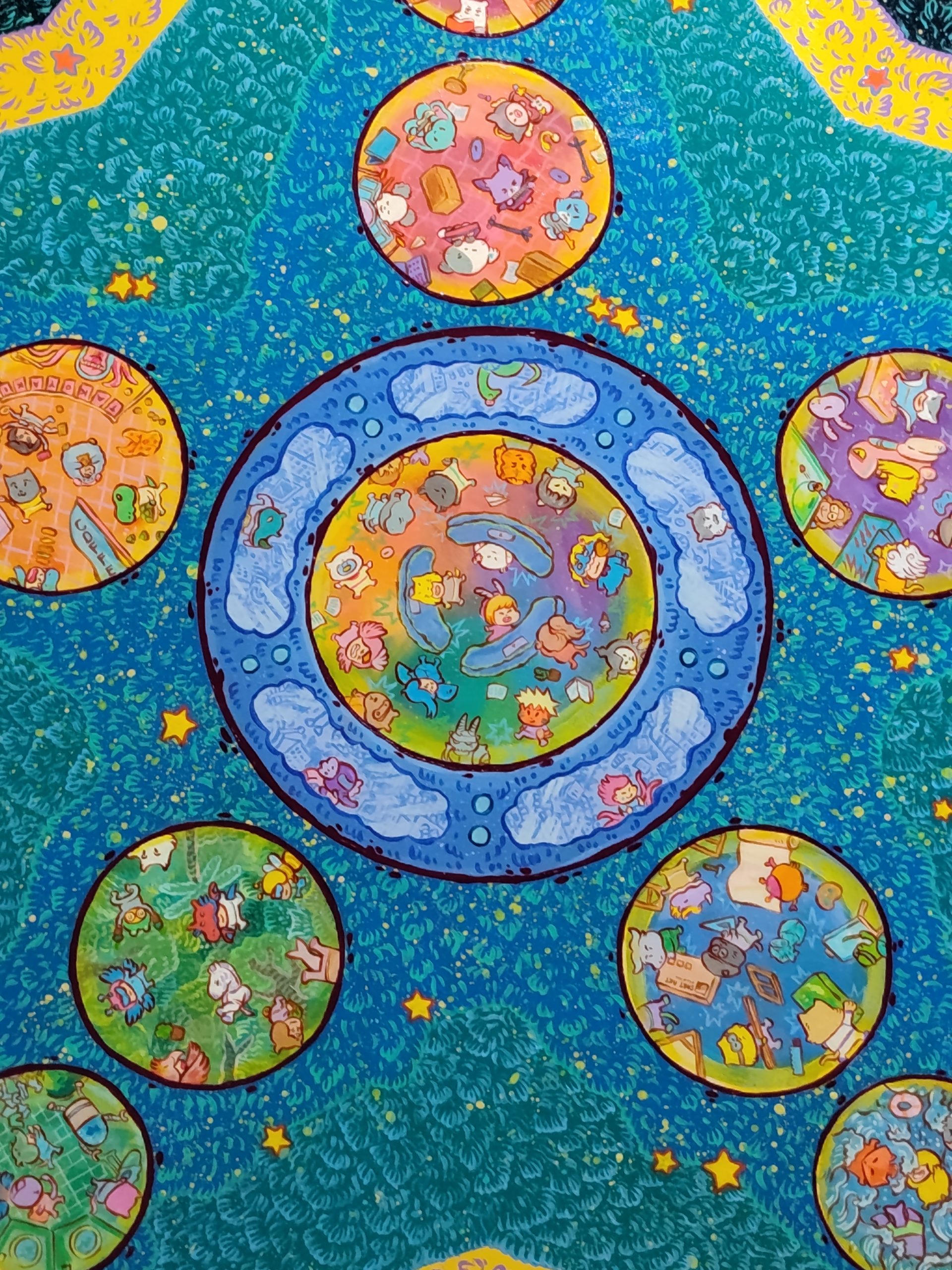
One of his featured works, Startopia, depicts a star-shaped spacecraft populated by his characters. The piece is based on the idea that a nation is defined by its people rather than its physical territory.
Its intricately detailed background also draws inspiration from his previous artist residency in Yogyakarta, Indonesia, a city renowned for its batik tradition.
Another popular attraction was Metamorphosis, a walkthrough exhibition by Singapore-based digital artist and composer Zhang Yi Fei.
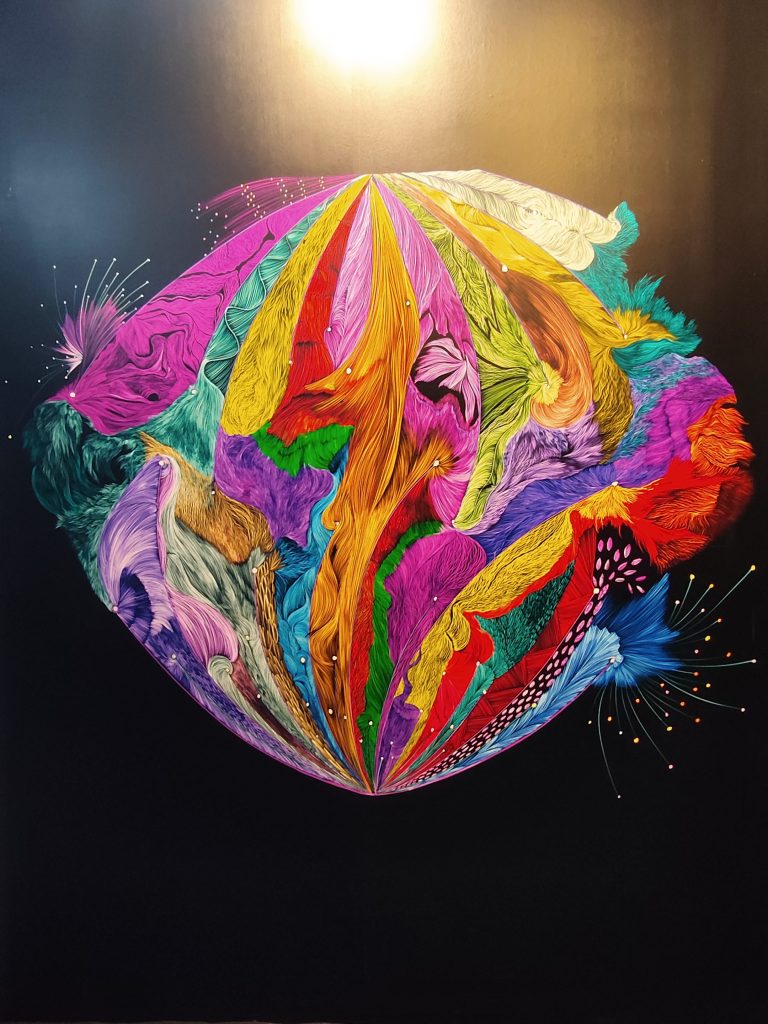
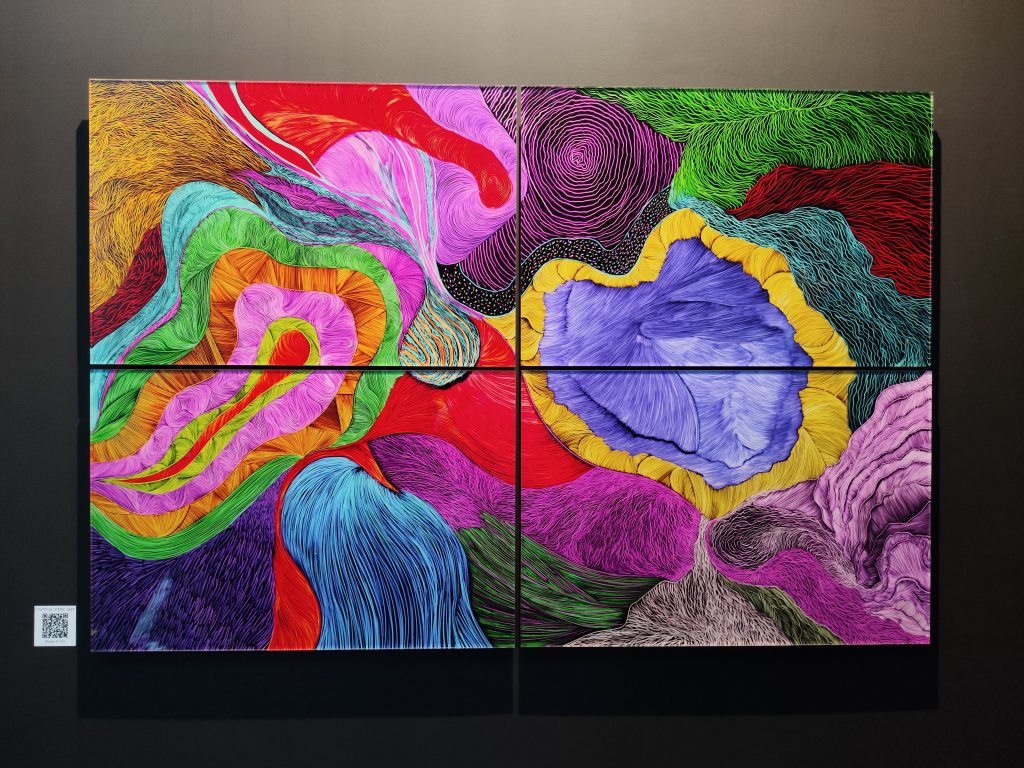
Described as “an invitation to encounter” one’s own story rather than one centred on the artist’s personal narrative, the exhibition featured powerful lines intersecting and interacting to form an array of shapes and images.
To me, the visuals evoked perspectives of human anatomy and marine life. I initially did not realise the works were digital because of their fine details and delicate appearance. It was only upon closer inspection that I noticed the glass panels and screens.
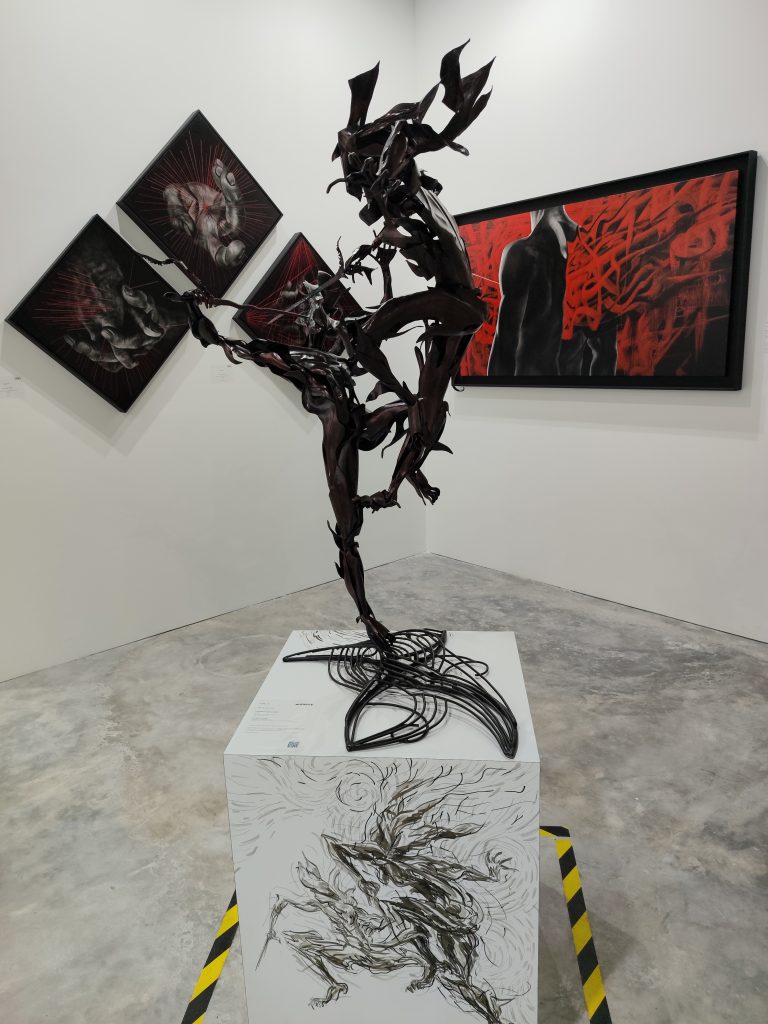
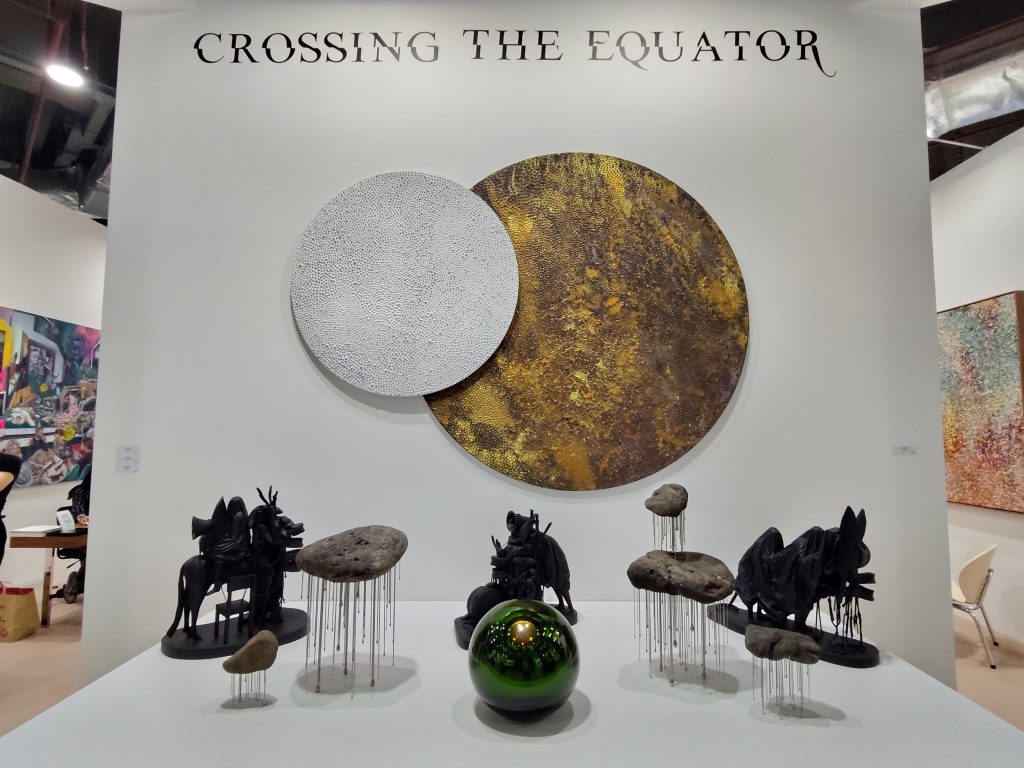
TAKSU Galleries also drew attention with its Crossing the Equator exhibition, which celebrated the diversity of its artists across geographical boundaries.
This was reflected in an arrangement of sculptures and installations created using mixed media by Endry Pragusta (Indonesia), Reg Yuson (the Philippines), Rudolf Burda (Czech Republic) and Peter Panyoczki (Hungary).
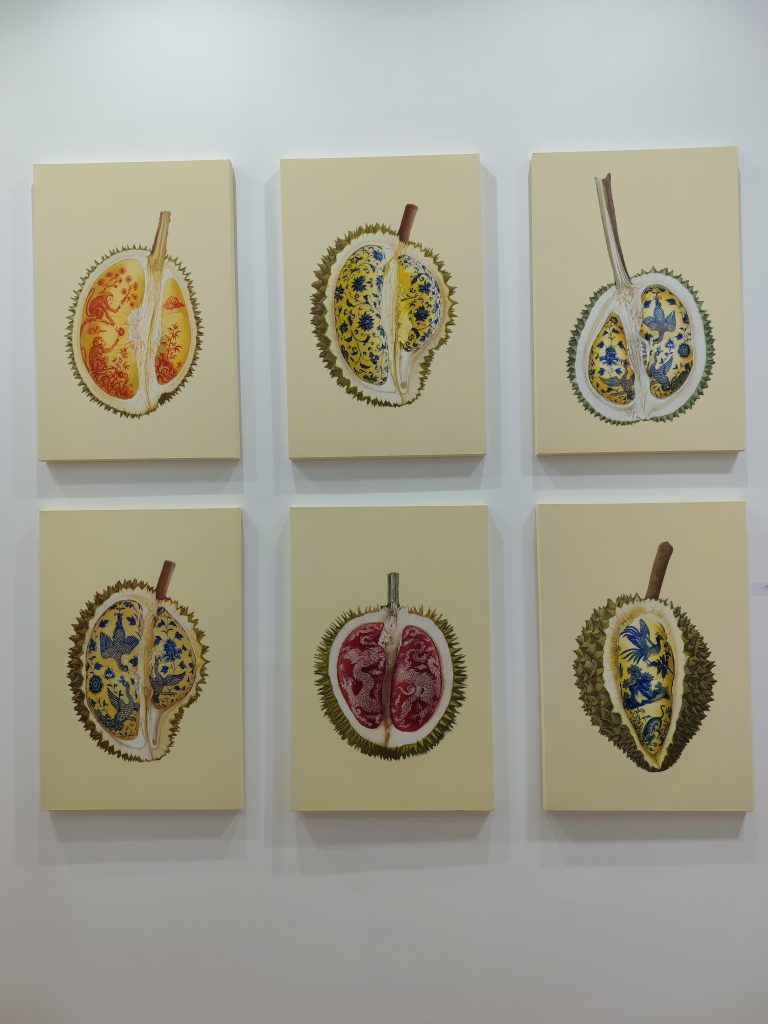
Around the corner, visitors were greeted by a series of six durian sculptures featuring flesh adorned with motifs reminiscent of Chinese ceramics. The works were created by local artist Azrul Azrai Mohyi.
I was particularly intrigued by the diverse range of works presented by TAKSU.
Over at Bauhaus Gallery, Silang Arus brought together celebrated veteran painter Syed Thajudeen and contemporary artist Haris Rashid in a cross-generational collaboration.
With a generational gap of half a century between them, the two artists created a collection bursting with energy and passion.
While Thajudeen captured female figures in moments of grace and scenes of society, Rashid explored personal identity and culture through various mediums, ranging from vibrant canvases to striking batik pieces displayed above.
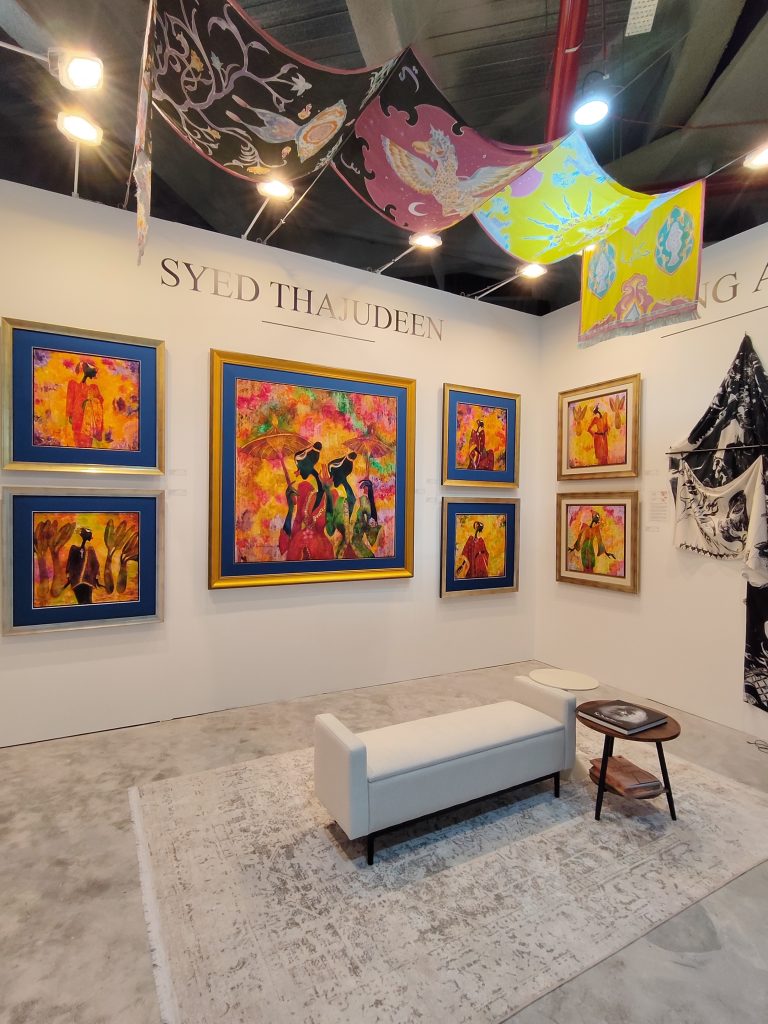
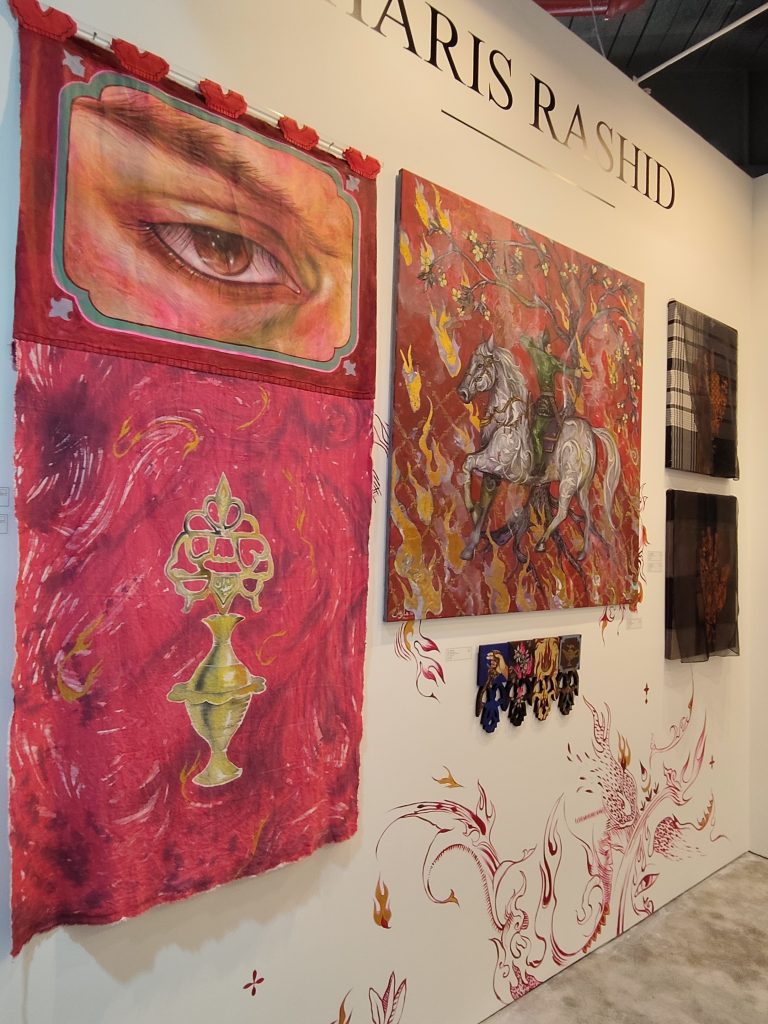
One particularly outstanding work at CIMBA was Thajudeen’s exquisite three-panel painting, Royal Barge, created in 2005. It depicts the grandeur of Parameswara and his entourage travelling along Sungai Melaka during the Malacca Sultanate era.
CIMBA also paid tribute to Malaysia’s traditional heritage and craftsmanship through the participation of Yayasan Hasanah.
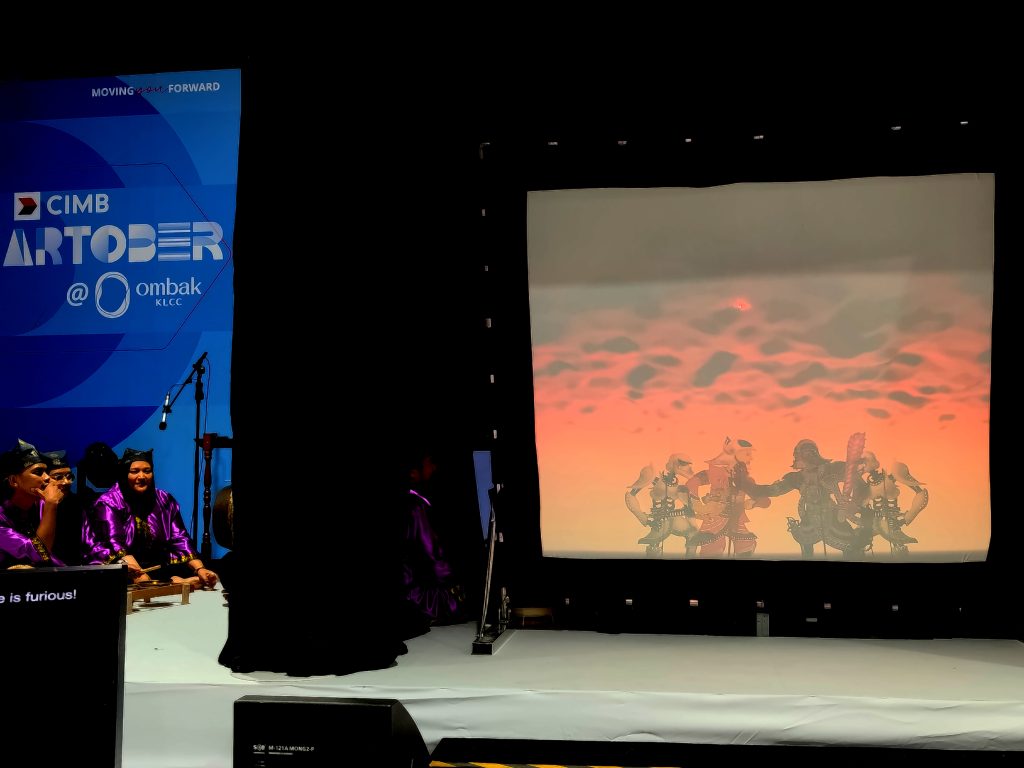
It was there that I met Tintoy Chuo, founder of Fusion Wayang Kulit (FWK), and Pak Dain Othman, a 13th-generation accredited tok dalang (puppeteer).
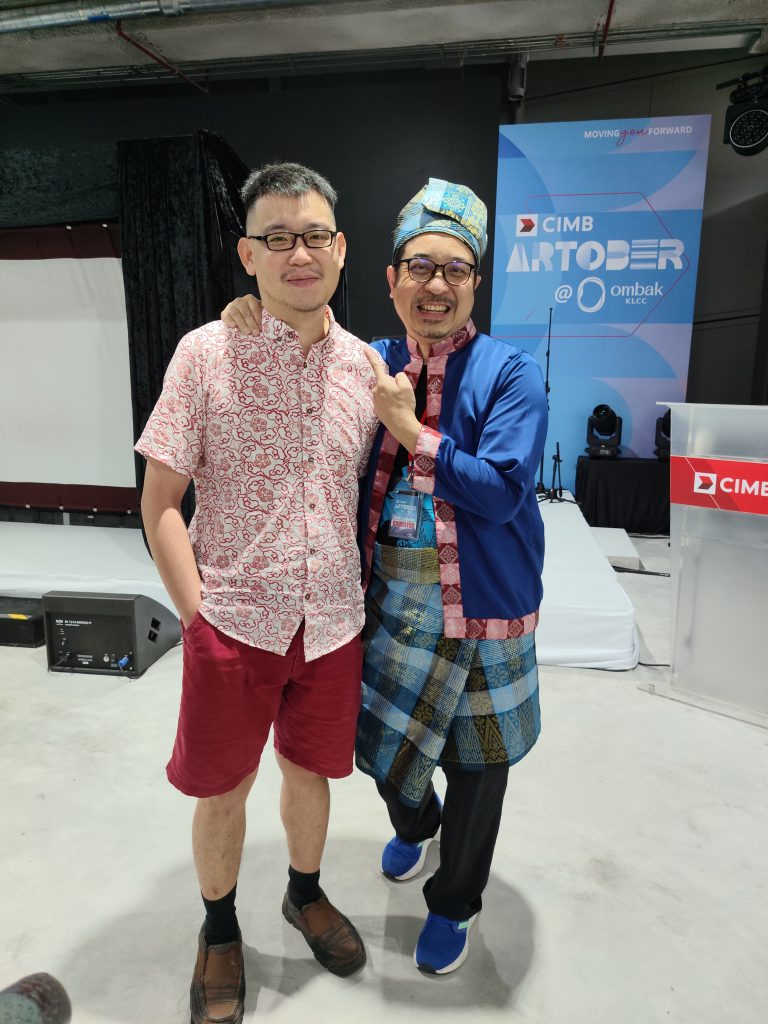
Already recognised internationally, FWK explores new ways of presenting wayang kulit Kelantan by incorporating elements of pop culture and technology.
Sitting down with Pak Dain, I asked how FWK justified its approach in the face of traditional expectations.
“FWK still comes from the principles of wayang kulit asli Kelantan,” he explained.
“It’s actually an enhancement of elements like music, audio and graphics. But the puppeteering, performance and music, we don’t change. The art of traditional wayang kulit is still there.
“We are allowed to focus on any cerita (story). So the art is not spoiled.”
Their signature production, Peperangan Bintang, an adaptation of Star Wars Episode IV: A New Hope, was performed before a packed audience that evening.
Accompanied by live music, the appearance of Kelantanese leather puppets depicting Stormtroopers and Darth Vader drew enthusiastic applause.
Thinking back to my former teacher’s words, I would say this to my younger self:
Art need not be tested, as our lives are already tests.
Art is a means of soothing the soreness of those tests.
Events such as CIMBA offer a welcome respite, and I am already looking forward to the next edition.