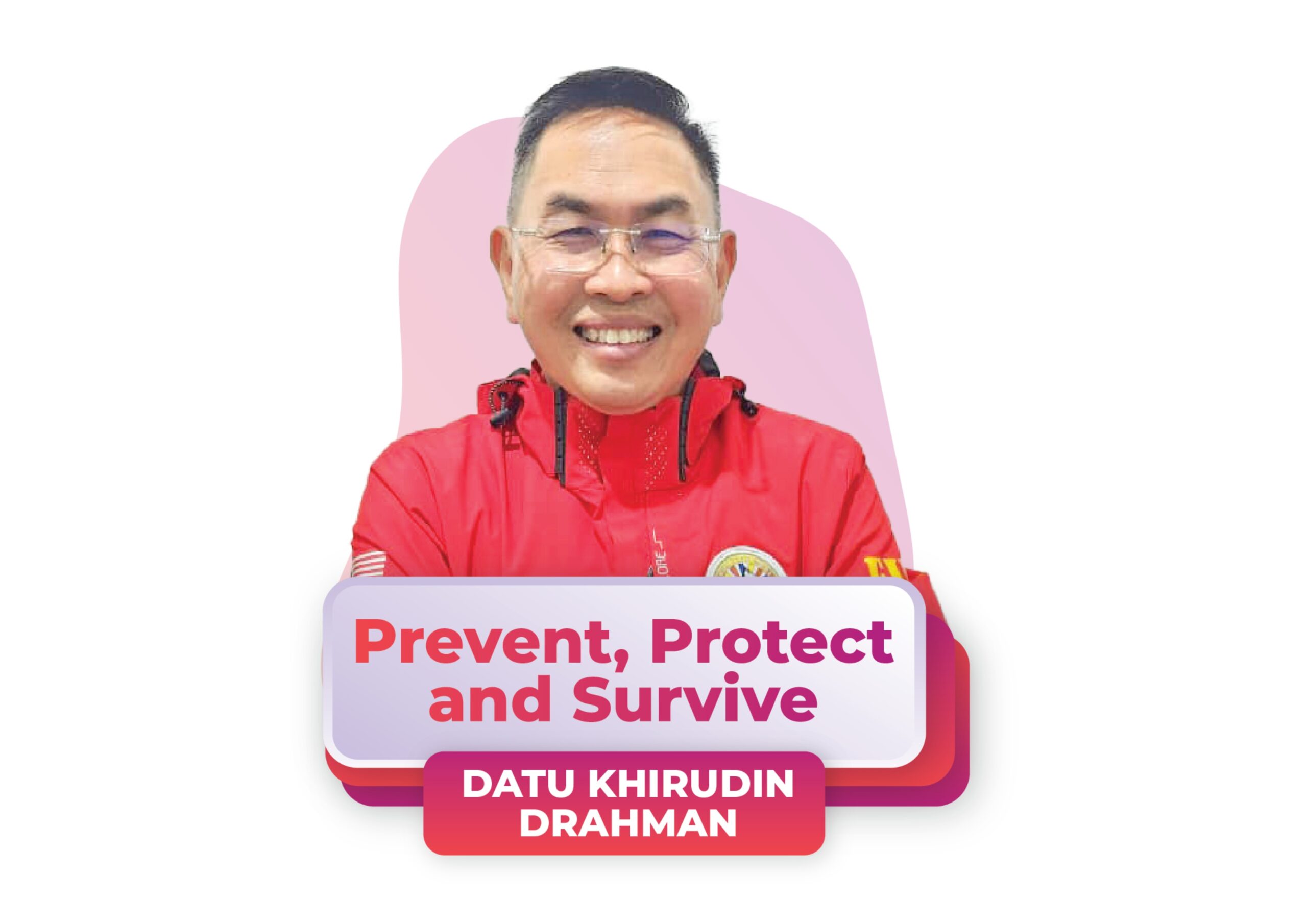
THROUGHOUT my 37 years in emergency service, one lesson has remained unchanged – communication is the backbone of every successful emergency operation.
When people think about disaster response, they often picture sirens, fire engines, rescue boats and uniformed personnel rushing into dangerous situations. While these are vital components of any emergency response, what often determines whether an operation succeeds or fails is something far less visible: communication.
Without reliable communication, even the best-trained responders can face delays, confusion and unnecessary risks. Information must move quickly and accurately between the incident ground, command centres and responding agencies. When communication breaks down, coordination suffers and valuable time can be lost.
That is why I have always respected those who work quietly behind the scenes to ensure communication remains operational during emergencies, particularly volunteer radio communication groups such as the Radio Emergency and Drone Squad (REDS).
In recent weeks, I have spent time with what I consider the “unsung heroes” of Sarawak’s emergency support system. Their work serves as a reminder that effective disaster management depends not only on equipment and manpower, but also on strong communication networks and community participation.
During the REDS Annual General Meeting on 18 April, I was honoured to be nominated and elected president of the organisation. Prior to this, I served as deputy president and adviser to REDS while carrying out my responsibilities as director of the Sarawak Fire and Rescue Department (Bomba Sarawak) from 2019 until May 2024.
To me, this role is not about titles or positions. It is about continuing a mission I strongly believe in – strengthening emergency preparedness through cooperation, communication and community involvement.
What makes REDS unique is the diversity of its membership.
The organisation comprises volunteers from various professional backgrounds, including former pilots, retired police and military personnel, professors, councillors, teachers and many others who share a common passion for radio communication and emergency response.
Today, REDS has around 160 members across Sarawak, with approximately 50 active members regularly involved in emergency-related operations.
What impresses me most is their dedication.
These individuals volunteer their time, knowledge and expertise without expecting recognition or reward. Yet whenever disasters occur – whether floods, search-and-rescue missions or incidents in remote areas – they are often among the first to offer assistance.
Their contribution is especially important in a state such as Sarawak, where geography continues to present significant operational challenges.
Our vast land area, rugged terrain, scattered settlements and communication blackspots make emergency response more complex than in many other regions. In some interior areas, mobile connectivity remains weak or non-existent. During disasters, conventional communication systems may also become unreliable because of damaged infrastructure, power outages or network congestion.
This is where organisations such as REDS play a crucial role.
Because REDS members are already located throughout the state and are often close to affected communities, they can provide immediate information from the ground. This enables emergency agencies to gain situational awareness more quickly, deploy resources efficiently and send the right teams to the right locations.
For me, this reflects a principle I have long championed throughout my years in service — the importance of developing “local heroes” or “local champions”.
In many emergencies, communities themselves become the true first responders long before official assistance arrives. Residents, village leaders and volunteers are often the first to assess the situation, provide initial aid and relay critical information to authorities.
The role played by REDS aligns closely with the National Fire and Rescue Policy 2021–2030, particularly in strengthening inclusive strategic cooperation among government agencies, community organisations and technical experts in managing modern disaster risks.
During my tenure as Bomba Sarawak director, REDS established a strategic partnership with the department through a Memorandum of Understanding (MoU) involving cooperation in special communication services.
We also consistently advocated stronger integration between REDS and the State Disaster Management Committee (SDMC) framework to improve operational sustainability, information-sharing and coordination during emergencies.
Beyond radio communication, REDS has also developed drone capabilities to support aerial surveillance, reconnaissance, damage assessment and search-and-rescue operations.
I personally witnessed the organisation’s commitment during numerous incidents throughout my career.
Whether during major floods, remote rescue missions or incidents such as the Mulu tragedy, REDS members consistently carried out their responsibilities voluntarily, professionally and effectively.
Their contribution often helped strengthen operational coordination and improve information flow on the ground.
What many people may not realise is that emergency communication itself is highly technical.
Public safety agencies around the world rely on communication standards such as TETRA (Terrestrial Trunked Radio), Project 25 (P25), Digital Mobile Radio (DMR) and Push-to-Talk over Cellular (PoC).
Each serves different operational needs.
TETRA, for example, is highly effective in mission-critical environments where multiple agencies need to communicate simultaneously without interference. P25 was specifically designed to improve interoperability among police, fire and medical services, while DMR provides a more cost-effective solution widely used by industrial sectors and volunteer emergency organisations.
Meanwhile, PoC technology combines modern 4G, 5G and satellite networks to provide communication support across wider geographical areas.
However, regardless of how advanced technology becomes, communication discipline remains equally important.
In emergency operations, poor communication can result in confusion, delays and operational failure.
That is why radio users must understand operational protocols such as SITREP and SPOTREP reporting, authentication procedures, message brevity and the importance of using clear, concise and standardised language.
Technology alone cannot guarantee effective communication if information is poorly managed or transmitted.
One of the greatest strengths of amateur radio communication is its resilience.
When conventional telecommunications systems fail because of damaged infrastructure or power disruptions, amateur radio can continue operating as an independent fallback communication system. This capability has proven invaluable in disasters worldwide, particularly in areas where access and connectivity are limited.
I witnessed its importance repeatedly throughout my years of service, including during the Highland Towers tragedy, the Mantin Cessna aircraft crash and regional disaster operations following the 2004 Aceh tsunami.
In many situations, communication became the lifeline connecting rescuers, victims and command centres.
Today, the challenge lies in narrowing the gap between volunteer communication expertise and formal disaster management systems.
Sarawak REDS has already demonstrated its capability, commitment and professionalism over many years despite operating on a voluntary basis. Its contribution deserves greater recognition and stronger institutional support.
At the end of the day, disaster response is not only about sophisticated equipment or modern technology.
It is about ensuring that when someone cries out for help, especially in the most remote corners of our state, there is still someone able to hear that call and relay it to those who can respond.
And often in Sarawak, REDS helps ensure that voice is never lost.
The views expressed here are those of the writer and do not necessarily represent the views of Sarawak Tribune. The writer can be reached at khirudindrahman@sslborneo.com.my