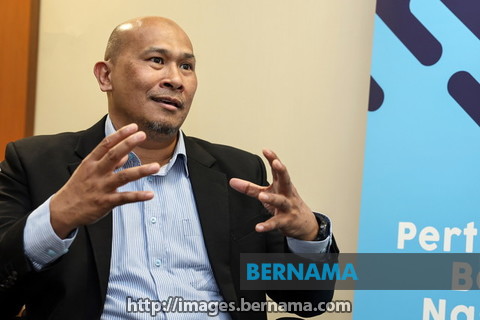
KUCHING: Sarawak should consider positioning itself as a hub for data centres by capitalising on its renewable energy resources, said former Tokyo Electric Power Company Holdings (TEPCO) President, Naomi Hirose.
Speaking at the Sustainable and Renewable Energy Forum (SAREF 4.0) at Borneo Convention Centre Kuching (BCCK) today, Hirose stressed that the global boom in artificial intelligence (AI) has triggered soaring demand for data centres, which require immense amounts of electricity.
“Instead of simply exporting energy, Sarawak could consider attracting data centres to be built near its hydropower plants, exporting data rather than just electricity.
“This approach could maximise value while addressing both energy and data security concerns,” he said.
He added that Sarawak has significant potential in both energy export and digital development and urged stakeholders to explore all available options.
Meanwhile, Head of the International Energy Agency (IEA) Regional Cooperation Centre Singapore, Sue-Ern Tan, pointed out that Southeast Asia accounts for about 25 per cent of global energy demand growth over the next decade, second only to India.
“By 2030, power consumption in this region will reach 2,000 terawatt hours – equivalent to twice Japan’s current consumption. This growth must be met in a way that is secure, affordable, and sustainable,” she said.
Tan outlined three golden rules for navigating the energy transition with the first being the diversification of both energy sources and trade partners.
“Second, predictability, as governments must provide policy certainty to attract long-term private sector investment.
“Third, cooperation, through enhanced interconnections, development of the ASEAN Power Grid, and stronger regional clean technology supply chains,” she explained.
Citing examples, Tan noted that Central America’s interconnected grid saves participating countries USD125 million (RM528.25 million) annually, while the Lao-Thailand-Malaysia-Singapore Power Integration Project has shown that cross-border cooperation in energy can work.
“The challenge now is scaling such initiatives across ASEAN,” she added.