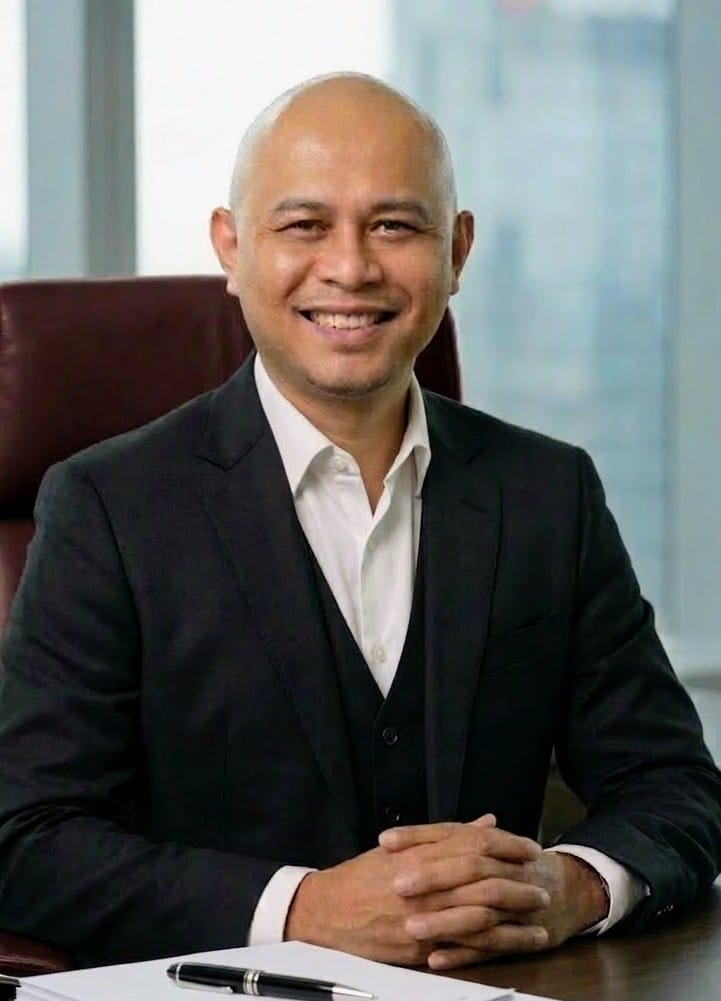
KUCHING: Former minister Datuk Zaid Ibrahim’s recent remarks on the Malaysia Agreement 1963 (MA63) have set off yet another round of protests.
Practising lawyer Wejok Tomik argued that any rewriting of the MA63 will not equate to reform but more to avoid the issues at hand.
In this sense he said Zaid’s remarks do not so much clarify the issue as they expose a familiar tendency that when Sabah and Sarawak begin insisting on what was agreed, the response from certain quarters is not compliance — but reinterpretation or worse, reinvention.
Zaid in his statement suggests that many of the underlying legal positions relating to resources, territorial rights, and constitutional safeguards are rooted in colonial constructs and therefore ought to be reconsidered.
To Wejok, that argument is, at best, incomplete, and at worst, it is deeply convenient because it quietly shifts the discussion away from the central issue — that those very arrangements were incorporated into the framework upon which Malaysia was formed.
“Once that happened, they ceased to be “colonial artefacts. They became constitutional commitments,” he said in reponse to Zaid’s statement posted in Facebook.
He noted that constitutional commitments are not something to be casually revisited simply because they have become politically inconvenient.
“If anything, the more difficult they are to honour, the more important it is that they are honoured. Otherwise, what exactly is the value of a constitutional federation?” he added.
Wejok said it was rather striking that decades after Sabah and Sarawak have consistently raised concerns about under-implementation, the proposed solution from some in the centre is not “let us finally fulfil what was agreed”, but rather “let us renegotiate what was agreed.”
He said that is not a neutral proposition, but a shift in position, and a telling one because it raises a question that Zaid does not answer: if the Federation has not fully honoured the existing terms, on what basis should Sabah and Sarawak trust that reopening those terms will produce a fairer outcome?
“Trust, after all, is not built on theory; it is built on conduct. And the conduct, over more than sixty years, has been remarkably consistent, such as commitments acknowledged, but slowly implemented; safeguards recognised, but narrowly interpreted, and rights affirmed, but administratively constrained.
“And when these patterns are pointed out, the response is equally familiar like patience is requested, committees are formed, language is softened, and substance is deferred.
“That is precisely why suggestions of “renegotiation” are unlikely to be received as reform, but will be read quite reasonably as another attempt to dilute what was never fully delivered in the first place,” he said.
On Zaid’s observation that MA63 as something that should now be revisited because the country is no longer under colonial influence, Wejok said while it was rhetorically appealing, again it sidesteps the real issue.
He insisted that the MA63 was not a colonial imposition on Sabah and Sarawak alone, it was the condition upon which decolonisation and federation took place.
He said to now argue that the very terms of that transition should be reconsidered, without first demonstrating full compliance, risks sending a rather troubling signal, that foundational agreements are respected only until they become inconvenient.
He said that is not a principle any federation should be comfortable normalising, reiterating that Sabah and Sarawak are not asking for special treatment, but not to be treated as though the terms of their entry into Malaysia are optional.
“And if that sounds uncomfortable, then perhaps the discomfort lies not in the demand, but in what the demand reveals.
“Because the truth is, the issue today is no longer whether MA63 is fair, but whether it has ever been fully honoured.
“Until that question is answered with clarity and action, calls for renegotiation will continue to sound less like reform and more like avoidance,” he said.
Wejok noted that after more than sixty years, Sabah and Sarawak are not asking for reinterpretation, but asking for completion; not eventually, not selectively and certainly not conditionally.
He said this is because a federation that continuously revisits its founding terms, instead of fulfilling them, risks becoming something else entirely — a structure sustained by language, but weakened by practice.
“And that is a far more serious problem than anything Zaid has suggested,” he added.