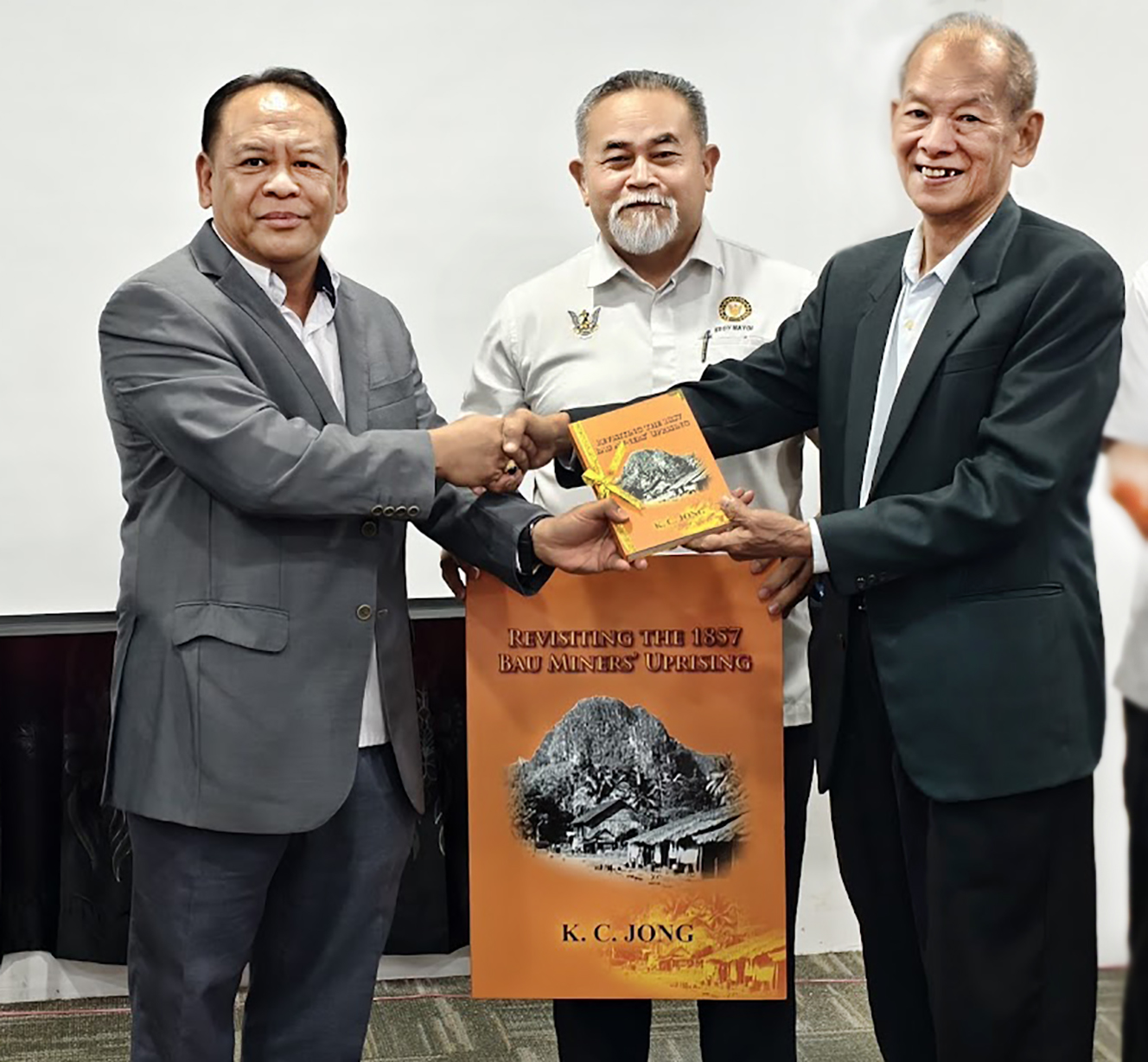
Veteran journalist and author K.C. Jong has launched the English edition of his 24th book, “Revisiting the 1857 Bau Miners’ Uprising”. Drawing on newly unearthed archives from around the world, the Bau-born writer sheds fresh light on one of Sarawak’s most turbulent historical episodes, offering a more balanced perspective on the miners’ struggle and its lasting legacy.
Latest book offers fresh insights into 1857 Bau Miners’ Uprising
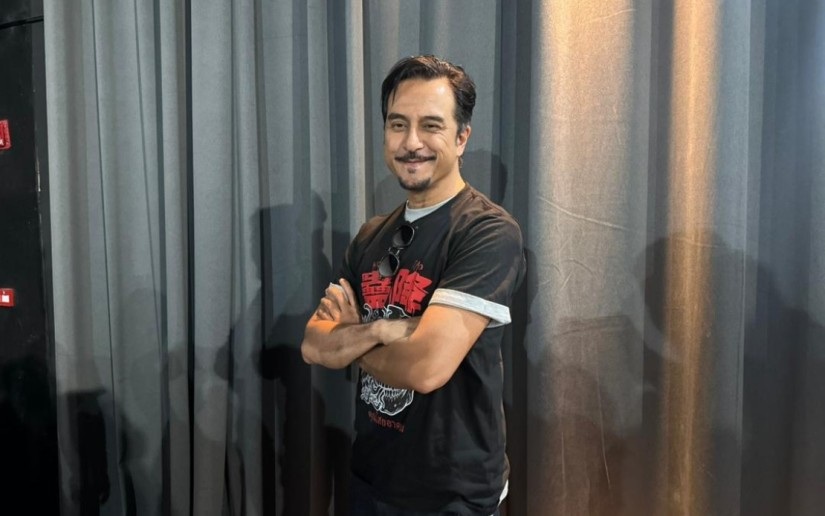
Veteran journalist and prolific author Jong Kiam Chun, popularly known as K.C. Jong, has published his 24th book, “Revisiting the 1857 Bau Miners’ Uprising” (English edition).
The book was officially launched on August 9, 2025 at the Bau District Office by Datuk Henry Harry Jinep, Deputy Minister of Transport Sarawak (Riverine and Marine), who is also the Assemblyman for Tasik Biru.
He had previously published the Chinese edition of the book on 5 June last year.
Jong first wrote about the uprising in 1996. However, with limited resources at the time, that earlier work contained inaccuracies and, he felt, failed to present the complete story.


Unearthing forgotten evidence through the internet
Many believed it would be impossible to uncover new information about an event that took place more than 160 years ago. However, drawing on his information management skills gained through further studies, Jong tapped into online archives and unearthed valuable documents from institutions in Singapore, the United Kingdom, the United States, New Zealand and Australia.
The uprising, involving some 600 gold miners of the Twelve Kongsi (Company) on February 19, 1857, gained international attention at the time, with reports appearing in major foreign newspapers despite the slow pace of mid-19th century communications.
Among the more than 20 news articles and 19 primary sources Jong discovered were reports from the Singapore Straits Times (March 21 and 24,1857) and the Singapore Free Press (April 21, 1857).
One of the most significant finds was a detailed letter written by Rajah James Brooke to a friend in the UK on March 15, 1857, later published in The Times of London on April 29, 1857. In it, Brooke described the miners’ attack on Kuching, his narrow escape, and the counter-attack strategies that led to the deaths of miners’ leader Liu Shan Bang and many of his men. Brooke’s forces subsequently destroyed the mining settlement at Mau San (Bau Lama), burning houses and mining facilities.
Jong also revealed that some miners managed to escape across the border into Sambas, Kalimantan, aided by Bidayuh villagers from Kampung Gumbang and Pangkalan Tebang.
Several of the newly found documents include eyewitness accounts offering vivid descriptions of the battle.
“Another precious document I uncovered was The Journal of James Brooke, dated March 1, 1842, which detailed how the Rajah forced the Bau miners to sign a new mining agreement with malicious intent. This, in turn, sowed the seeds of a series of conflicts between the two parties,” Jong explained.


A local perspective
Born in Sebuku, Bau, Jong writes from a Sarawakian perspective, portraying the uprising as a struggle against colonialism and imperialism in defence of the miners’ autonomy. This contrasts with the viewpoint of Brooke’s administration and some earlier historians — both local and foreign — who labelled the miners as rebels seeking to overthrow Brooke’s government.
With over 100 reference works and numerous first-hand accounts, Jong’s latest book provides a detailed and more balanced picture of the events, including the complex reasons behind the uprising. Still, he acknowledges that some aspects of this tragic event remain unknown and said he will continue searching for new evidence.
“This book will be a very useful reference for future researchers,” he added.
Copies are priced at RM40.00 each and can be obtained directly from K.C. Jong via email at kcjong03@gmail.com
From newsroom to bookshelf
Jong began his journalism career on January 2, 1965, with the Chinese daily Sarawak Vanguard, a year after completing Form 5 at St Joseph’s Secondary School. He later joined See Hua Daily News, serving as chief reporter for several years, before moving in 1984 to the English-language Borneo Bulletin (Brunei-based) as its Kuching correspondent for a decade.
After leaving journalism, he became executive secretary of the Sarawak Associated Chinese Chambers of Commerce and Industry until his retirement in 1999. Retirement, however, did not slow him down. Jong continued researching and writing extensively on Sarawak’s history. He published his first book in 1992 and has since released 24 titles — 14 of them focusing on Sarawak history.
In 2019, the Sarawak State Library honoured him as the “Most Active Writer of Sarawak”. In 2024, the Malaysia Hakka Cultural Association presented him with the Hakka Culture Contribution Award for his research and writings on Hakka heritage.
Lifelong learning
At 84, Jong remains a passionate lifelong learner — a habit he credits with keeping his mind sharp and productive. He has earned a Diploma in Journalism and News Reporting, a Diploma in Public Administration, as well as a Bachelor’s and a Master’s degree in Information Management, all through correspondence and online courses.
Service and recognition
Jong’s contributions extend beyond journalism and literature. In 1979, he was named a JCI Senator by Jaycees International (JCI), followed by the Bunga Raja Award from JCI Malaysia in 1980.
He currently serves as vice president of the Sarawak Chinese Writers Association and Secretary General of the Kuching-Samarahan-Serian Jong Clan Association.
His honours include the BBS (1983) and AMN (1993) from the Sarawak Governor, as well as an AMN from the Yang di-Pertuan Agong in 1992.
Jong continues to encourage local writers and teachers to explore local primary sources and document the history of Sarawak — especially the history of Bau — before valuable records are lost forever.