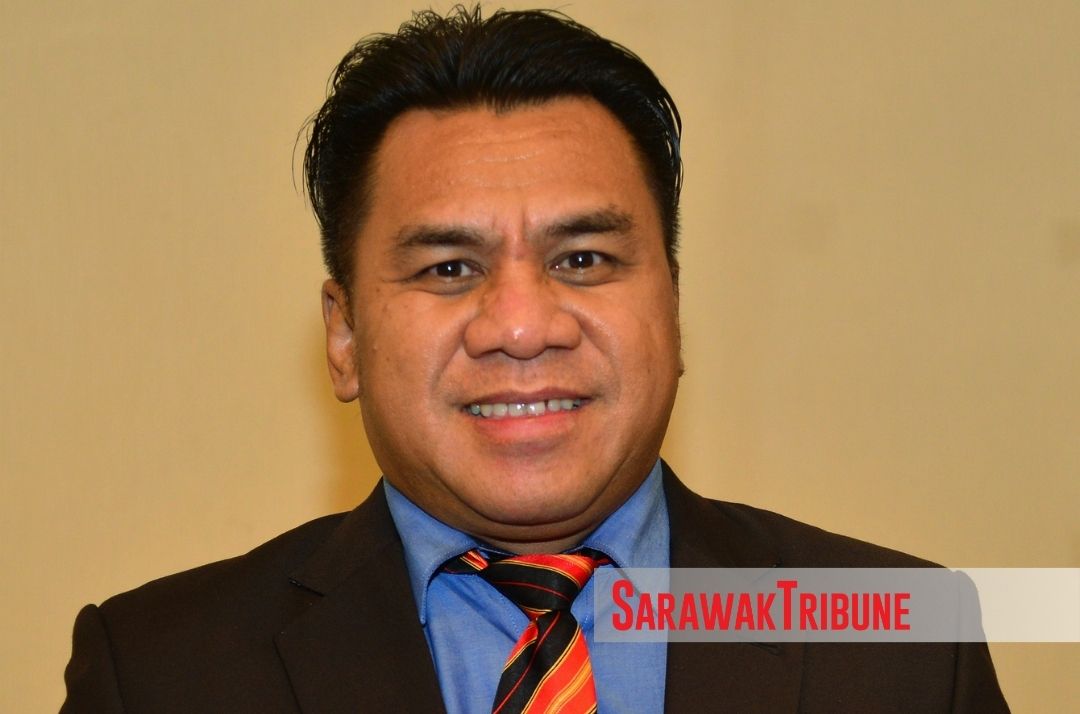
KUCHING: Kota Sentosa assemblyman Wilfred Yap has rejected former economy minister Datuk Seri Rafizi Ramli’s suggestion that increasing Sarawak’s share of oil and gas revenues could threaten Malaysia’s sovereign credit rating and raise national debt interest rates.
Yap stressed that Sarawak’s rightful demands are grounded in legal and constitutional frameworks, particularly the Malaysia Agreement 1963 (MA63), the Federal Constitution, and the Inter-Governmental Committee (IGC) Report 1962.
He dismissed these claims as misleading and argued they unfairly portray Sarawak as a threat to national fiscal stability.
“This narrative is both misleading and unfair. And it risks turning Sarawak into a scapegoat for deeper federal inefficiencies.
“Sarawak’s demands are not arbitrary. They are grounded in legal and constitutional foundations, all of which recognise Sarawak’s autonomy over land and natural resources,” he said in a Facebook statement today.
Yap said that from 1976 to 2020, Petronas contributed over RM1.2 trillion to the federal government, yet Sarawak, as a major oil and gas contributor, only received a 5 per cent royalty.
He said this long-standing imbalance needed rectification, not false narratives that blame Sarawak for Malaysia’s financial challenges.
“The issue is not Sarawak’s demands but the federal government’s over-reliance on Petronas as a fiscal lifeline in distribution of resources, and a long-term plan for national productivity.
“Malaysia must transition away from a centralised model of dependency.
“A resilient economy is built on diversification, not on the back of one company, one region, or one commodity.
“The future lies in inclusive economic development, sound fiscal management, and transparent governance, not in questioning the constitutional rights of Sarawak,” he stressed.
Yap also addressed the claim that Sarawak’s actions were rebellious.
He pointed out that Sarawak operates within the law and that Petros, the state-owned oil and gas entity, complies with all legal frameworks, including the Oil Mining Ordinance 1958 and the Distribution of Gas Ordinance 2016.
“Petros, our state-owned oil and gas entity, works professionally and transparently in full legal compliance. This is not rebellion, it is responsible governance.
“Investor confidence, both domestic and foreign, is built on legal certainty, policy clarity, and institutional integrity.
“Attempting to frame Sarawak’s rightful share as a fiscal threat sends the wrong signal, not just to Sarawakians, but to the entire nation and the global market,” he said.
Yap said by giving Sarawak the fiscal space to develop, the country would see a rise in investments, infrastructure development, and rural upliftment, all of which would contribute positively to Malaysia’s gross domestic product (GDP).
This, he said, is the kind of decentralised development that Malaysia urgently needs.
“It is unjust for Sarawak to be continually told to accept less in the name of ‘national interest’ when that ‘interest’ is skewed by federal inefficiency and poor financial planning,” he added.
Yap called for a shift in Malaysia’s budget philosophy, one that moved away from the unhealthy reliance on Petronas and embraced a more decentralised, inclusive approach to national development.
“Let us move forward with mutual respect, equity, and sound fiscal policy.
“Malaysia must learn to stand on its own two feet, not lean unfairly on Sarawak’s oil and gas,” he said.