THE Sarawak Legislative Assembly today unanimously passed the Sustainable Resources and Wastes Management Bill, 2025, marking an important step for the state in advancing its environmental sustainability, circular economy and energy transition.
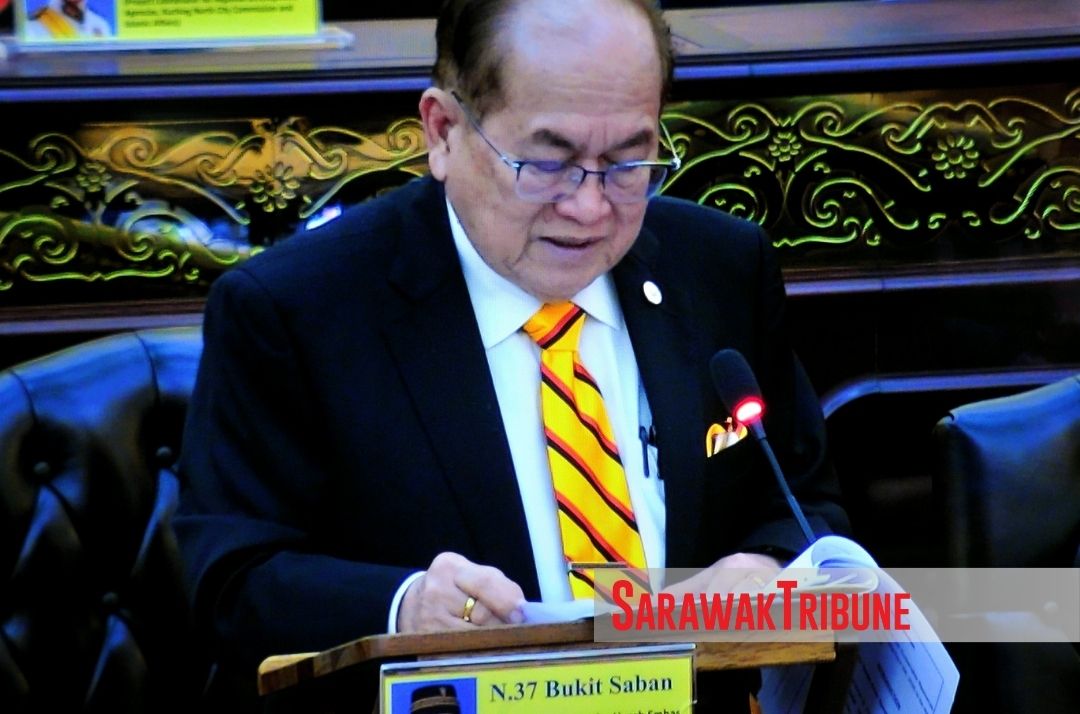
The Bill, tabled by Deputy Premier Datuk Amar Douglas Uggah Embas, aligns with the Premier’s vision to “Don’t Waste the Wastes — Monetise the Wastes”.
When tabling the Bill, Uggah said it establishes a comprehensive legal framework and a dedicated Authority to regulate, coordinate, and promote sustainable resources and wastes management throughout the state.
“To unlock the full potential of Sarawak’s bioenergy sector, there is a need for a comprehensive and enabling regulatory framework, supported by targeted policies and incentives.
“Such measures would stimulate private sector participation, facilitate project implementation, and ensure the sustainable and efficient use of the state’s biomass resources in advancing Sarawak’s renewable energy and circular economy goals,” he said.
He added the introduction of the regulatory framework through the Bill fully aligns with Sarawak’s constitutional authority to legislate on matters pertaining to land, water, forestry and local government as enshrined under the State List in the Ninth Schedule of the Federal Constitution.
Uggah, who is also the Second Minister of Finance and New Economy, highlighted Sarawak’s vast biomass resources, from palm oil residues and woody biomass to sago and municipal wastes, which offer significant potential for clean energy generation and value-added industries.
“Under the Sarawak Energy Transition Policy (SET-P), bioenergy is expected to contribute meaningfully to the state’s energy mix by 2035,” he said.
He noted that the palm oil industry alone generates large volumes of empty fruit bunches (EFB), palm oil mill effluent (POME) and palm kernel shell (PKS) each year, all of which can be converted into various forms of energy and other bio-based products.
“Sarawak is also exploring the conversion of existing coal-fired power plants to operate on biomass, further advancing the state’s low-carbon transition,” he said.
He said with its vast biomass potential and growing commitment to renewable energy development through the Sarawak Sustainability Blueprint, the SET-P and the Post-Covid Development Strategy 2030 (PCDS 2030), Sarawak is well positioned to become a regional leader in renewable energy and a model of circular economy excellence.
“Realising this vision, however, will require coordinated efforts across government agencies, the private sector, and local communities, supported by strategic investments in technology, logistics and infrastructure,” he said.
He said despite the availability of biomass feedstocks, their utilisation in Sarawak remains limited due to several operational and economic constraints.
“Among the main challenges are unattractive feed-in tariffs for biogas and wastes-to-energy projects, high capital investment with limited financing mechanisms, and logistical difficulties in aggregating biomass from remote and dispersed locations.
“The lack of supporting infrastructure further hinders the consistent and efficient supply of feedstocks to potential bioenergy facilities,” he said.
Among the key provisions of the Bill is that the definition of “sustainable resources” includes any material or substance—biological or non-biological—or discarded material from any premise, including industrial, construction, agricultural, or logging waste, which has recoverable value or can be converted into energy or other non-energy products.
“Wastes”, on the other hand, are defined as any substance, material, or object intended for disposal that can no longer be reused, recycled, or recovered.
It was also stated that the Bill provides for the creation of a Sustainable Resources and Wastes Management Authority, to regulate, coordinate and promote sustainable resources and wastes management throughout the state.
The Minister responsible for implementing and administering the Bill is the one having responsibility for energy and environmental sustainability.
In the Bill, the Authority is empowered to regulate and oversee all activities related to sustainable resources and wastes management in the state, including segregation, collection, treatment, recycling and disposal.
The Authority may issue guidelines or directions, require reports, and approve related plans or projects to ensure effective management and compliance.
Clause 8 of the Bill sets out the core functions of the Authority which includes among others, formulating and implementing systems or mechanisms for sustainable resources and wastes management, coordinating with federal and state agencies, and recommending related policies to the Minister.
In addition, the Authority is also responsible to promote investment, research, innovation, and capacity building by engaging with potential investors and financiers to advance sustainable initiatives across Sarawak.
This Bill also introduces provisions on incentives, inter alia, to encourage investment by any person on sustainable resources and wastes management.
It also further empowers the Authority to give incentives or rewards to persons or industries contributing to such efforts.
Earlier, a total 24 members debated in support of the Bill.