BUSINESS owners often talk about familiar workplace problems: low productivity, difficulty retaining staff, and the challenge of developing strong leaders.
From an organisational and leadership perspective, these issues are often treated as performance gaps that require training interventions.
But what many do not realise is that some of these patterns begin long before a person applies for a job. They start in early childhood classrooms.
It has been observed that there is a subtle shift in how young children are being guided meaningfully.
In many early learning centres around Kuching, the way adults discuss discipline, boundaries and authority is evolving.
Parents today place a high value on emotional expression and building their child’s confidence – both essential for character development.
At the same time, there is growing hesitation around setting firm limits, and this change deserves closer attention.
This is not merely a parenting trend. From a human nurturing perspective, it is an issue that will eventually surface in the workplace.
Today, some preschool educators feel uncertain about how firmly they can enforce boundaries, especially when parents have differing expectations.
Early childhood education rightly emphasises warmth, flexibility, and emotional connection.
But when these strengths are not paired with clear structure and consistency, children may miss out on learning how to respond to guidance, handle correction, and follow shared rules.
These gaps become more noticeable when children enter Primary One, where routines are more structured and expectations clearer.
However, the economic implications often emerge much later, when these same individuals enter organisations that require accountability, deadlines, and coordinated teamwork.
Employees who struggle to accept correction, delay difficult tasks, or resist structured systems do not simply create interpersonal tension; they slow execution, weaken the accountability culture, and increase managerial workload.
What begins as a developmental gap eventually becomes an operational cost.
A similar pattern can be observed among small and medium enterprises (SMEs).
For example, smaller firms operate with lean teams and limited managerial bandwidth.
When new employees struggle with feedback, structure, or workplace expectations, the impact is felt immediately at the operational level.
For business owners, how well employees accept feedback, manage pressure, and adapt to company systems directly affects operational efficiency.
High turnover, long adjustment periods, repeated retraining, and disengagement are not merely HR concerns—they are cost drivers.
In smaller enterprises with lean teams, even one misaligned employee can disrupt workflow, delay projects, and divert managerial attention from growth.
Consider a small service-based SME.
When a new employee struggles to accept performance feedback, managers may spend a disproportionate amount of time managing emotional reactions instead of improving systems or expanding markets. Over time, this shifts leadership focus from strategy to behavioural management, with significant opportunity cost.
What appears to be a workplace performance issue often has deeper behavioural roots.
The truth is simple: learning to be led is part of learning to lead. Early childhood classrooms are often the first environments where children experience authority outside their family.
When boundaries are fair, clear, and consistently applied, children learn an important lesson: guidance is not rejection, and structure is not control.
They begin to develop resilience – the ability to adjust when things do not go their way.
When children do not have enough of these experiences, guidance in later years can feel like criticism. Structure feels restrictive, and accountability feels personal.
In the workplace, this can translate into difficulty handling performance reviews, resistance to systems, challenges in teamwork, or avoidance of responsibility.
This is not an argument for harsh or punitive discipline. It is an argument for balanced guidance: warmth paired with structure, and empathy aligned with clarity.
Research in leadership and organisational psychology consistently shows that high-performing teams function best when expectations are both supportive and clearly defined.
Early childhood centres across Sarawak play a bigger role than simply preparing children for school.
They are shaping behavioural foundations for future workplaces, contributing to the growth of SMEs.
Clear communication with parents about behavioural expectations, classroom routines, and the value of boundaries can reduce long-term misalignment.
When home and school send consistent signals, adaptability strengthens.
Policymakers should also view early childhood through a broader economic lens.
As Sarawak continues to strengthen its innovation ecosystem and SME landscape, workforce resilience must be part of strategic planning.
Skills such as cooperation, accountability, adaptability, and response to authority start forming early.
They cannot be fully manufactured through short-term corporate training programmes.
SME leaders cannot afford to wait for education systems to correct these patterns; they must respond strategically within their own organisations.
There are three practical responses SMEs should prioritise.
First, strengthen onboarding by clearly defining behavioural expectations – not just job scope – from day one. Accountability, reporting structures, and feedback processes must be made explicit rather than assumed.
Second, invest in leadership capability that balances firmness with empathy. Managers should be trained to deliver corrective feedback confidently and consistently while maintaining professional respect. Avoiding difficult conversations only compounds long-term inefficiency.
Third, build a culture where constructive feedback is normalised early and reinforced often. When accountability and support coexist, adaptability improves and performance stabilises.
Recognising that some workplace friction may reflect broader developmental patterns allows leaders to respond with structure rather than frustration.
Still, the long-term solution does not sit solely in HR manuals or policy revisions.
It begins much earlier.
For Sarawak to build a strong, innovative, and competitive business ecosystem, conversations about education must include behavioural foundations.
Confidence without accountability leads to fragility; care without structure leads to confusion. Sustainable progress requires balance.
The classrooms of today are shaping the workplace culture of tomorrow.
When parents, educators, and institutions work together to provide balanced guidance, fewer organisational resources will be required later to correct avoidable behavioural gaps.
Learning to be led is not about obedience. It is about understanding systems, accepting responsibility, functioning within shared expectations, and developing the discipline required for innovation.
For businesses seeking long-term competitiveness, that lesson begins long before the first job interview.
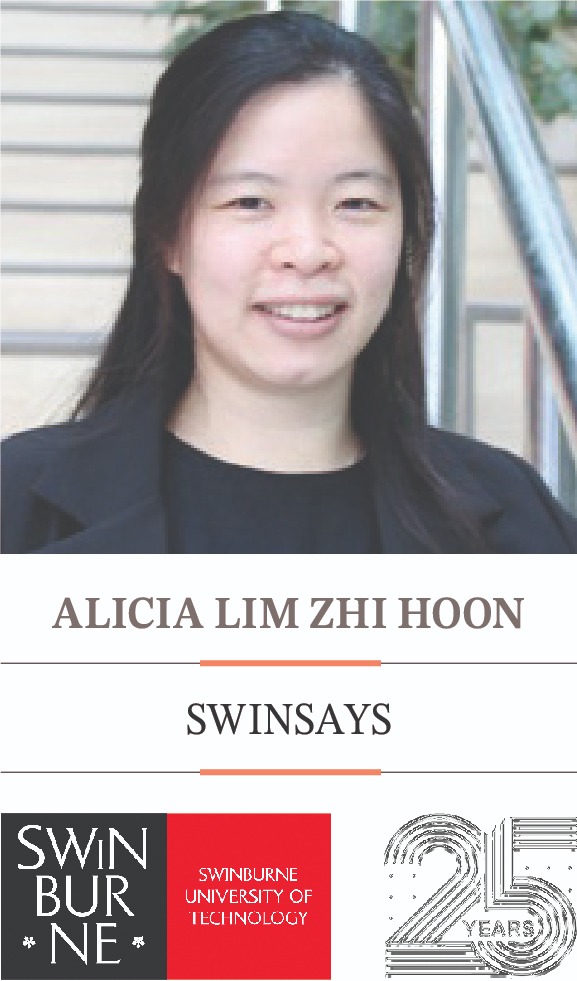
● Dr Alicia Lim Zhi Hoon, School of Design and Arts, Faculty of Business, Design and Arts, Swinburne University of Technology Sarawak Campus. Email: azhlim@swinburne.edu.my
The views expressed here are those of the writer and do not necessarily represent the views of Sarawak Tribune. The writer can be reached at mvoon@swinburne.edu.my.