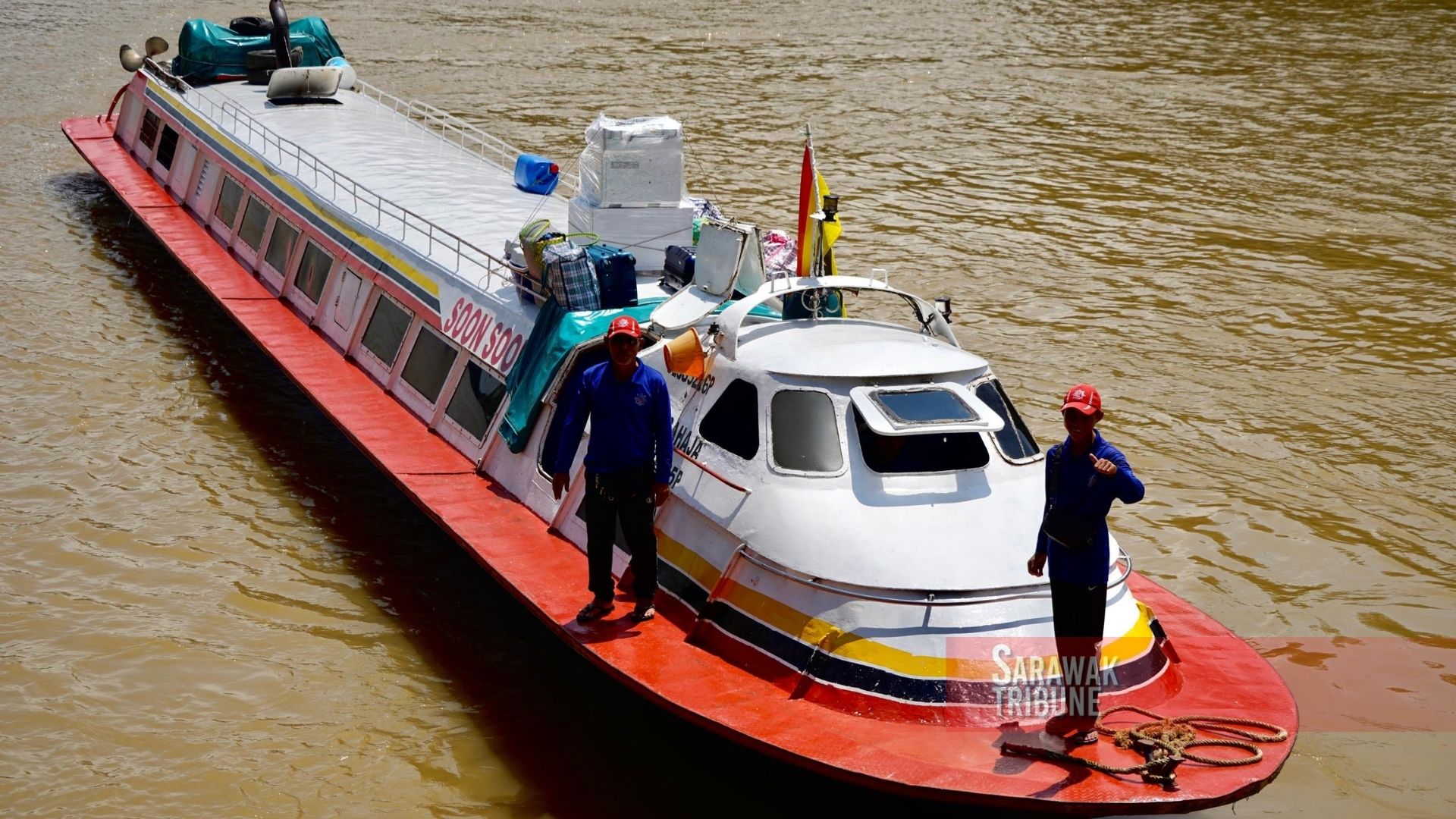
THE Rajang River has always been more than a river.
For generations of Sarawakians living deep in the interior, it was the only road home.
Long before highways carved their way through forests and hills, the river connected Kapit with the outside world. It carried schoolchildren heading to boarding schools, patients seeking medical treatment, traders bringing supplies upriver and families returning home for Gawai.
Along its muddy waters travelled not only passengers and cargoes but also memories, hopes and livelihoods.
Nowhere was that more evident than at Kapit’s passenger terminal.
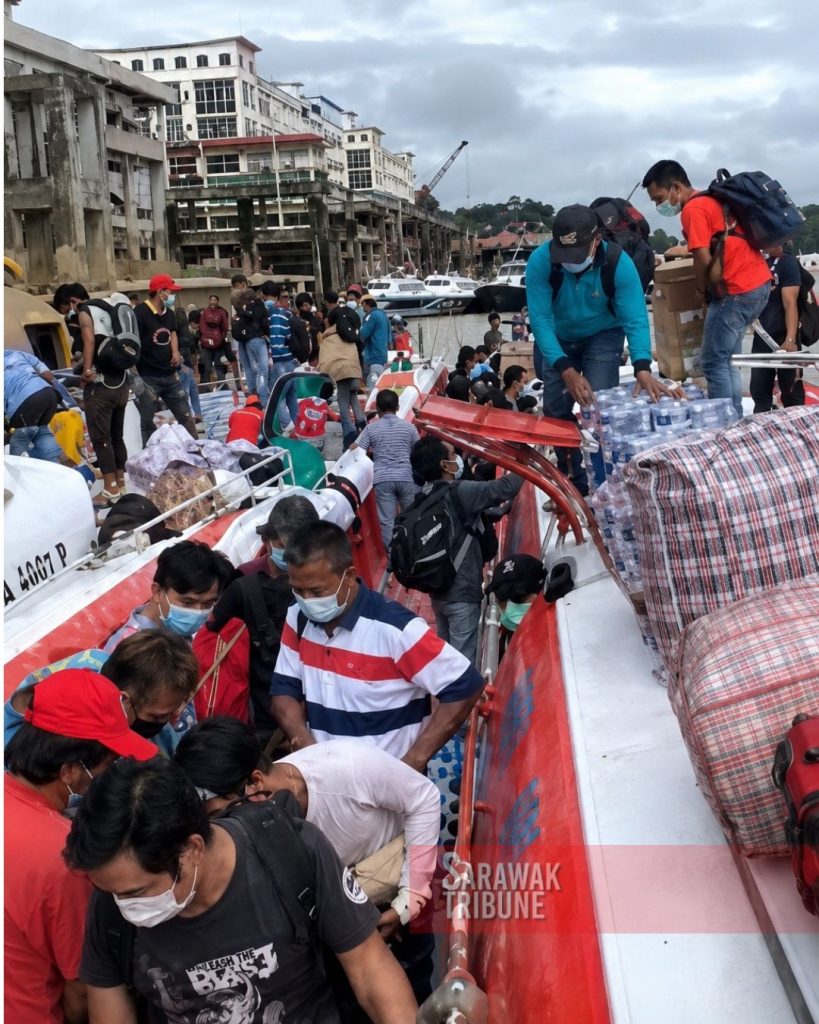
Before sunrise, the waterfront was already awake. Travellers arrived carrying sacks of rice, cartons of cooking oil, groceries and bundles tied neatly with raffia strings.
Hawkers prepared breakfast for waiting passengers while porters stood ready for the first express boat of the day. As the familiar rumble of engines echoed across the Rajang, boat crews untied ropes, checked their engines and called out destinations as passengers carefully stepped aboard.
For decades, it was a scene repeated almost every day.
Express boats from Sibu arrived before continuing their journeys to Belaga, Punan Bah, Pelagus and other settlements scattered across the upper Rajang. At a time when roads had yet to reach much of Sarawak’s interior, the river was not simply the fastest route. It was the only one.
Then, almost unnoticed, everything began to change.
As roads stretched deeper into the interior, journeys that once took an entire day by river could suddenly be completed in just a few hours by car. Families who had depended on express boats for generations gradually chose the convenience of travelling by road instead.
Passenger numbers dwindled.
One by one, long established routes quietly disappeared.
In January 2023, the Sibu to Kapit express boat completed its last journey following the completion of the Sibu Kapit Road, closing a chapter many believed would last forever.
Even then, Kapit remained the gateway to the remaining upriver services, with express boats continuing to connect Belaga, Punan Bah and nearby settlements where river travel was still part of everyday life.
Now, another chapter has quietly come to an end.
Shortly after midday on July 19, an express boat eased alongside Kapit’s jetty after travelling for more than six hours from Belaga.
Passengers stepped ashore carrying groceries, backpacks and personal belongings, much as countless others had done over the decades.
There were no speeches. No banners. No farewell ceremony.
To everyone else, it was simply another journey completed.

But for 55-year-old express boat owner and driver Saging Himang, it was one he would never forget.
It was the final Belaga to Kapit express boat service.
After securing his boat at the jetty, Saging stood quietly beside it before speaking words he never imagined he would have to say.
“Today’s trip from Belaga is the last one. Tomorrow (June 20) I’ll only operate the Punan Bah route.”
With that simple sentence, another piece of the Rajang’s history slipped quietly into the past.
For years, Saging has owned and operated the boat himself, making the long journey between Kapit and Belaga while keeping one of the Rajang’s last remaining river links alive.
Every trip began long before passengers arrived. The boat had to be fuelled, checked and prepared before setting off through the winding river carrying passengers, groceries, parcels and everyday necessities.
It was demanding work but it was work he believed mattered.
“The people still need this service,” he said.
Today, however, keeping that service alive has become increasingly difficult.
Passengers pay between RM30 and RM55 depending on where they board or disembark but operating costs have risen sharply. A single return trip between Kapit and Belaga now consumes more than RM2,000 worth of diesel.
With fuel subsidies no longer available and diesel costing more than RM4 a litre, every journey has become a financial gamble.
“Fuel is simply too expensive. I can’t afford to operate the longer route because of the cost.”
Unlike larger transport companies, Saging has no fleet of boats and no office making decisions on his behalf.
He operates with just two crew members and remains at the helm himself. Every expense, every journey and every difficult decision rests on his shoulders.
Even as passenger numbers declined, he continued running the Belaga service because he knew many communities still relied on it.
Walking away was never easy.
“If subsidies are provided again, I’ll continue operating the Belaga service,” he said.
For now, he will continue serving Punan Bah.
How much longer that service can survive, however, remains uncertain.
“We’ll see how things go. If I can continue, I will. If not, I’ll have to tie up the boat.”
His words were spoken quietly, without bitterness or drama.
Only acceptance.
For Saging, the river that had provided a livelihood for years was becoming increasingly difficult to navigate, not because of its currents but because of rising costs.
If the Punan Bah service also disappears, the Rajang will lose its last regular express boat connection from Kapit.
The impact will not be felt only by passengers.
Along the waterfront are people whose lives have always revolved around the arrival of every express boat.
Among them is porter Philip Lim.
For more than four decades, the 57-year-old has earned his living carrying passengers’ luggage and cargoes between the jetty and the waiting boats. Heavy sacks of rice, gas cylinders, groceries and bulky luggage passed across his shoulders day after day beneath the afternoon sun.
It was hard work. But it gave his family a future.
“All three completed their studies with the money I earned from this job. It all came from carrying cargoes. I had no other work,” he said.
He remembers when the waterfront was constantly alive.
As soon as an express boat appeared around the bend, dozens of porters rushed towards the jetty hoping to be first to unload the luggage. On busy days, there was barely enough time to rest before another boat arrived.
“There used to be many express boats here. Now only one is left serving the Belaga and Punan Bah routes. The rest are all in Sibu,” he said.
Back then, boats regularly arrived carrying between 30 and 40 passengers.
Today, many carry only around a dozen.
As passenger numbers declined, so did Philip’s income.
There was once a time when he could earn more than RM200 in a day.
Now, returning home with RM10 or RM20 is considered a good day.
“Even if I can earn RM10 or RM20, it’s already good because there are no more express boats,” he said.
The financial uncertainty has become even harder after his wife recently spent two months in Sibu receiving cancer treatment. His children are still searching for work, adding to the family’s worries.
“I hope they will help us. It’s very difficult to earn money now and my children are still unemployed.”
Not far away, another porter has watched the same changes unfold.

Forty-two-year-old Zamaluddin Udin was just 12 when he first started carrying passengers’ bags at the waterfront, earning RM2 or RM3 for each load.
“It wasn’t just adults. Many young people started working from the age of 12,” he recalled.
During the busiest years, between 30 and 40 porters worked at Kapit’s passenger terminal.
Today, only about eight remain.
Most left after the number of express boats steadily declined.
Those who stayed survive on occasional work whenever boats arrive.
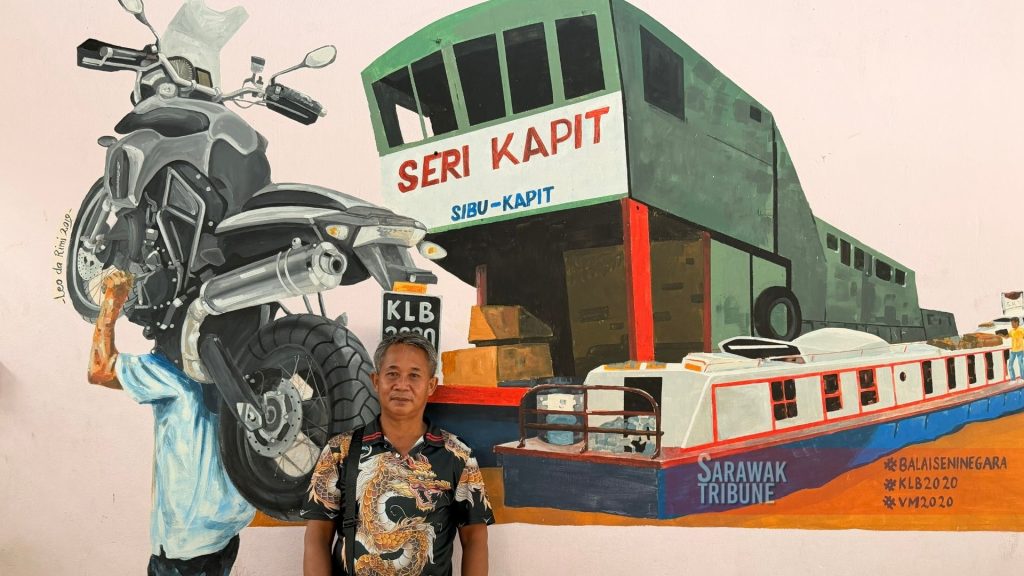
Like Lim, Zamaluddin understands that roads have transformed travel across Sarawak’s interior.
He does not oppose development.
He simply hopes the people whose livelihoods disappeared alongside the boats will not be forgotten.
“If they could provide some assistance, that would be good. No one has ever asked us how many people worked here or approached us about assistance. We’ve just been left on our own.”
The story of the Rajang’s express boats is not one of resisting progress.
The roads linking Sarawak’s interior have transformed lives, allowing children to reach schools more easily, patients to travel to hospitals more quickly and families to return home in hours instead of spending an entire day on the river.
Few would wish to turn back the clock. But every road tells two stories.
While one chapter begins, another quietly comes to an end.
As more people travelled by road, fewer boarded the express boats. The operators struggled to cover rising fuel costs, routes became unsustainable and the boats gradually disappeared from the Rajang.
With them went the livelihoods of boat owners, drivers, porters and small traders whose lives had revolved around the waterfront for generations.
For Saging, hope now rests on the possibility that fuel subsidies might one day allow the Belaga route to return.
For Lim and Zamaluddin, the hope is much simpler.
They know the river can no longer compete with modern highways.
They only hope the people who spent decades keeping it alive will not be forgotten.
As evening settles over Kapit’s waterfront, the Rajang continues to flow as it always has.
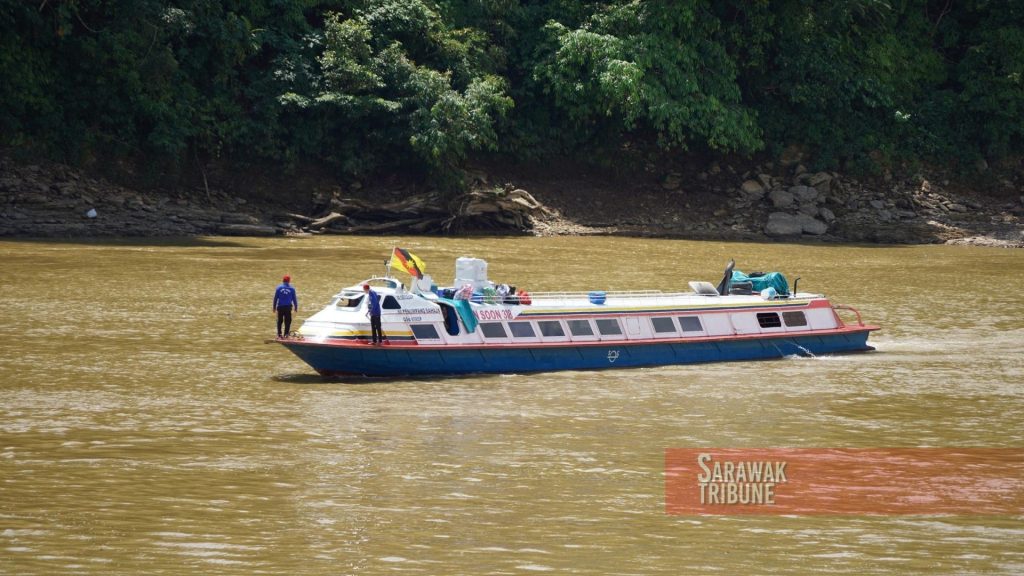
On July 20, one express boat still left Kapit for Punan Bah.
For now.
No one knows how much longer it will continue.
When the day finally comes that the last express boat no longer departs from Kapit’s jetty, the Rajang will lose more than another mode of transport.
It will mark the end of a way of life that shaped the upper Rajang for generations.
The river will keep flowing.
Only this time, it will flow a little more quietly.