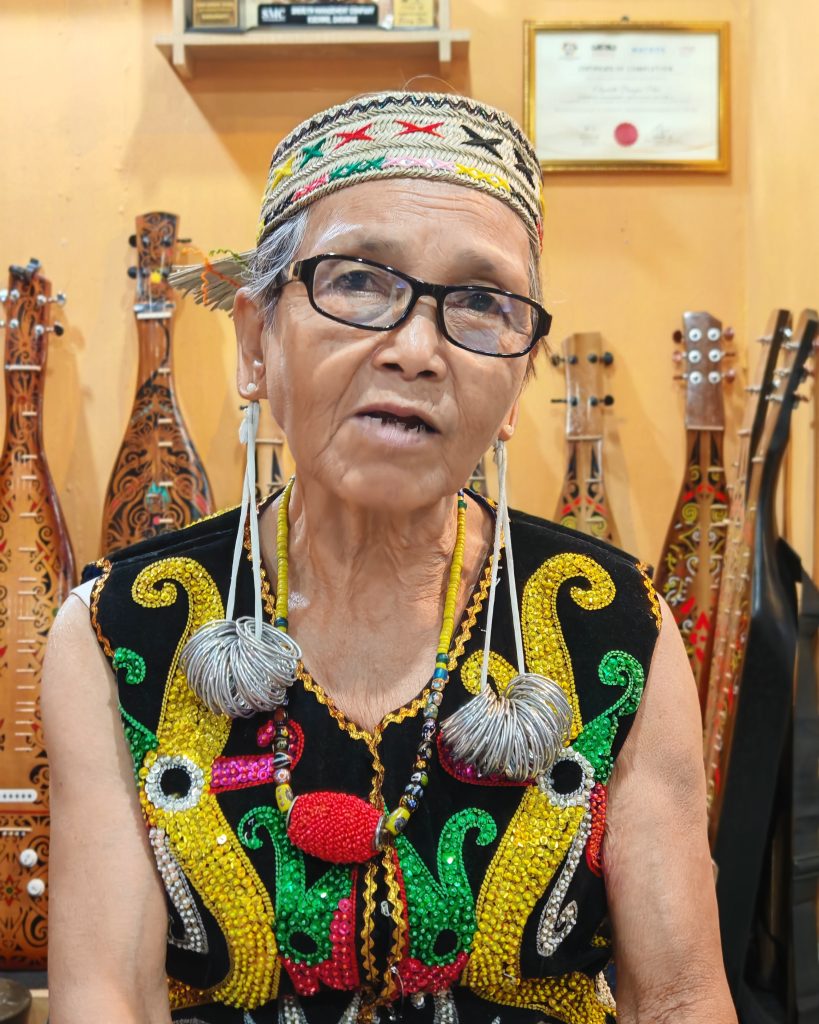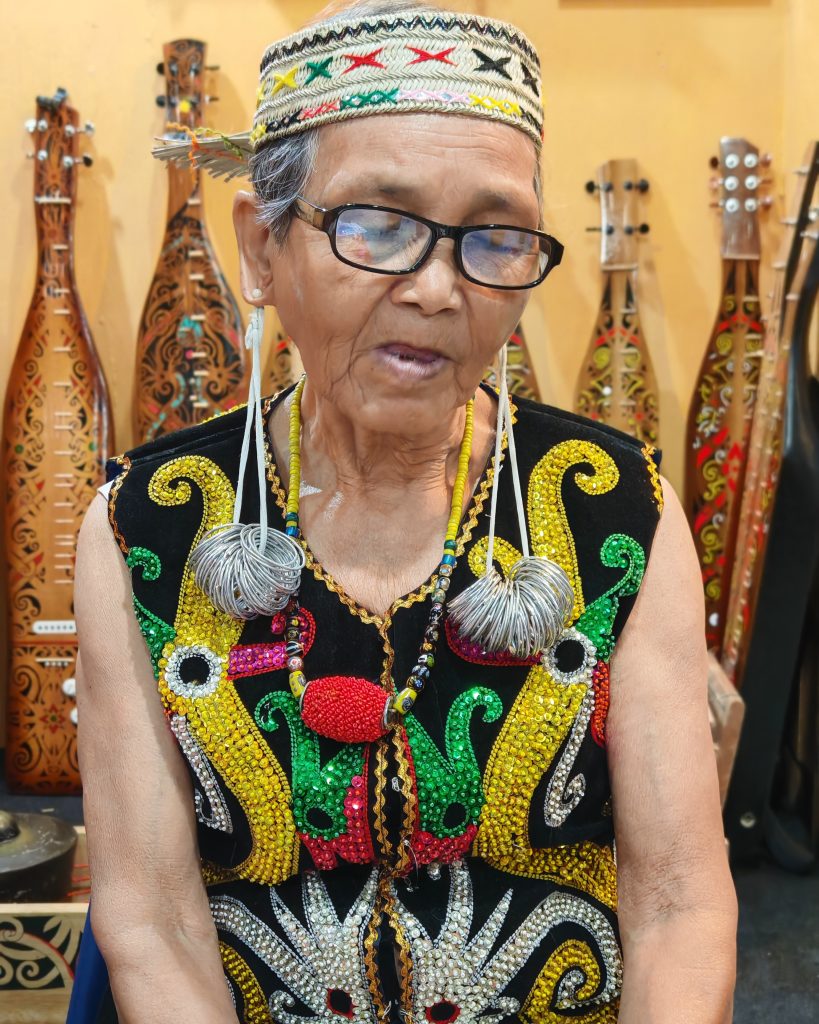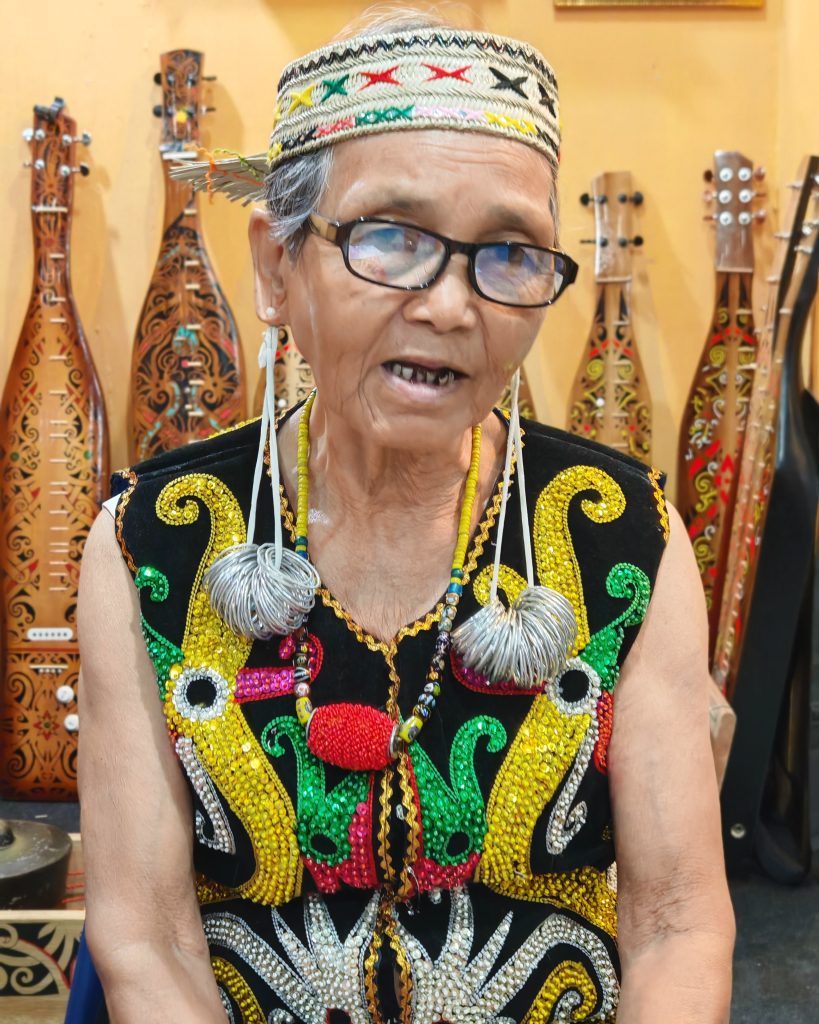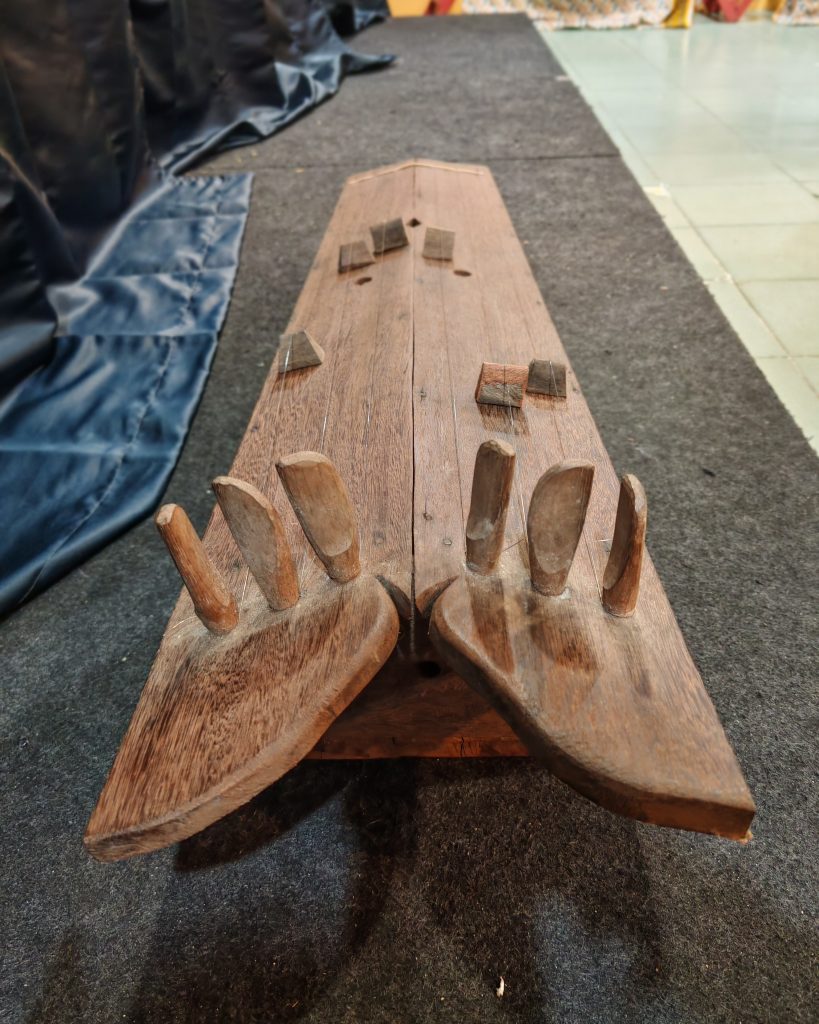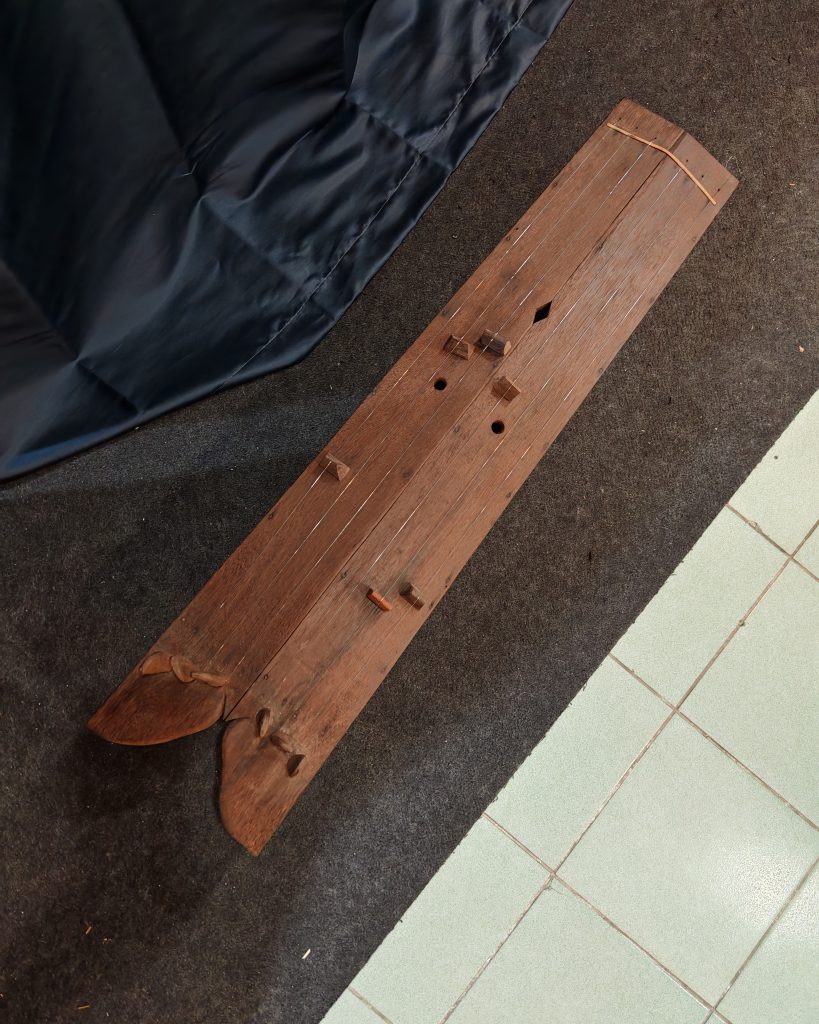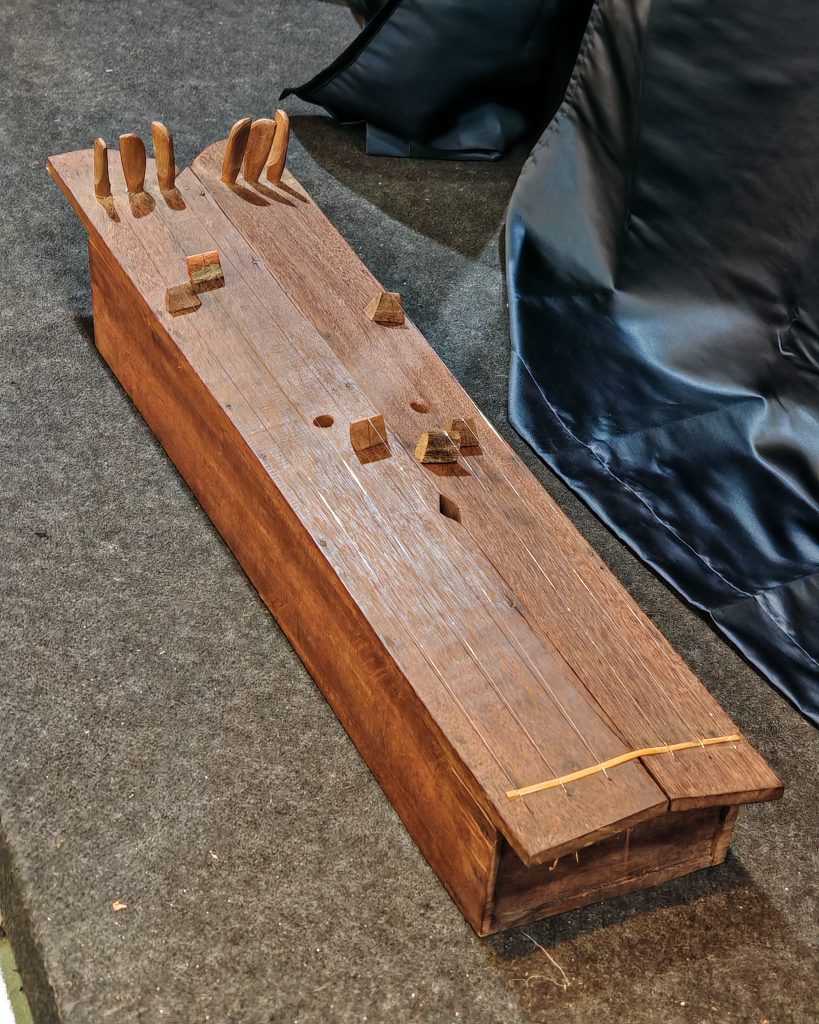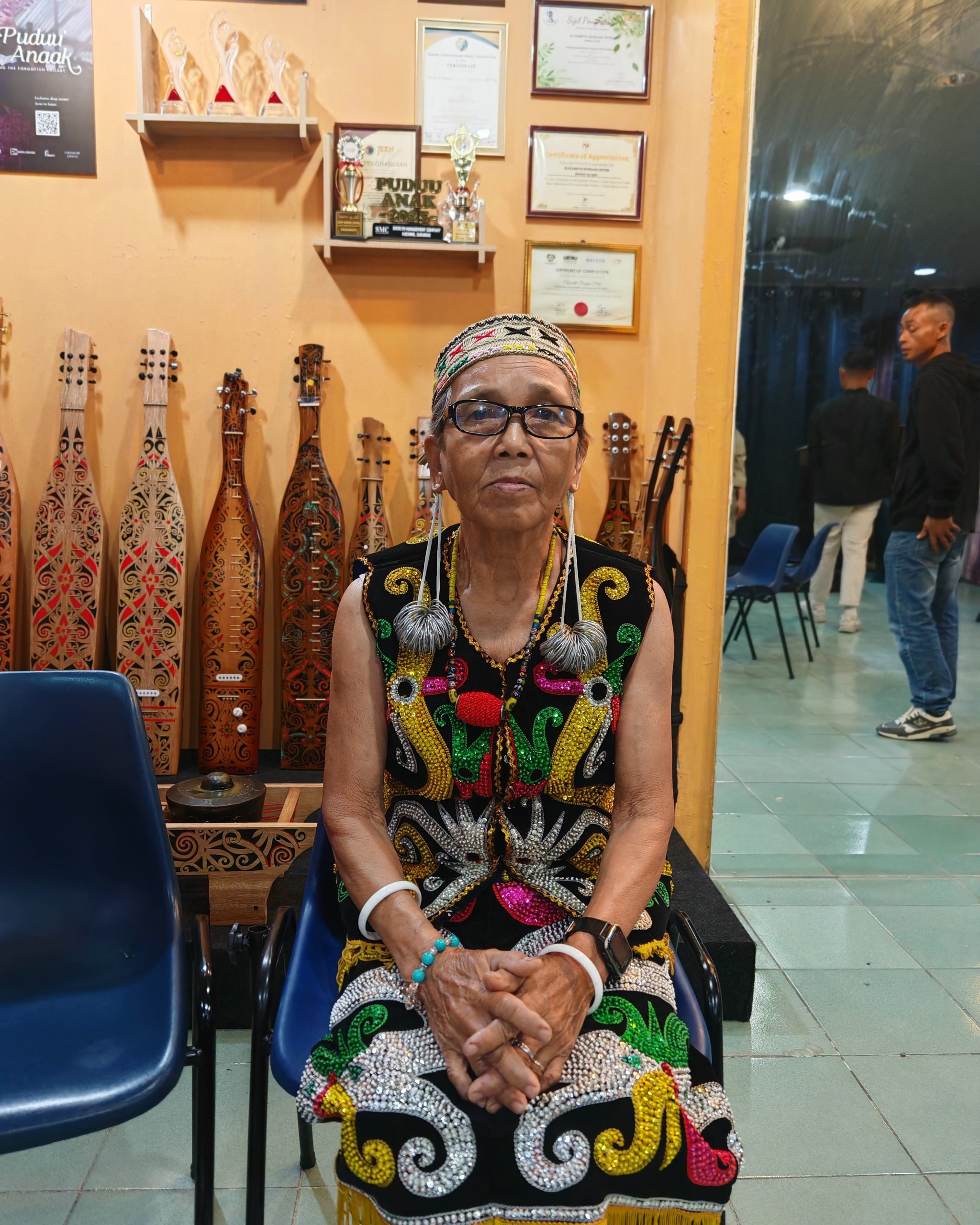
Once a long-standing tradition, the sound of the ‘lutong’ now echoes faintly as younger generations pursue studies and work. But in a quiet corner of Baram, Pang Selong continues to play – determined not to let her culture fade away.
A Melody Fading in Time
CURIOUS feet once circled a longhouse in the village of Long Semiyang, Baram. The lutong, a musical legacy of the villagers and a rhythm born from the Kenyah community, was played at every occasion. And when it wasn’t, 18-year-old Pang Selong would curiously fiddle with its strings.
Today, it has been more than 40 years since those days when she first dreamt of playing the lutong. She is now among the last few in her village who still know how to play the instrument – one that stands on the brink of extinction. Pang was taught by her brother, who was both a lutong player and maker, when the instrument first piqued her interest.
“Although the lutong once carried the taboo that only women could play it, by the time I was growing up, that belief had faded. Everyone, regardless of gender, could play the instrument, and it’s usually accompanied by the sape. What actually mattered was the timing – when could we play it?” said the 65-year-old.
According to her, while music was one of the traditional ways to entertain during ceremonies, it was not played often. The villagers were usually busy at their farms and plantations. What mattered more than continuing the lutong’s legacy then was survival – each grain of rice harvested played a more vital role in sustaining life, especially in a village deep within the rural heart of Sarawak.
Growing up amidst this routine, Pang said the desire to play the lutong was always there, but she had to work tirelessly at the farm. That was why she could only experiment with it at 18. Nevertheless, she received her very own lutong when she was 25 – a gift from her husband, who was also a lutong maker.
Made from belian wood, Pang revealed that during her mother’s time, the lutong was made from bamboo.
“It wasn’t very durable. It broke easily, but that was the lutong my mother and grandmother played,” she said.
Though most of her days were spent in the fields, there were times when Pang could showcase her lutong skills. During gatherings or celebrations, she and her fellow villagers would come together to play. For her, it was an experience filled with pride and joy – excitement laced with honour.
Unlike today’s lutong, which typically has eight to ten strings, Pang’s traditional lutong had only six, making it more difficult to blend the tunes. Still, Pang said that didn’t matter – what mattered most was the joy of playing and the rhythm that brought them together.
Bridging the past and the present
Because it is harder to play than its counterpart, the sape, the lutong has become less popular among the Kenyah community in rural Baram. The instrument was mainly played in nearby communities such as Long Semiyang, Long Selaan, and Long Banga.
While there are many reasons the instrument is gradually being forgotten, Pang believes one of them is that younger generations were encouraged to migrate to the cities in search of better opportunities and education.
“At Long Semiyang, it’s just us seniors who are still staying there,” she said when met in Kuching recently.
Nevertheless, she is grateful that her third son, among her six children, continues her legacy in the village as a lutong player.
Although she was in Kuching for a lutong workshop aimed at reviving the once-forgotten Kenyah instrument, her thoughts often wandered back to her crops in the village.
“People just didn’t have the time to play the lutong, or to properly learn it. When our children left, we wanted them to have a better life. We knew that by sending them out to study or to the city, they could have it easier,” she shared.
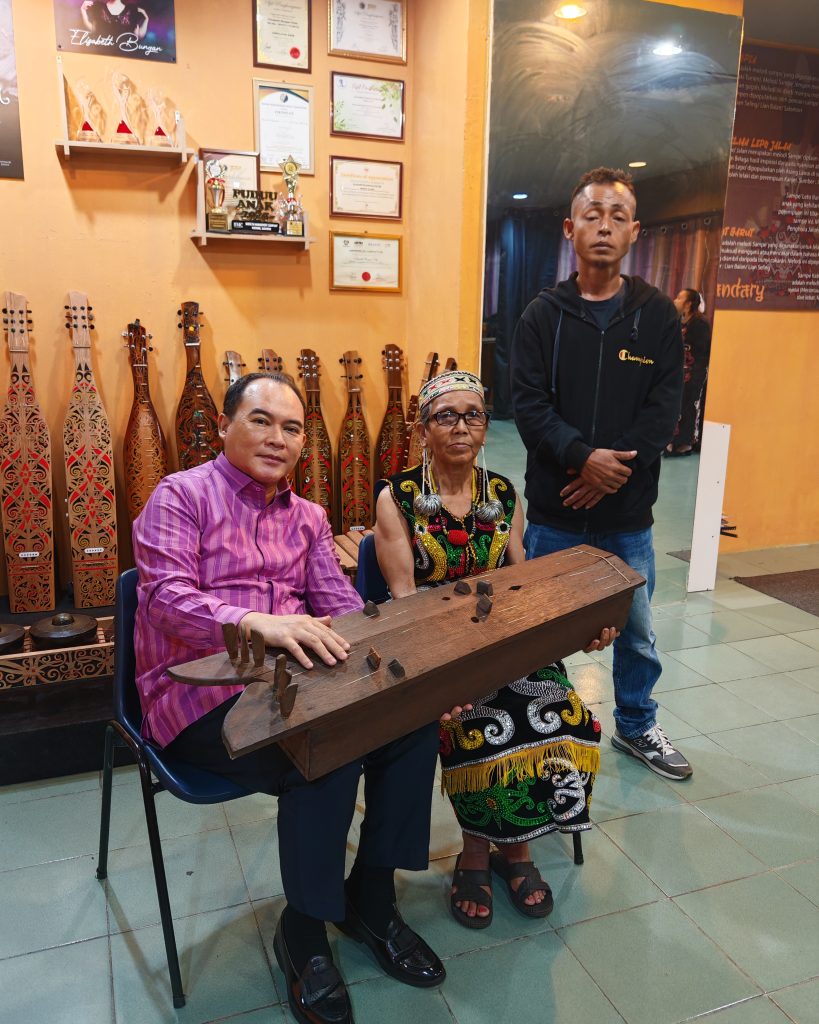
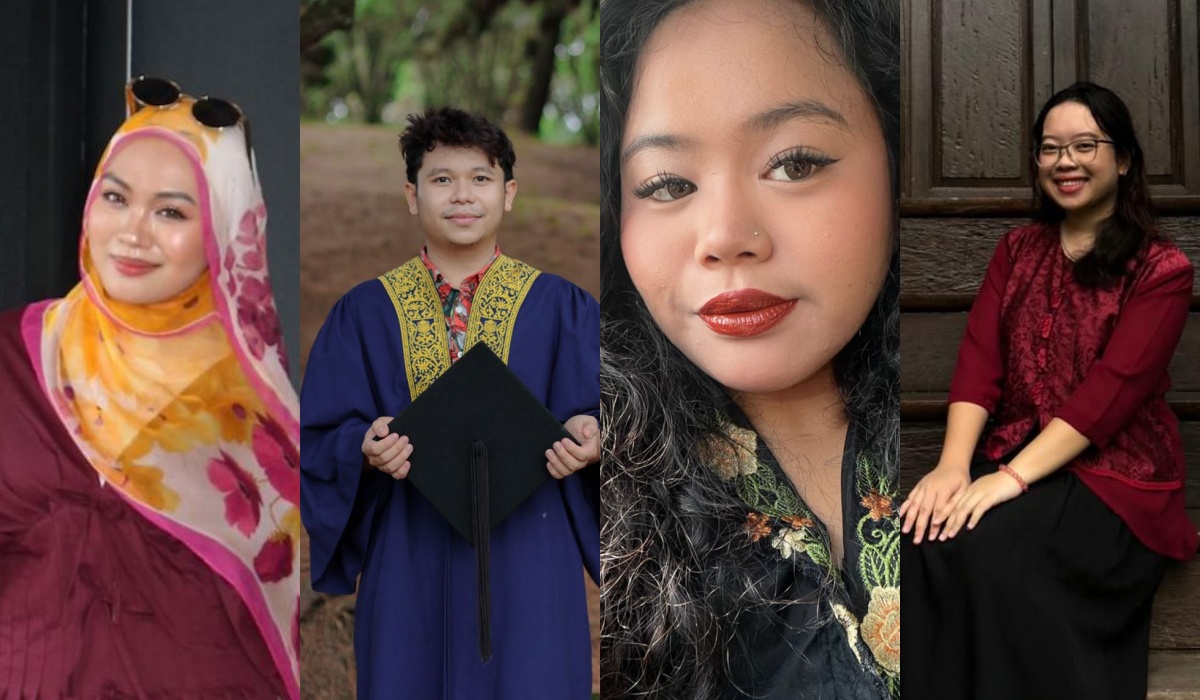
Looking back, she feels the weight of a fading legacy – a music on the verge of losing its identity. So, when she saw many young musicians at a lutong workshop organised by Bungan Creative, keen to revive the instrument, she felt a deep sense of relief.
“I feel happy to see that the lutong’s legacy can continue. I hope that the younger generation will learn to play it properly, and with passion,” she said.
At the same workshop, Pang handed over her old lutong to Elizabeth Bungan, founder of Bungan Creative, hoping that the instrument’s sound will travel far – carrying their heritage across generations and into the future.
As Pang watches a new generation take up the lutong, she knows that the music which once echoed through her longhouse will live on in younger hands. What began as a curious dream in her youth has become a legacy of sound, memory, and resilience – a reminder that heritage, like music, only fades when it is no longer heard.