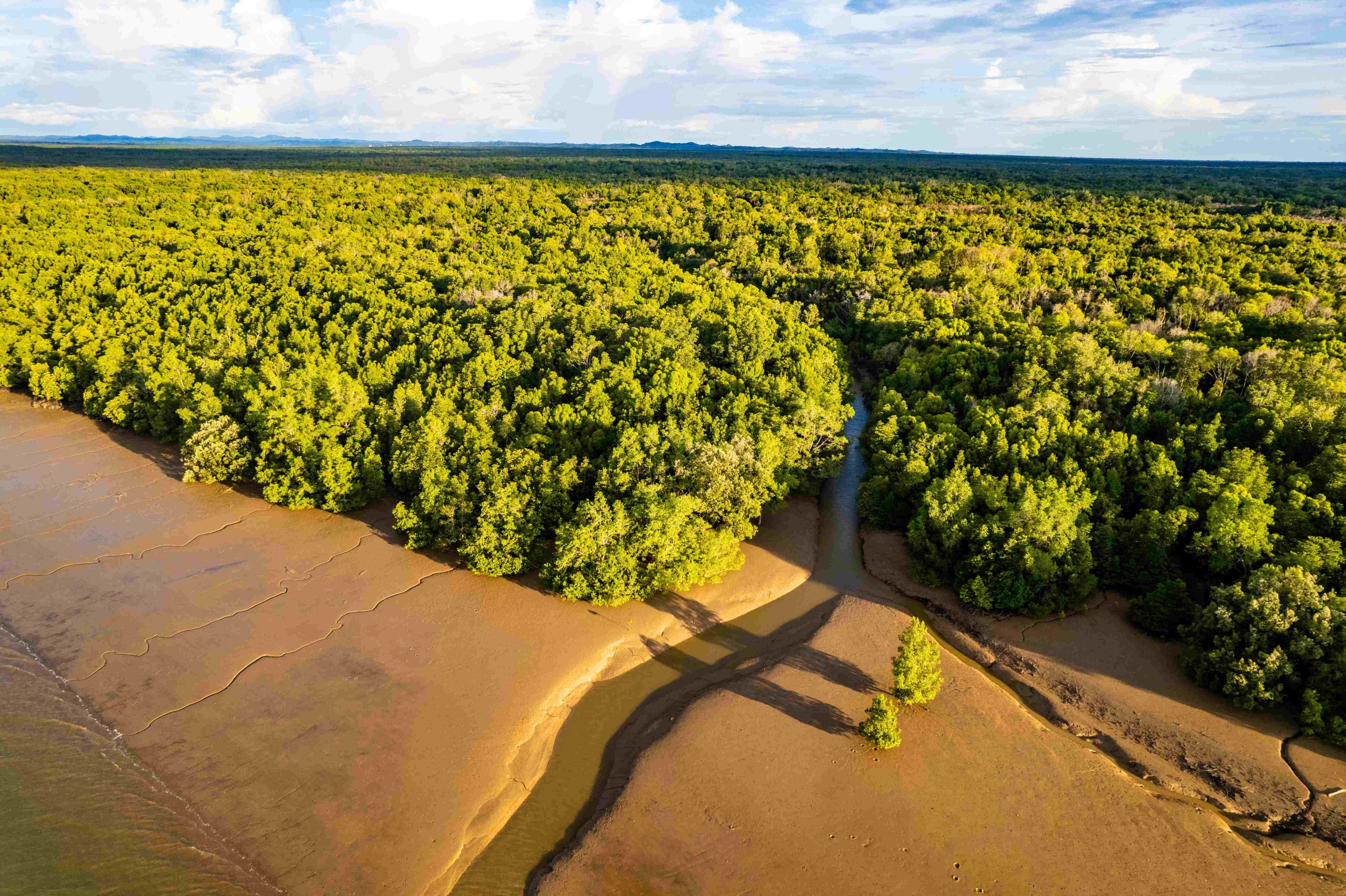
BY MAYA GREEN
EVERY sixty seconds, a structural failure of our planet’s life support network occurs in plain sight. As the global economy continues to grow, approximately 11 football pitches of tropical primary forest disappear into smoke, ash and barren soil.
According to data compiled by Global Forest Watch, this relentless pace translates into millions of hectares of ancient, irreplaceable rainforest being permanently erased every year.
For decades, international legal frameworks have viewed this scale of destruction through a narrow lens: an economic externality, a regulatory failure or a localised environmental offence. But as the planet faces an escalating climate and biodiversity crisis, a fundamental truth is emerging through the canopy of global jurisprudence. The wholesale destruction of Earth’s primary ecosystems is not merely a regulatory violation. Because it directly undermines the environmental conditions required for human survival, it constitutes a systematic assault on human life. It is time for international law to recognise mass environmental destruction, commonly referred to as ecocide, for what it truly is: a crime against humanity.
The human cost of ecological bankruptcy
To understand why environmental destruction amounts to a crime against humanity, we must bridge the false divide between human welfare and nature. Primary forests are not merely collections of trees; they are complex biophysical systems that regulate the global biosphere.
Lungs of the Earth: Primary rainforests store vast quantities of carbon. Their deliberate destruction releases billions of tonnes of greenhouse gases into the atmosphere, directly accelerating global warming, intensifying extreme weather events and rendering entire regions increasingly uninhabitable for human life.
The freshwater engine: These ancient canopies regulate regional and global rainfall patterns. Their destruction triggers severe, self-reinforcing droughts that dry up agricultural land, reduce freshwater supplies and threaten the food security of millions of people worldwide.
Displacement and cultural erasure: The immediate victims are Indigenous and tribal communities. When illegal logging syndicates and industrial agricultural companies clear primary forests, they displace people from their ancestral lands, destroying livelihoods and forcing communities into climate induced migration.
When a state or corporate entity acts with full knowledge that its activities will trigger long term environmental collapse and widespread human suffering, such actions meet the moral and legal threshold of widespread, systematic attacks against civilian populations.
The evolution of international law
Historically, the International Criminal Court (ICC) has reserved the designation of ‘crimes against humanity’ for direct atrocities committed by humans against other humans, such as extermination, enslavement and forced deportation. However, international law has always been an evolving framework, adapting to confront new forms of mass devastation.
The legal tide is already turning. In late 2024, climate vulnerable nations including Vanuatu, Samoa and Fiji formally petitioned the ICC to amend the Rome Statute and officially recognise ecocide as a standalone international crime alongside genocide and war crimes. Furthermore, the ICC Office of the Prosecutor issued a landmark policy stating its intention to prioritise investigations into Rome Statute crimes involving severe environmental harm.
Globally, domestic governments are refusing to wait for international consensus:
Belgium made history by becoming the first European Union member state to formally codify ecocide into its national penal code.
Mauritius enacted domestic ecocide laws carrying strict penalties and up to 10 years of imprisonment for severe, widespread environmental harm.
Regional expansion: Parliaments from Scotland, Brazil, Italy, India, and the Philippines have formally introduced bills to criminalise mass environmental harm.
Redefining accountability for the modern era
Opponents of criminalising ecocide under the banner of international human rights often argue that the law cannot easily prove a direct, localised link between a cleared patch of forest and a specific human death. But this argument relies on an obsolete, pre-climate-crisis understanding of cause and effect. We now possess the satellite data and planetary science to prove that the destruction of primary ecosystems inflicts broad, predictable and fatal consequences on human populations.
Allowing corporations and complicit states to hide behind civil fines while they permanently strip the Earth of its biodiversity is an act of collective negligence. Fines are merely factored into the cost of doing business; criminal liability at the international level changes the corporate risk calculus by holding executive decision-makers personally accountable.
The choice to legally elevate ecosystem destruction to a crime against humanity is an acknowledgement of our collective vulnerability. If poisoning the air we breathe, disrupting the water we drink and destabilising the climate that allows our species to survive does not constitute a crime against humanity, then the term has lost its meaning. To safeguard the future of human civilisation, we must safeguard the living systems that sustain it.