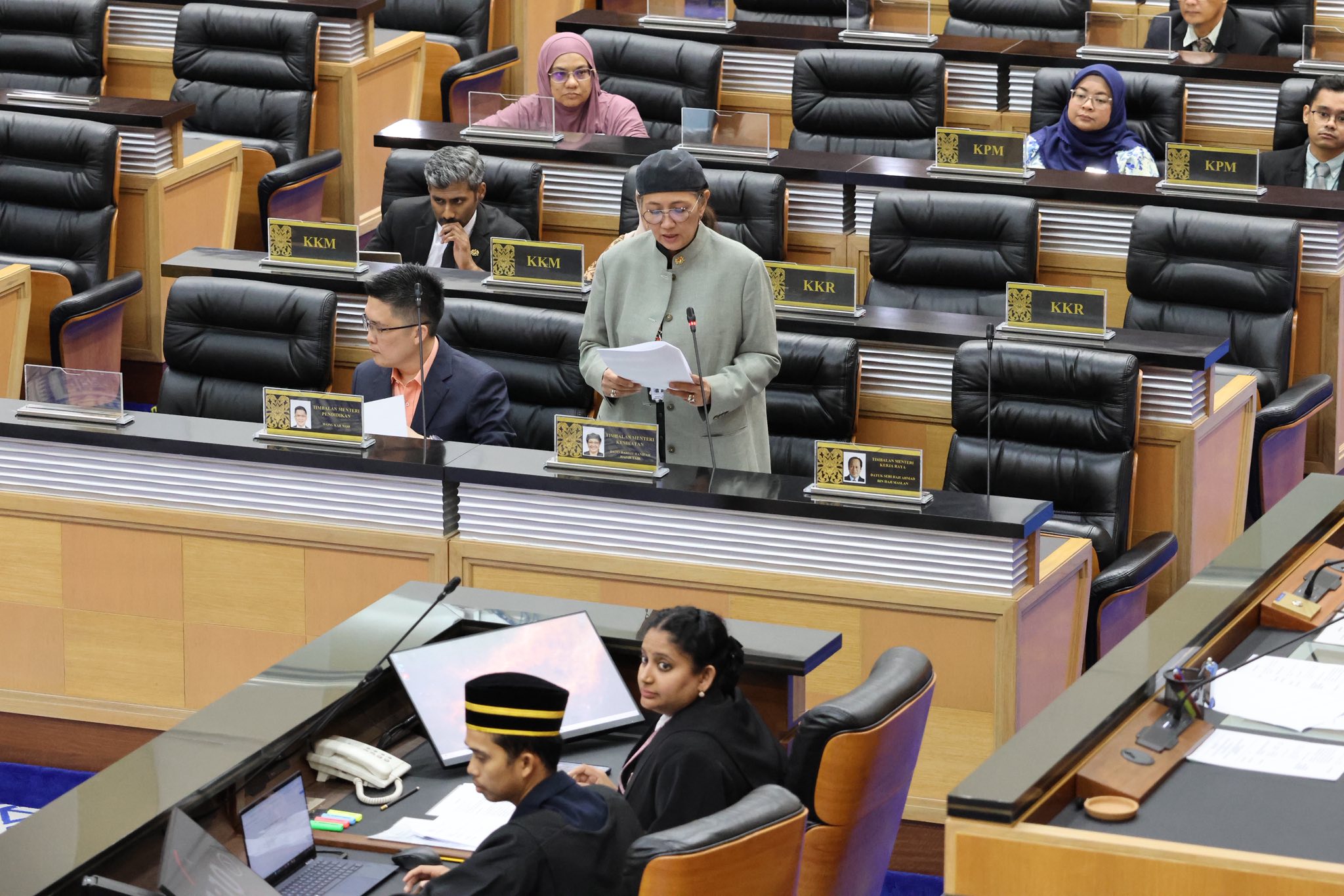
KUCHING: The Education (Amendment) Bill 2025 and the implementation of the 2027 School Curriculum (KP2027) are critical steps in reforming Malaysia’s national education system, says Batang Sadong MP Rodiyah Sapiee.
Supporting the Bill, she said the new curriculum must go beyond academic achievement to build a generation equipped with both knowledge and values.
She stressed that KP2027 should prioritise strengthening foundational skills in literacy, numeracy and critical thinking, while embedding values, character development and soft skills from an early age.
“Quality education is not just about academic achievement, it is the foundation for building a more competitive and resilient economy.
“Malaysia can no longer rely solely on a resource-based economic model. Resources are finite, but talent is enduring,” she said in a statement on Friday.
Rodiyah noted that a strong talent pipeline was essential for Malaysia’s shift to a talent-driven economy, citing South Korea and Singapore as examples of countries that successfully transformed themselves through investment in education and human capital.
She said the education reform under KP2027 would lay the groundwork for Malaysia to develop a workforce that is not only intellectually capable, but also ethical, responsible and globally competent.
“These nations were once on equal footing with Malaysia. Today, they are advanced economies because of their focus on education as a catalyst for growth.
“I firmly believe that this reform will form the bedrock of Malaysia’s transition to a new economic model — one powered not by natural resources, but by the strength of its people’s minds and talents,” she added.
The Dewan Rakyat on Wednesday passed the Education (Amendment) Bill 2025, which makes it mandatory for all Malaysian citizens to complete schooling up to the secondary level.
Under the amendment, parents who fail to ensure their children complete secondary education may face a fine of up to RM5,000, a maximum six-month jail term, or both.
The Bill, approved by a majority voice vote after debate from 34 MPs, amends the Education Act 1996 (Act 550) by broadening the scope of “compulsory education” beyond primary schooling.
Education Minister Fadhlina Sidek, when tabling the Bill for its second reading, said the change was intended to secure continuous access to education for all Malaysian children, in line with the country’s development needs.