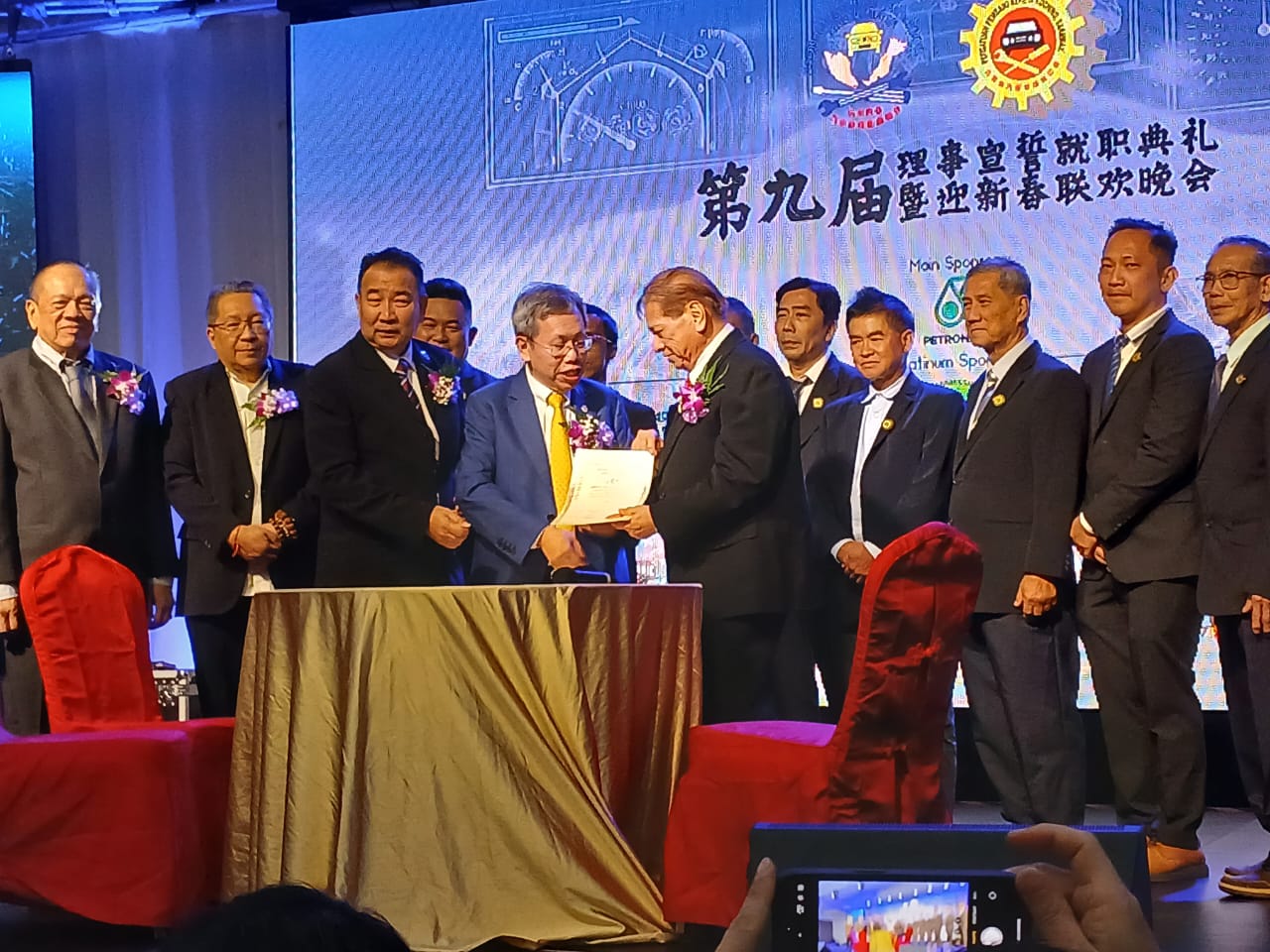
KUCHING: The Federation of Automobile Workshop Owners’ Association of Malaysia (FAWOAM) reaffirmed its commitment to working closely with the Sarawak Government to modernise and future-proof the automotive repair industry, as highlighted during its 9th Committee Swearing-in Ceremony held in conjunction with a Chinese New Year dinner on Saturday evening (Jan 31).
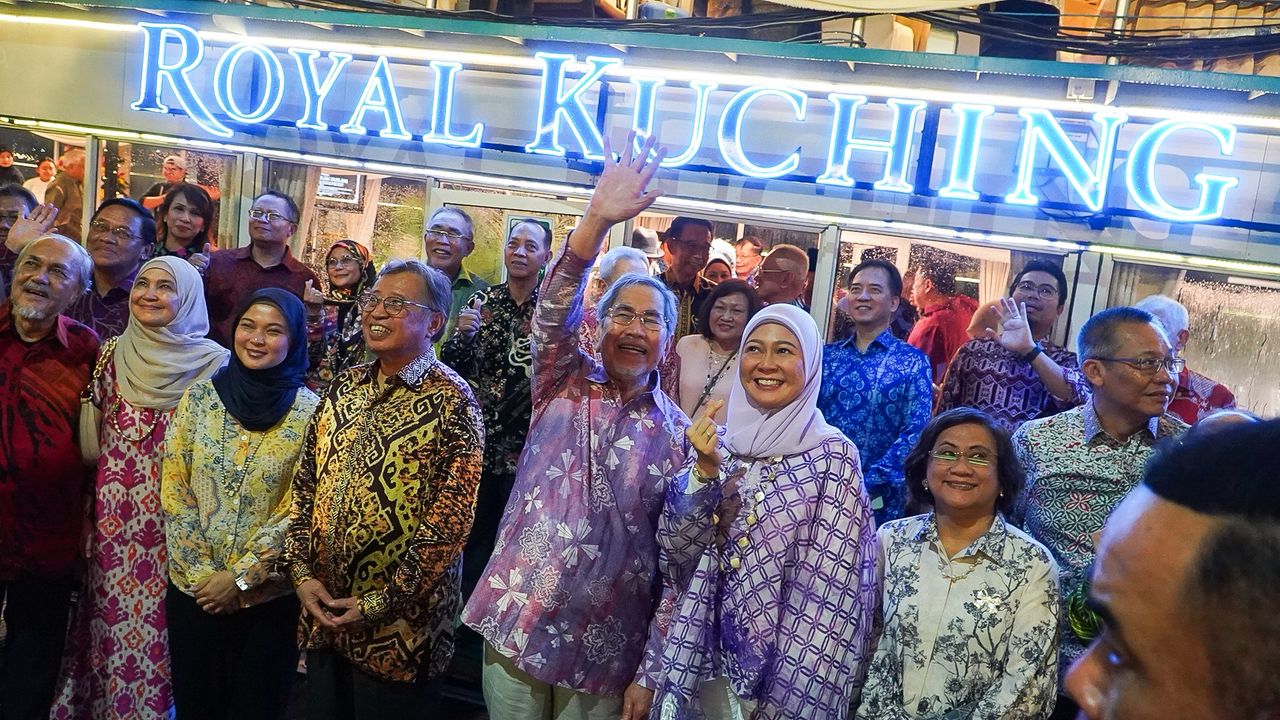
Speaking at the event, Deputy Premier Datuk Amar Dr Sim Kui Hian said the strong turnout of 640 people at the dinner reflected the unity of the association and the vital role played by the automotive repair sector in Sarawak’s economic ecosystem.
“This strong attendance tonight is not just a sign of unity within the association, but also a reflection of how important the automotive repair industry is to Sarawak’s economy,” he said.
He also welcomed the presence of industry representatives from Singapore and various states in Peninsular Malaysia, describing it as a symbol of continued regional collaboration and knowledge exchange within the automotive sector.
Founded in 2002 and now comprising more than 180 members, the association has consistently partnered with the government to enhance technical standards, particularly through skills upgrading and Malaysian Skills Certificate (SKM) accreditation.
“In today’s automotive industry, without proper professional certification, it is very difficult to survive in a highly regulated and competitive market,” said the Public Health, Housing and Local Government Minister, commending the association’s long-standing commitment to skills development and professional recognition.
He highlighted the association’s close cooperation with the government in securing designated industrial working sites, which has enabled members to operate in a safer, more compliant and sustainable environment.
“This is a clear example of how the government and industry can work together to solve real, practical problems faced by our SMEs,” he said.
Addressing the rapid evolution of automotive technology, Dr Sim noted that the industry is undergoing a major transition from traditional mechanical repairs to electronic, intelligent and software-based systems, driven largely by the rise of electric vehicles (EVs).
“The challenge today is not just about vehicles changing, but whether our people can keep up with the technology and whether the industry stays ahead of the curve,” he said, adding that human capital would determine the sector’s long-term competitiveness.
He expressed strong support for the association’s plans to organise more training and upskilling programmes, while assuring that the government would facilitate stronger collaboration with technical institutes, polytechnics and training centres across Sarawak.
“Through closer cooperation with our training institutions, we want to ensure our workforce is future-ready and equipped with the right skills,” he said.
Dr Sim also acknowledged the high cost of upgrading diagnostic tools and EV-related equipment, saying the government was prepared to explore suitable financing mechanisms through Sarawak-owned banks to help small and medium automotive businesses modernise their operations.
“Equipment upgrading requires significant investment, and we understand this burden. The government is ready to look into more appropriate financing and loan facilities to support the industry,” he said.
He further cited Sarawak’s commitment to green technology and smart mobility, including the Kuching Urban Transportation System (KUTS), which will utilise hydrogen-powered Autonomous Rapid Transit (ART) vehicles.
According to him, the focus is not only on adopting new technologies, but also on developing local expertise.
“Our goal is clear; the maintenance, servicing and technical support of these advanced systems must be carried out by Sarawakians themselves,” he said, noting that specialised training is being conducted through centres such as Centre for Technology Excellence Sarawak (CENTEXS).
As the association begins a new term under its 9th Committee, Dr Sim expressed confidence that continued unity and close government-industry collaboration would drive sustainable growth.
“If industry development is a vehicle, technology is the engine, talent is the fuel, policy is the steering wheel and the association is the chassis that holds everything together, and with collaboration and foresight, I am confident this industry will continue to move forward steadily and sustainably,” he said.
Founded in 2002, the association has grown to more than 180 members and has consistently worked hand-in-hand with the government to uplift professional standards in the sector.
A key focus has been technical upskilling and the facilitation of SKM accreditation among members, ensuring higher levels of professionalism, compliance and long-term industry sustainability.
The event reflected both the unity of the association and the growing importance of the automotive repair sector within Sarawak’s economic ecosystem.
The presence of industry leaders from Singapore and several states in Peninsular Malaysia further underscored strong regional ties and ongoing cross-border collaboration within the automotive industry.
At the event, also present were Kuching City South Council Mayor, Datuk Wee Hong Seng; FAWOAM Chairman, Bong Jiew Kit; advisers, Cho Chee Seng and Datuk Simon Too; and Vice-President Yap Kuan Leong.