SARAWAK is positioning itself to enter the blockchain economy as global industries accelerate digital transformation.
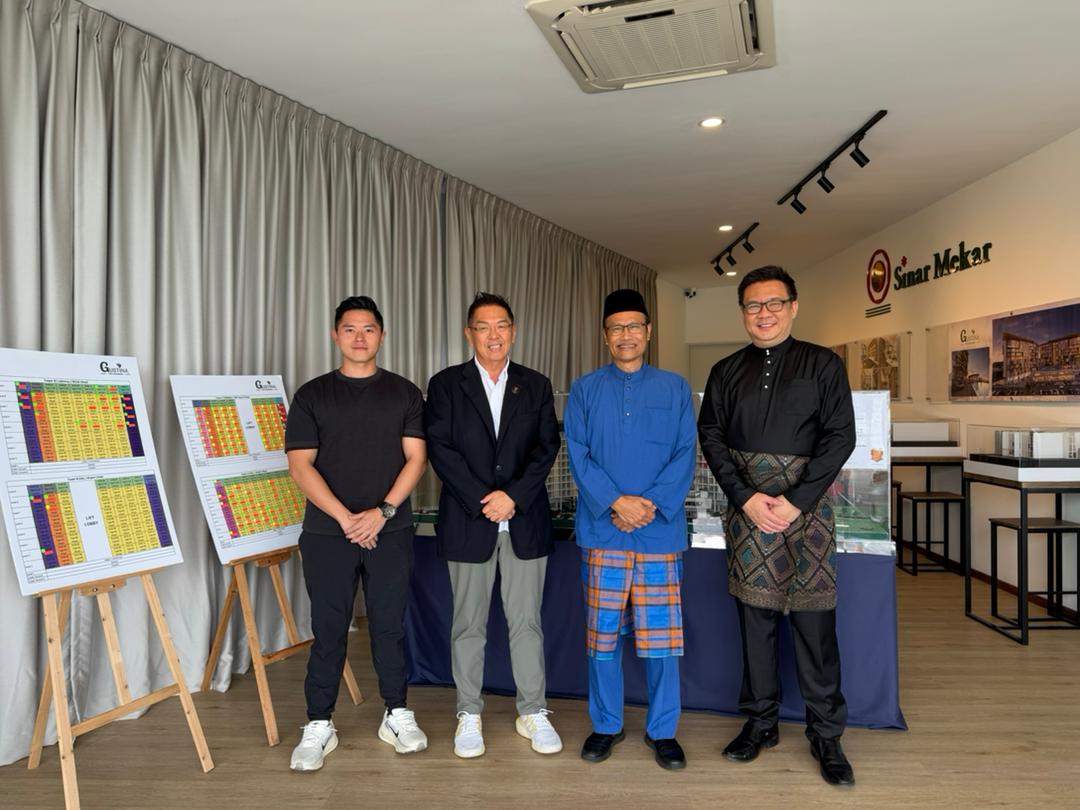
During the Borneo Blockchain Conference 2025, the Kuching Blockchain Technology Association (KBTA) signed a Memorandum of Understanding (MoU) with ACCESS Blockchain Association Malaysia to boost collaboration and promote awareness of blockchain technology.
Following the MoU, Sarawak Tribune met with KBTA’s President, James Gan, to get his thoughts on Sarawak’s progress, local projects already taking shape, and how the State can nurture a new generation of blockchain talent.
Sarawak Tribune: How would you describe Sarawak’s progress in blockchain adoption?
James Gan: We are still in the early stages, but awareness is improving fast. There are already local projects such as NFT venture by a Sarawak company, another doing halal certification for beef, and one developing biodiversity product certification.
These are small but important steps. With the right infrastructure and policy, larger-scale adoption will come. Compared to three years ago, the acceptance rate is much better now because agencies like SMA, SDEC, MDEC and TEGAS are directly involved.
What practical uses could blockchain have in Sarawak?
The easiest to start is with education certificates on blockchain. Today, verifying a graduate’s certificate can take weeks because employers must call the university.
On blockchain, verification is instant. Once recorded, the data cannot be altered. Employers can scan the file and confirm a graduate’s details within seconds.
This is already being done in Singapore and can later apply to medical certificates, trade documents and halal certification.
What about tokenisation? How can it work here?
Real-World Asset (RWA) tokenisation is a big opportunity. It allows physical assets such as property, art or even whiskey barrels to be represented as digital tokens that people can trade globally.
For example, a whiskey barrel worth £400,000 can be tokenised into 1,000 bottles. Each bottle is a token worth £400. People around the world can buy or sell those tokens.
When the whiskey matures, whoever holds the token owns the bottle. It opens global liquidity for producers and manufacturers instead of depending on a few large buyers.
This concept can also apply to Sarawak products such as biodiversity goods or commodities, giving local businesses direct access to global investors.
What kind of infrastructure and support will Sarawak need?
Both technology and policy must come together. You need a blockchain layer, whether a global public one or a local chain, and clear regulations to protect users and guide businesses.
There are also cost factors. For example, universities could pay a small fee per certificate to maintain the system, while development could be done through joint ventures with private and government partners.
At the moment, KBTA is self-funding most of its activities. In the future, we hope agencies such as MEITD or HRDC can help fund our public courses and outreach programmes.
How is KBTA helping Sarawakians develop skills in blockchain?
Our goal is to make blockchain education accessible. We have already conducted free public courses such as Blockchain 101, and plan to roll out ten rotating courses every few months.
Anyone can join, and those who complete all ten will have a basic foundation before moving to higher-level training. We also plan hackathons, incubators and exchange programmes with blockchain associations in Malaysia, Singapore and other countries.
We already have trainers in Sarawak and will run a free public course this November. The idea is to give Sarawakians practical skills and global exposure.
How is public perception of blockchain changing in Sarawak?
It used to be that people associated blockchain only with cryptocurrency or scams. That is changing. With proper regulation and government involvement, it now looks more legitimate.
Having agencies like SMA, SDEC, MDEC and TEGAS participate in events helps build confidence. Awareness still takes time, but the perception is improving each year.
You often say blockchain allows Sarawakians to work locally and earn globally. What do you mean by that?
Blockchain removes the barrier between local and global work. You can live in Kuching, Sibu or Miri, and still work for international projects.
For example, a university student in Singapore writes smart contracts for blockchain projects from his bedroom. He is paid in tokens that later multiply in value when the projects succeed. He has already made a few million Singapore dollars while still studying.
This opportunity is not only for developers. People can be community managers, designers or marketers for blockchain projects, earning about USD2,000 a month remotely.
It means Sarawakians can stay close to home while earning global income. With the right infrastructure, we can keep our talent here and still connect with the world economy.
What are KBTA’s next steps following this conference?
We will continue working with SDEC, TEGAS and CENTEXS to expand blockchain education and awareness across Sarawak.
This first conference in Kuching was small but successful. Next year, we plan to reach more people through talks, training and collaborations with government agencies.
We also hope to participate in more international events like Token 2049 in Singapore to promote Sarawak’s presence.
Blockchain is not only a technology. It is part of a new economy, and Sarawak must be ready for it.