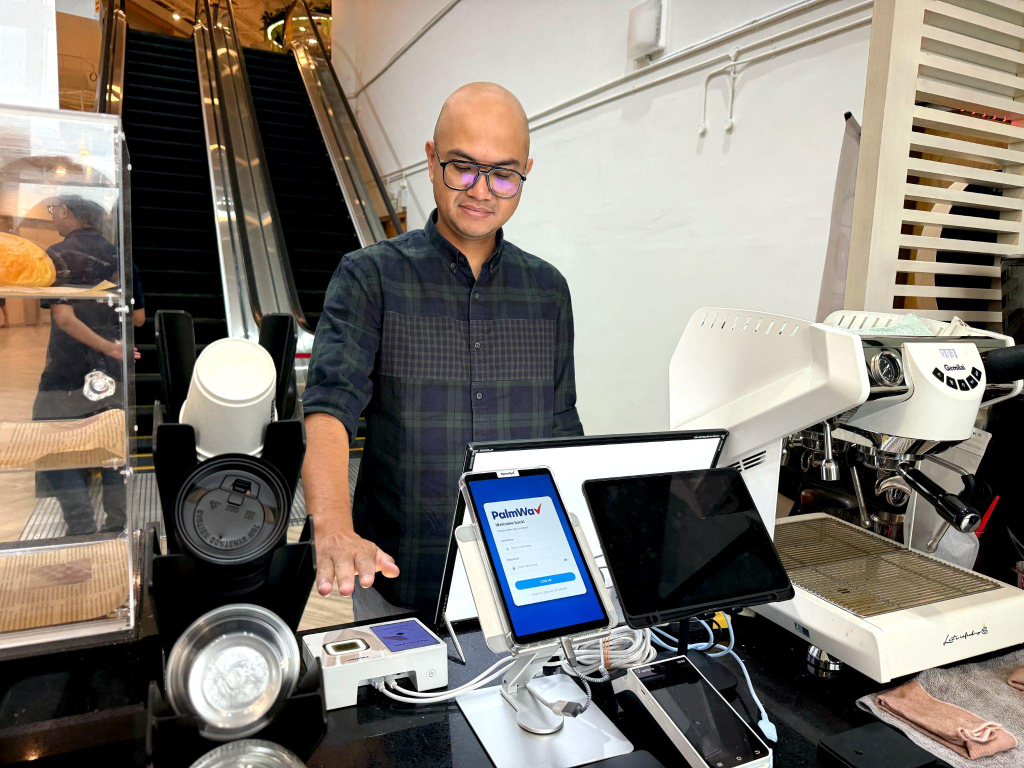
An innovation prototype is quietly reshaping the way Malaysians might pay in the near future. OpenSys Technologies has unveiled PalmWav, a palm-recognition system that lets users make seamless, device-free payments — no cards, no phones, just a wave of the hand. What sets it apart is its ability to plug straight into the country’s existing payment rails, including PayNet’s MyDebit network, signalling that biometric transactions may not be as far off as we think.
The rollout marks another milestone in OpenSys Technologies’ push to stay ahead of the curve, as the company continues experimenting with next-generation tools in the digital payments space. With the system, users can settle transactions with nothing more than a wave of the hand — a futuristic touch that sits neatly alongside the payment methods Malaysians already rely on, from smartphones to physical cards and the ever-faithful wallet.
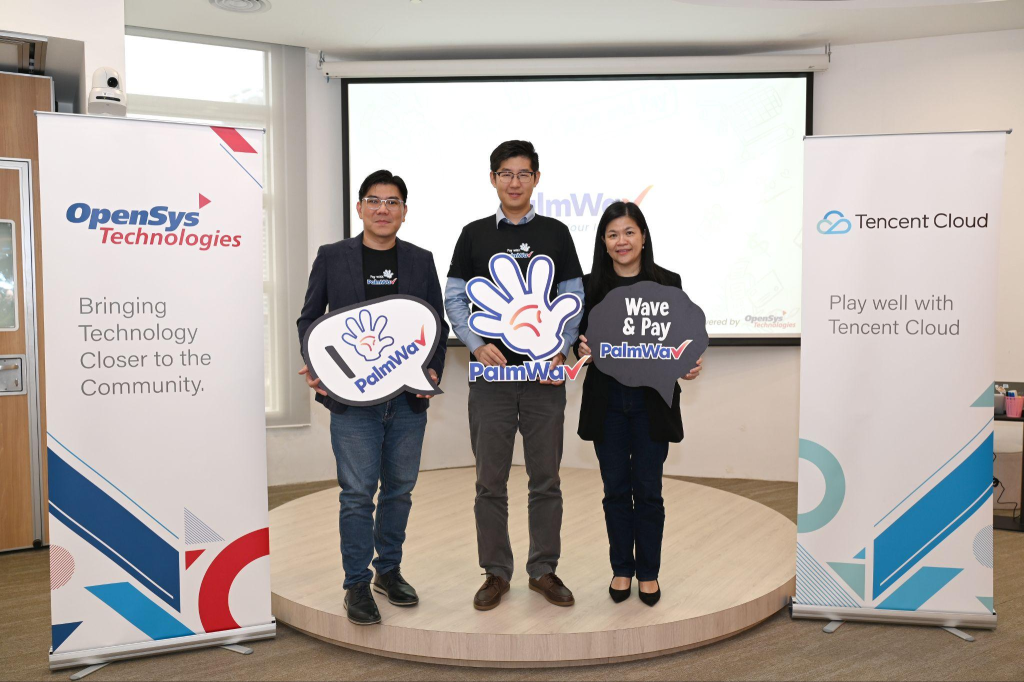
The internal showcase gave OpenSys employees and selected partners a first-hand taste of the PalmWav™ experience before it reaches the public. Kom.Fi in Kuala Lumpur and Bread Maison in Petaling Jaya acted as early pilot sites, offering live demos that showed just how convenient and reliable the system can be in everyday use.
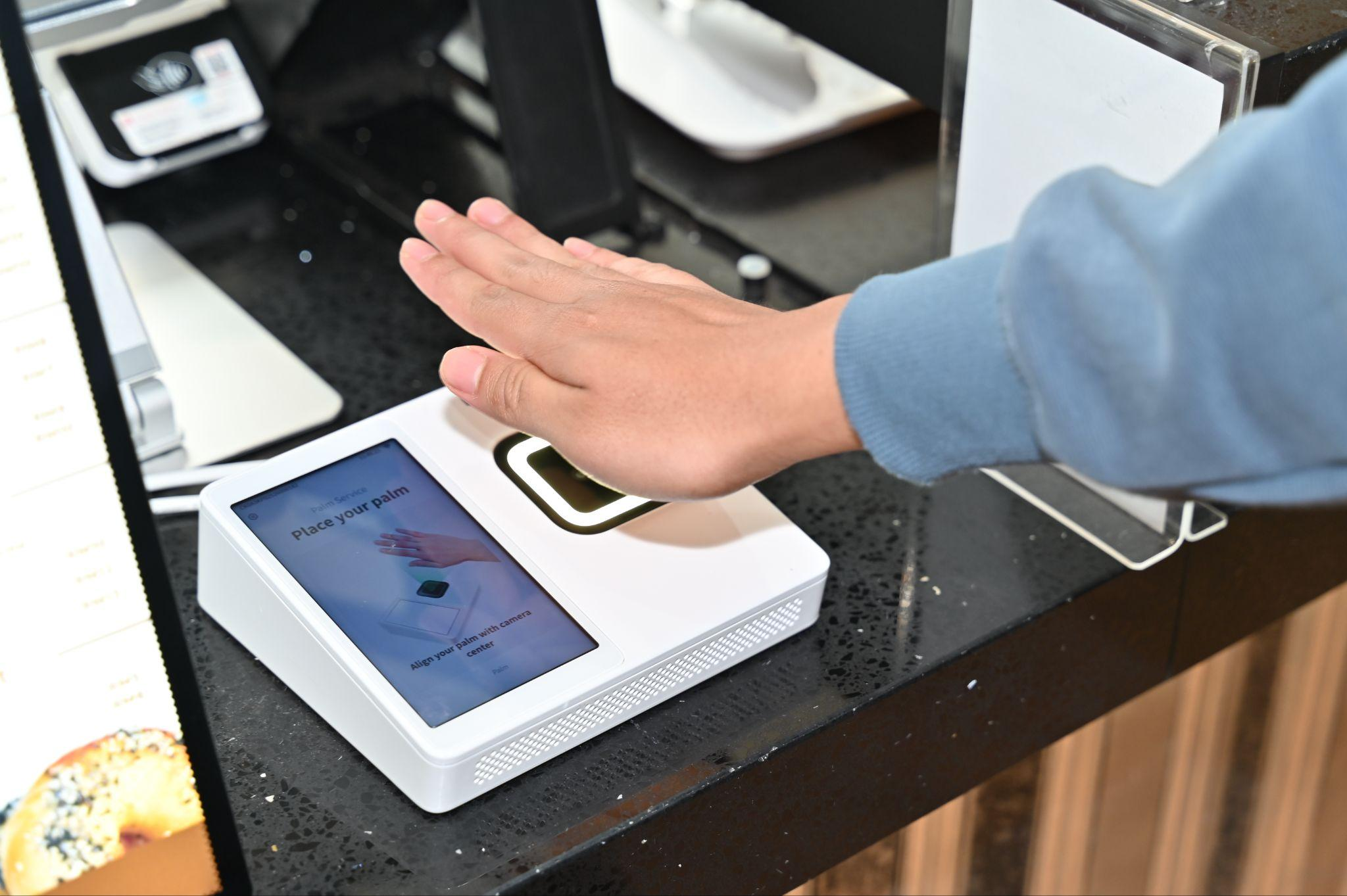
Powered by Tencent Cloud’s AI capabilities, PalmWav generates a unique, encrypted “palm signature” for each user. Authentication happens within seconds, meeting stringent privacy and security standards while keeping the user journey fuss-free.
Signing up is equally straightforward. Users download the PalmWav mobile app and complete a one-off registration at participating merchants. After that, payment is as simple as hovering a palm over the reader — no cards, no phones, no rummaging through bags.
At present, PalmWav operates in a controlled production environment designed to showcase interoperability with Malaysia’s existing payment ecosystem, including PayNet’s MyDebit network. Through this pilot, OpenSys Technologies is exploring how biometrics might shape a simpler, faster, and more intuitive payment experience for Malaysians in the years ahead.
Benefits for consumers:
- Fast and frictionless — pay securely in seconds with just your palm.
- No devices needed — forget your smartphone, card, or wallet; payment is always at hand.
- Privacy guaranteed — all palm templates are encrypted.
- Convenient onboarding — register easily through the PalmWav™ app or in-store.
Benefits for merchants:
- Faster checkouts and shorter queues — optimise operations for busy periods.
- Hands-free transactions — enhance hygiene and customer experience.
- Integration-ready — work with loyalty and rewards programmes.
- Future-proof technology — scalable to millions of users and multiple payment schemes.
Beyond the convenience factor, PalmWav is built with enterprise-grade security at its core. Every transaction is protected through end-to-end encryption, strengthened by payment tokenisation and backed by real-time fraud monitoring, a full suite of safeguards designed to keep users’ data locked down from start to finish.
“PalmWav reflects our commitment to innovation and our drive to explore new technologies that could redefine how Malaysians experience digital payments. The ability to pay with nothing but your palm illustrates the kind of seamless experience we envision for the future,” said Denis Koay, Group Chief Commercial Officer of OpenSys Group.
Wong Siew Pooi, co-CEO of OpenSys Technologies added that, “By combining Tencent Cloud’s biometrics expertise with our deep understanding of Malaysia’s payments landscape, this prototype showcases a new way to make transactions simpler, safer, and more intuitive.”
This pilot underscores OpenSys Technologies’ commitment to research and innovation, using technology as a catalyst to support Malaysia’s evolving digital economy. The company will continue evaluating palm-based payments across multiple sectors to study their potential for future real-world applications.