Firms that build efficiency and diversify markets stand strongest when global shocks hit
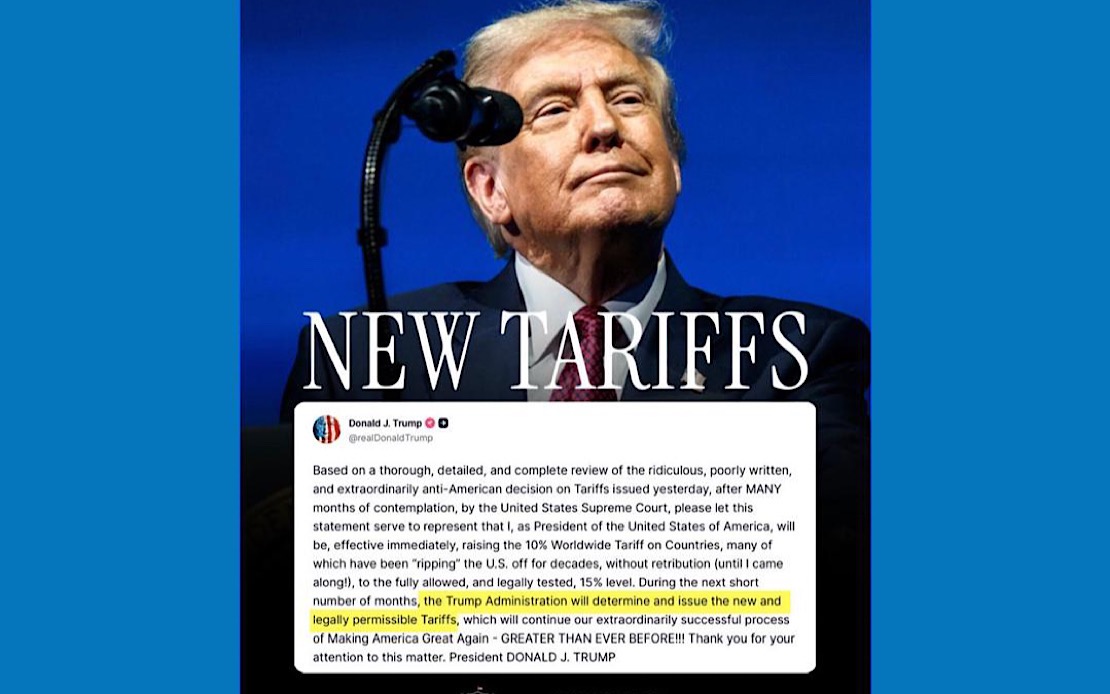
KUCHING: A 10 per cent US tariff could deliver an early jolt to Sarawak’s export engine before firms have time to recalibrate.
Universiti Malaysia Sarawak (UNIMAS) senior lecturer Dr Dzul Hadzwan Husaini said the immediate impact would likely be a short-term shock to production and export activity, particularly for industries heavily tied to global demand.
He said export-oriented firms may initially face softer orders and margin compression as markets adjust to the new tariff environment.
“Given Sarawak’s strong reliance on export-driven industries, this first-round impact could be felt relatively quickly along the production chain.
“The impact is likely to be front-loaded in the short run, with firms typically adjusting over time through market reorientation, cost restructuring and supply-chain optimisation,” he told Sarawak Tribune.
During this adjustment phase, Dzul said targeted — even temporary — government support would be important to help affected industries manage cash flow pressures while undertaking restructuring and upgrading.
He noted that most export-linked sectors in Sarawak carry some degree of exposure, either directly or indirectly through global value chains serving the US market.
“This includes resource-based manufacturing, electrical and electronic components, and downstream processing activities,” he said.
According to Dzul, two structural realities explain this vulnerability.
“First, the United States remains the world’s largest economic powerhouse and a major demand centre in global trade. Second, the US continues to be an important trading partner for Malaysia,” he said.
On who ultimately bears the burden of a tariff, he explained that tariffs create a deadweight loss, meaning costs are shared across producers, consumers and overall welfare in both trading nations.
“In the initial phase, exporters often experience margin pressure, but the final incidence depends on demand elasticity, contract structures and market competition,” he said.
Renegotiating contracts alone, he added, is unlikely to provide a reliable solution, particularly when tariff measures stem from broader fiscal and strategic considerations within the United States.
“These are largely beyond the control of individual firms or even small open economies,” he said.
Still, Dzul emphasised that today’s global economy is structurally different from previous decades, with more diversified supply chains, digitally enabled firms and increasingly flexible production systems.
“As a result, while the short-term adjustment may be challenging, the medium- to long-term outlook remains manageable,” he said.
He stressed that Sarawak has the capacity to adapt through productivity upgrading, digitalisation and AI adoption — but speed matters.
“No firm can control geopolitical tensions, global monetary cycles or shifts in capital flows,” he said.
Exchange rates and trade conditions will continue to move in response to forces far beyond the reach of individual companies, and trying to forecast them can prove costly and distracting.
“What businesses can control is productivity, structure and resilience,” he said.
Dzul argued that productivity must become central to business strategy, with digitalisation, automation and artificial intelligence now essential rather than optional.
He said firms investing in smarter inventory systems, predictive analytics and process optimisation can reduce unit costs and improve decision-making.
“When productivity rises, sensitivity to external shocks, including tariffs, declines.”
High-productivity firms, he added, compete on efficiency and innovation rather than purely on price.
He also underscored the importance of diversification.
“Diversification is a powerful shield, warning that businesses that depend on a single export market or a narrow product line are inherently more vulnerable.”
Expanding into new markets, developing differentiated products and moving up the value chain can reduce reliance on any single destination.
“Diversification transforms volatility from a threat into a manageable variable,” he said.
Beyond markets, Dzul said financial and supply-chain diversification also matter. Aligning financing structures with revenue streams and avoiding excessive concentration in one region or currency can strengthen balance sheets.
Firms with diversified income sources are better positioned to absorb shocks, he added.
“Supplier diversification is essential in a world of fragmented geopolitics, and building relationships across multiple regions reduces dependence on a single country or trade corridor.”
Flexible sourcing arrangements enhance bargaining power and operational continuity, he said.
He also urged structured stock planning.
“Structured stock planning matters, and firms should design short-, medium- and long-term inventory strategies based on demand forecasting and risk assessment rather than reacting emotionally to policy changes.”
A disciplined procurement framework reduces exposure to temporary volatility, he added.
“The core message is clear: sustainable competitiveness does not come from trying to predict tariffs or exchange rates.
“It comes from building a high-productivity, diversified and adaptable business model.
“External shocks are inevitable; resilience is built internally,” he said.